




 Author:
  April 17, 2026
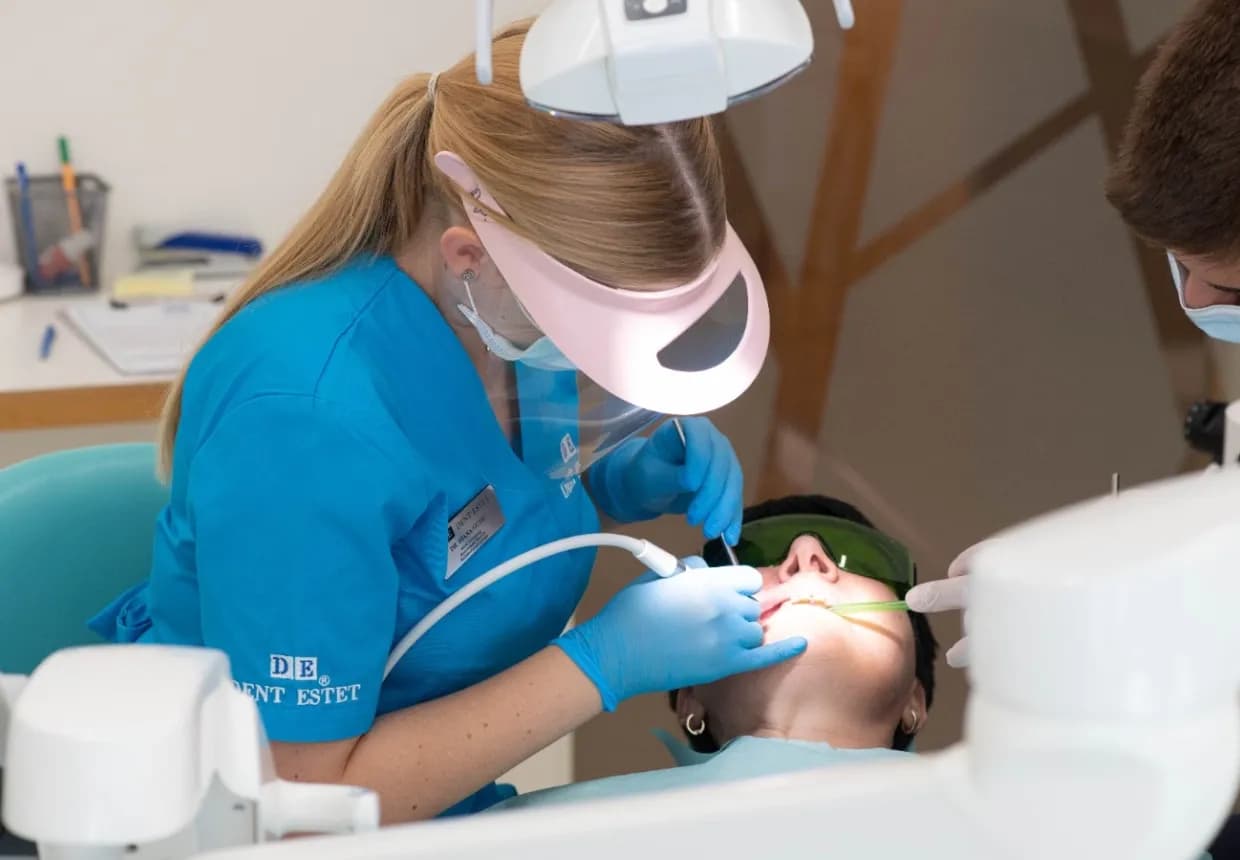
Dental Air Flow is a professional cleaning procedure that uses a jet of air, water and fine particles (erythritol or glycine) to remove bacterial plaque, biofilm and stains from the teeth.
Unlike brushing at home, Air Flow works deep down, including in hard-to-reach areas where bacterial plaque accumulates over time. For this reason, it is not just a cosmetic procedure, but an essential one for preventing cavities, gingivitis and other periodontal conditions.
Air Flow has been shown to have a gentler effect on soft and hard tissues compared to traditional root planing.
One of the main advantages of the procedure is patient comfort. Air Flow is a quick, non-invasive and painless procedure that does not affect the structure of the teeth. In just a few tens of minutes, the teeth become smoother, cleaner and visibly brighter, without discomfort or recovery time.
Air Flow forms part of a comprehensive professional dental hygiene protocol, alongside scaling. As part of guided biofilm therapy (GBT), this technology is used for effective and gentle cleaning, helping to maintain long-term oral health.
How Air Flow helps prevent dental problems
Dental Air Flow helps prevent oral health problems by effectively removing bacterial plaque and biofilm, the main causes of tooth decay and gum disease. As part of professional dental hygiene, this treatment supports the maintenance of optimal oral health in the long term.
The role of Air Flow in controlling bacterial plaque
Maintaining oral health begins with effective control of bacterial plaque. Dental Air Flow allows for deep cleaning, including in hard-to-reach areas where daily brushing fails to completely remove deposits.
Even with a proper oral hygiene routine, certain surfaces — such as the area behind the molars or the spaces between the teeth — remain difficult to clean. Using a controlled jet of air, water and fine particles, Air Flow effectively removes bacterial plaque from these areas, reducing the number of bacteria responsible for inflammation.
Over time, bacterial plaque can mineralise and turn into tartar, which cannot be removed by brushing at home. Regular professional dental cleaning, including scaling and Air Flow, prevents tartar build-up and maintains optimal oral health.
Read about the difference between scaling, professional cleaning and Air Flow.
Why Air Flow complements daily hygiene
Proper oral hygiene starts at home, with brushing twice a day and the use of aids such as dental floss or a water flosser. However, these methods cannot completely remove the bacterial plaque that has built up over time.
Air Flow complements daily hygiene with a professional dental cleaning that reaches the interdental and subgingival spaces. The fine jet of air, water and special particles allows for the effective removal of deposits from areas where bacteria can trigger gum inflammation.
Thus, combining proper oral hygiene at home with regular professional cleaning helps prevent cavities, gingivitis and other dental problems.
What dental problems can you prevent with Air Flow?
Dental Air Flow helps prevent common oral health problems by effectively removing bacterial plaque and deposits from the surface of the teeth.
As part of professional dental hygiene, this treatment contributes both to gum health and to the aesthetic appearance of your smile.
Gingivitis and gum inflammation
Gingivitis is a superficial inflammation of the gums, caused by an excessive build-up of bacterial plaque, which manifests as bleeding when brushing and represents the early stage of periodontitis.
Through the effective removal of bacterial plaque using Air Flow, gum inflammation is reduced and the gums regain their health.
Tooth stains and stubborn deposits
Our daily diet includes coloured foods and drinks (coffee, tea, wine), which can become trapped on the tooth surface or stain existing bacterial plaque on the teeth.
Teeth can also become stained due to the colourants found in tobacco. These colourants gradually accumulate on the enamel and, over time, form dark stains.
With Air Flow, stains and deposits are effectively removed, leaving a clean, smooth, lighter-coloured surface, with the effect being immediately visible.
It is important to note that Air Flow does not replace professional teeth whitening. Unlike whitening, which acts deep within the tooth structure, Air Flow only cleans surface deposits.
Bad breath caused by bacterial plaque
Halitosis, or persistent bad breath, is mainly caused by sulphur-producing bacteria in the oral cavity, due to poor oral hygiene, gingivitis or dry mouth (xerostomia).
Symptoms include:
- unpleasant odours in the mouth
- white tongue
- persistent metallic taste
A preventive care session including scaling and Air Flow is effective in removing the bacteria that cause unpleasant odours in the mouth.
Find out about the causes of halitosis and the available treatment methods.
When you need dental Air Flow more often
Dental scaling is usually recommended every six months. However, in certain situations, professional dental cleaning may be required more frequently to prevent the build-up of plaque and the development of gum problems.
Signs that bacterial plaque is building up quickly
Bacterial plaque forms constantly on the teeth, but when it is not removed effectively, it can build up quickly and turn into tartar.
Recognising the signs early helps you prevent conditions such as gingivitis or periodontitis and maintain oral health through regular professional dental cleaning.
The most common signs are:
- visible deposits on the teeth, appearing whitish or yellowish, especially around the gums;
- a feeling of ‘heavy’ or sticky teeth after brushing;
- bleeding when brushing, which may indicate gum inflammation.
If you notice these symptoms, a dental check-up and professional cleaning with scaling and Air Flow are recommended.
Situations where the risk of gum inflammation is higher
In addition to poor oral hygiene, there are certain situations where the risk of gingivitis and bacterial plaque build-up is higher.
Among the most common are:
- smoking or tobacco use;
- wearing braces;
- the presence of dental work (crowns, implants), which can make cleaning difficult;
- a diet low in vitamin C;
- dry mouth (xerostomia);
- hormonal changes (pregnancy, menstruation);
- certain conditions or treatments that weaken the immune system.
In these cases, the dentist may recommend more frequent professional dental cleaning appointments to prevent gum inflammation and other complications.
Frequently Asked Questions
How often is a dental Air Flow treatment recommended?
A dental air flow treatment is generally recommended every six months as part of a professional dental cleaning. For smokers, patients with braces, or those prone to rapid plaque build-up, it may be necessary every three to four months.
Can dental Air Flow prevent gingivitis?
Yes, the dental Air Flow helps prevent gingivitis by removing bacterial plaque – the main cause of gum inflammation. It therefore reduces the risk of bleeding and helps keep your gums healthy.
Is dental Air Flow recommended if I’m wearing braces?
Yes, Air Flow is recommended during orthodontic treatment. It effectively cleans hard-to-reach areas around the brackets and reduces the risk of tooth decay and gum inflammation.
Read about the importance of scaling during treatment with braces.
Can I have Air Flow treatment if I have dental implants?
Yes, Air Flow is safe for dental implants. It helps to gently clean the areas around them and prevents inflammation, such as peri-implantitis.
Read about the importance of scaling during dental implant treatment.