



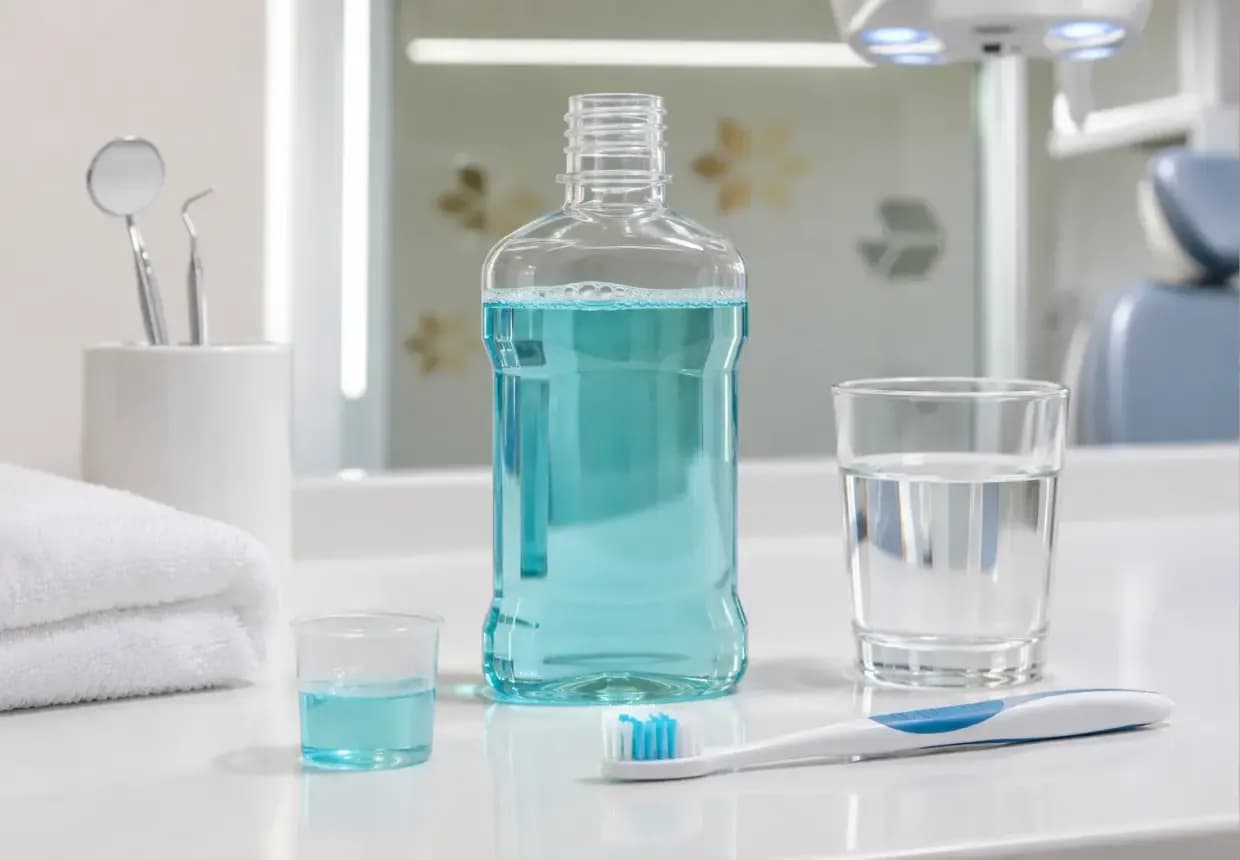
Alcohol-based mouthwash: benefits, risks and when it’s best to avoid it
 Author: Dr. Dr Eduard Grigore
 November 18, 2026
Alcohol-based mouthwash can complement oral hygiene, but it is not necessary for everyone. Its effectiveness depends mainly on the active ingredients and the product’s formulation, and alcohol can cause a stinging sensation or discomfort in some people, particularly those with sensitive oral mucosa.
There are both alcohol-based and alcohol-free formulations, with different ingredients and uses. The choice depends on the health of your gums, any oral problems you may have, and the purpose for which you are using the mouthwash. It is not a substitute for brushing and flossing.
Why does mouthwash contain alcohol?
Alcohol, usually ethanol, is used in some formulations to help dissolve and disperse active ingredients or flavourings, such as essential oils and menthol.
It can also contribute to the product’s antiseptic effect and is partly responsible for the intense sensation of ‘freshness’ or slight stinging that many people associate with effectiveness.
It is important to note, however, that a burning sensation does not automatically mean that the product cleans more effectively. It is simply a reaction of the mucous membrane to the formula and the ingredients it contains.
What are the benefits of alcohol-based mouthwash?
Mouthwash can complement your oral hygiene routine, particularly when it contains active ingredients with antibacterial properties. However, the benefits depend on the product’s formulation and the individual’s specific needs.
It can help control bacterial plaque and gum inflammation
Some mouthwashes containing essential oils and alcohol have been studied for their ability to further reduce bacterial plaque and gum inflammation. The effect, however, is a complementary one.
“Mouthwash does not mechanically remove plaque attached to the surface of the teeth in the same way as a toothbrush, nor does it clean the spaces between the teeth like dental floss or interdental brushes. Therefore, mouthwash is an aid, not an alternative to brushing.” – Dr Eduard Grigore, specialist in periodontology at the DENT ESTET Ploiești and Green Dental by DENT ESTET clinics.
It can temporarily improve breath
The fresh taste sets in quickly and can be pleasant, but the effect on breath is often temporary.
If halitosis keeps coming back, the cause must be identified. Factors that may contribute include:
bacterial plaque and tartar;
- gum inflammation;
- tooth decay;
- a coated tongue;
- dry mouth;
- other oral or general health problems.
Mouthwash can temporarily mask the odour without addressing the underlying cause.
What are the potential risks of using alcohol-based mouthwash?
For most healthy adults, using the product as directed does not cause any significant problems. However, there are situations in which the alcohol in the formula may cause discomfort or exacerbate an existing problem.
It may increase the sensation of a dry mouth
Alcohol may contribute to a sensation of dry mouth in some people.
If your mouth is already dry, a product that exacerbates this sensation may become unpleasant and may even contribute to worsening bad breath.
May irritate the oral mucosa
Some people may experience:
- a burning sensation;
- a stinging sensation;
- irritation;
- an unpleasant sensation in the mouth.
The discomfort may be more noticeable if you already have mouth ulcers, sores or sensitive mucous membranes.
It may temporarily mask an oral problem
If mouthwash is used to mask pain, inflammation or bad breath, there is a risk that the problem will be put off rather than being assessed.
A symptom that keeps recurring is worth investigating.
Is there a link to the risk of oral cancer?
The relationship between the use of alcohol-based mouthwashes and the risk of oral cancer has been investigated in numerous studies. The available evidence does not conclusively prove that the use of these products, in itself, causes oral cancer.
The risk of oral cancer is influenced by several factors, including alcohol and tobacco consumption. If you have individual risk factors or any concerns about using mouthwash, discuss choosing a suitable product with your dentist.
When is it best to avoid mouthwash containing alcohol?
Not everyone tolerates alcohol-based products equally well. In certain situations, an alcohol-free formula may be more suitable, or a doctor’s advice may be required.
| Situation | Why it might be better to avoid it |
| Dry mouth, including that associated with certain medicines | May exacerbate the feeling of dryness |
| Mouth ulcers or irritated mucous membranes | May increase the burning sensation and discomfort |
| After extractions or surgical procedures | May irritate the area; follow your doctor’s advice |
| Marked oral sensitivity | The formula may be difficult to tolerate |
| Children | There is a risk of swallowing |
| People recovering from alcohol dependence | Products containing alcohol may be unsuitable |
| Pregnancy | It is advisable to choose the product in consultation with your doctor |
If you find yourself in any of these situations, there are alcohol-free formulas that may be easier to tolerate.
When should you discuss mouthwash with your doctor?
Sometimes, the question isn’t which mouthwash to choose, but why you need it.
An assessment is recommended if:
- you suffer from persistent bad breath;
- your gums bleed;
- your gums are inflamed;
- the mouthwash causes a burning or stinging sensation;
- you frequently have a dry mouth;
- you develop mouth ulcers or sores that do not heal;
- you have oral sensitivity;
- you’re not sure which type of product is right for you.
During a consultation or a professional dental cleaning, your dentist may recommend a product suited to your needs or determine whether mouthwash is, in fact, necessary.
How do you use mouthwash correctly?
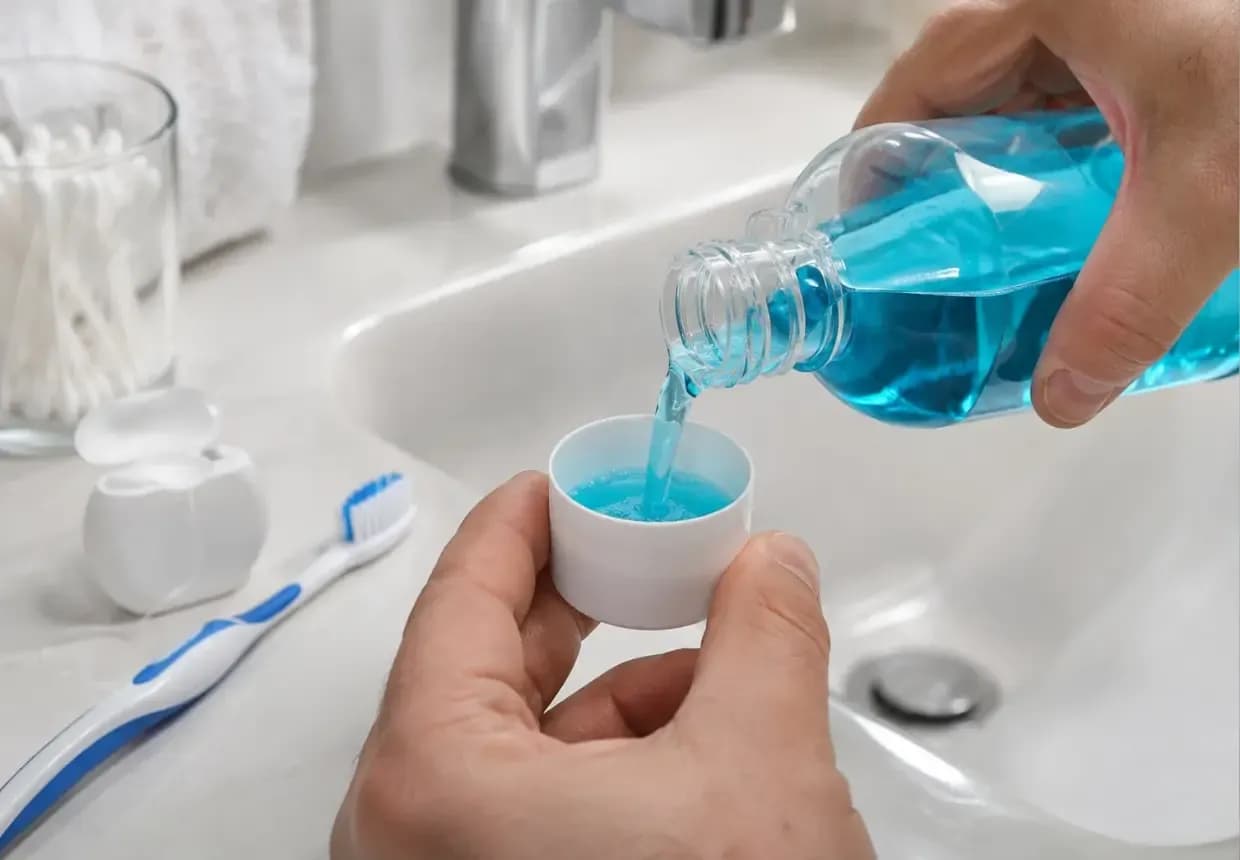
The effectiveness of the product also depends on how it is used. More does not automatically mean better, and excessive use does not necessarily bring any additional benefits.
A few useful tips:
- don’t automatically use it straight after brushing; it can be used at another time of day;
- follow the rinsing time indicated on the label;
- do not swallow the product;
- do not rinse immediately with water unless the product instructions state otherwise;
- do not exceed the recommended frequency;
- Do not make using mouthwash a daily habit without a specific need or without checking whether the product is suitable for you.
Can mouthwash replace brushing and flossing?
No. Brushing and cleaning between the teeth remain the cornerstone of oral hygiene. Mouthwash can complement this routine, but it cannot mechanically remove bacterial plaque adhering to the surface of the teeth.
A proper routine may include:
- brushing twice a day;
- cleaning between the teeth;
- tongue cleaning;
- regular check-ups and professional cleanings;
- mouthwash, if recommended and if the product is suitable.
Mouthwash with or without alcohol: which will you choose?
There is no one-size-fits-all solution. The choice depends on the health of your gums, your risk of tooth decay, whether you suffer from dry mouth, and the purpose for which you wish to use the product.
Alcohol-free products for daily use
There are alcohol-free mouthwashes which may contain:
- fluoride;
- cetylpyridinium chloride;
- other antibacterial ingredients;
- substances designed to protect tooth enamel or control bad breath.
These may be better tolerated by people with a dry mouth or sensitive oral mucosa.
Chlorhexidine products
In certain situations, your dentist may recommend chlorhexidine solutions, for example for certain types of gum inflammation or following certain procedures.
"However, these products are not intended for prolonged use without medical advice, as they may cause side effects, including tooth discolouration." – Dr Eduard Grigore
Frequently asked questions about alcohol-based mouthwash
Is it dangerous if I accidentally swallow mouthwash?
A small amount, accidentally swallowed by an adult, does not usually cause any serious problems. However, the product must not be swallowed deliberately. In the case of children, or if a larger amount is swallowed, it is advisable to seek medical advice.
Does alcohol-based mouthwash whiten teeth?
Not in the sense of a teeth-whitening treatment. Some formulations may help to control certain superficial stains, but they do not significantly alter the natural shade of the teeth.
Can I use mouthwash every day?
It depends on the product and the reason for using it. Some formulations are intended for daily use, whilst others are recommended only for limited periods.
Is alcohol-free mouthwash less effective?
Not necessarily. Effectiveness depends on the active ingredients and the product’s intended use, not just on whether or not it contains alcohol.
Mouthwash is an aid, not a shortcut to good oral hygiene
Mouthwash containing alcohol can be useful in certain situations, but it is not essential and is not suitable for everyone.
If you have a dry mouth, sensitive gums or find that the product causes a stinging sensation, an alcohol-free formula may be more suitable. And if you’re trying to mask a persistent problem – bad breath, inflamed gums, bleeding or pain – the solution isn’t to use more mouthwash, but to identify the cause.
If you’re unsure which product suits your needs, book a consultation at DENT ESTET for an assessment and recommendations tailored to your oral hygiene routine.