




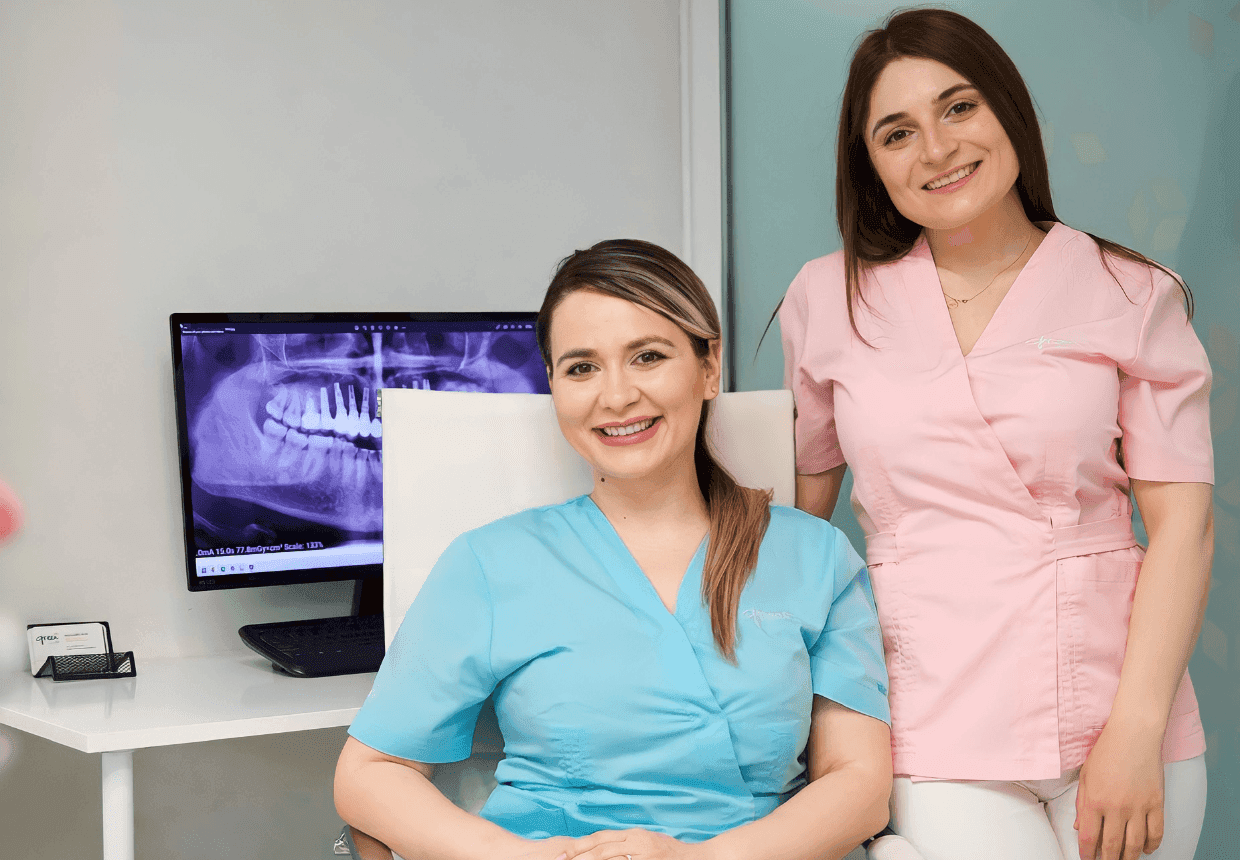
The success of dental implants: the role of osseointegration
 Author: Dr. Marina Băjinaru
 June 26, 2026
Osseointegration is the biological process by which a dental implant becomes anchored in the maxillary or mandibular bone, ensuring long-term stability and success.
In other words, following dental implant treatment, the bone adapts around the implant screw and forms a direct bond with it, transforming it into a solid foundation for the future dental restoration.
In this article, Dr Marina Băjinaru, a specialist in dento-alveolar surgery, explains the factors that influence the success of dental implant treatment, as well as how long the healing period lasts, on average.
Why is osseointegration important for the success of the implant?
In the first few weeks after surgery, the implant must remain completely fixed in the bone. Any micromovement destroys the new bone cells and leads to the formation of fibrous tissue (scar tissue), resulting in the loss of the implant.
Implant stability and functionality
“The basis for osseointegration is increased initial stability, which is achieved by firmly screwing the implant into the bone. This stability provides the body with the conditions necessary to create new bone cells around the titanium, transforming mechanical stability into definitive biological stability,” explains Dr Marina Băjinaru.
Osseointegration is an essential element for the implant’s functionality. A successful implant correctly absorbs and transmits the forces generated during chewing directly into the jawbone, just like a natural root.
Longevity and reduced risk of failure
The long-term success of dental implant treatment also depends on wear resistance – that is, the ability of the screw and its components to withstand daily chewing cycles for decades.
Furthermore, osseointegration helps to reduce the risk of failure. A treatment that is properly planned and carried out creates a perfect biological seal between the gum and the implant. This prevents bacteria from penetrating the bone and significantly reduces the risk of peri-implantitis (the main cause of implant loss over time).
Predictability
Strict adherence to surgical and prosthetic protocols reduces the risk of implant rejection to less than 2–3 per cent, giving the patient the assurance of a sound investment in their health.
Biological factors influencing osseointegration
Bone density
Bone density represents the ratio between cortical bone (hard, compact, located on the outside) and cancellous bone (soft, porous, located on the inside) at the site of insertion.
This directly influences implant fixation through the following biological and mechanical mechanisms:
1. Determination of primary (mechanical) stability
Initial anchorage: High-density bone provides excellent mechanical resistance when the implant is screwed in. The threads of the titanium screw grip firmly into the compact bone matrix.
Prevention of micro-movement: Eliminating micro-movement during the first few weeks is vital. Dense bone acts as a ‘natural vice’, keeping the implant completely immobilised until the body begins to form new bone.
2. Bone classification (Misch scale) and clinical implications
In dentistry, the bone density of the jaws is divided into four main categories (from D1 to D4), each with a different biological behaviour:
D1 bone (fully compact/hard bone): This is usually found in the anterior region of the mandible (lower jaw). It offers excellent primary stability, but its blood supply is limited. For this reason, biological healing takes longer, and there is an increased risk of the bone overheating during drilling.
D2 and D3 bone (ideal density): Characterised by a strong outer cortical layer and a well-vascularised cancellous core. This is the ideal bone for implants, offering the perfect balance between immediate mechanical stability and rapid biological healing thanks to the abundant blood supply.
D4 bone (Very soft/porous bone): This is commonly found in the posterior (lateral) regions of the upper jaw. It has a very thin cortical layer and a sponge-like interior. The primary stability achieved here is minimal, requiring special bone condensation techniques or implants with deeper threads to prevent failure.
3. The relationship between density, vascularisation and osteogenesis
The role of stem cells: Osseointegration is not merely a mechanical process, but a cellular one. The cancellous bone within areas of optimal density (D2–D3) is rich in blood vessels.
New bone formation: The blood delivers oxygen, nutrients and osteoblasts (cells responsible for forming new bone) to the site. These cells migrate onto the chemically treated surface of the titanium implant and begin to secrete a bone matrix which will mineralise over time, resulting in the definitive biological bond (secondary stability).
Bone volume
Bone volume represents the physical dimensions of the bone available in the alveolar ridge, defined by three critical parameters: height, width (thickness) and length.
“Alongside density, bone volume is a decisive biological and geometric factor, as a dental implant must be completely surrounded by healthy bone in order to survive and function correctly under masticatory pressure,” explains Dr Marina Băjinaru.
Bone volume directly influences the osseointegration process and the success of treatment through the following biological factors:
- The biological rule of 1.5–2 millimetres of peripheral bone - for the osseointegration process to remain stable over time, the titanium implant must not only fit within the bone, but must also be surrounded by a protective bony ‘shell’:
- Bone thickness: Biologically, it is essential that there be a band of bone at least 1.5–2 mm thick around the entire circumference of the implant (particularly on the outer side, towards the lip/cheek).
- Consequences of a bone deficit: If the bone volume is too narrow and the remaining bone wall is thinner than 1 mm, the local blood vessels cannot effectively nourish that area. The thin bone will resorb (dissolve) rapidly in the first few months after surgery, exposing the implant threads to the gum and causing infections.
The quality of the gingival tissue
The quality of the gingival tissue (medically known as the peri-implant mucosa) acts as the outer ‘biological shield’ that protects the bone and the dental implant from aggressions within the oral cavity.
“Although osseointegration takes place strictly within the bone, the survival of this bond in the medium and long term depends directly on the condition, thickness and type of gum surrounding the implant neck,” explains Dr Marina Băjinaru.
The patient’s age
Age in itself is not an obstacle, but it directly influences a series of subtle biological mechanisms within the bone and soft tissues.
Here is how the patient’s age affects the cells’ ability to osseointegrate:
1. Bone metabolism rate (bone turnover)
- In young patients: The process of bone remodelling is extremely rapid and vigorous. The cells that form bone (osteoblasts) are very active, which means that the biological bond between titanium and bone forms more quickly and results in excellent peripheral bone density.
- In elderly patients: As people age, the general metabolism slows down and osteoblast activity decreases in favour of osteoclasts (the cells that resorb bone) [^2]. This biological imbalance does not prevent osseointegration, but it does slow it down. For this reason, the healing period during which the implant must not be subjected to significant forces may be extended by the dentist by a few weeks.
2. Bone vascularisation and angiogenesis
- The importance of blood: For an implant to be accepted by the body, new blood vessels must form rapidly (angiogenesis) around the titanium screw [^3]. Blood supplies oxygen and vital nutrients to the cells that repair the bone.
- The effect of age: In older people, blood microcirculation in the jawbones is often reduced (an effect that is exacerbated if there are also cardiovascular problems or a history of smoking). Poorer circulation means a slower initial inflammatory response and a more delicate early healing phase.
3. Hormonal changes and bone matrix quality
- The impact of the menopause/andropause: The decline in oestrogen (in women) and testosterone (in men) levels as we age directly affects bone mineralisation.
- The link to osteoporosis: Hormonal deficiency can lead to a decrease in bone density (osteopenia or osteoporosis) [^4]. Biologically, the bone becomes more porous (shifting towards type D4) and provides weaker support for the initial stability of the implant, requiring the dentist to use adapted surgical techniques.
4. The immune response and the ability to regenerate
- Cellular ageing (senescence) also affects the cells of the immune system. A slower immune system means that the body finds it harder to fight off any bacteria that may enter the area around the implant in the first few days after surgery.
Medical conditions that may affect integration
There are conditions that directly alter the body’s biology, affecting blood circulation, the body’s ability to heal, or bone strength.
Here is how each of these factors influences the process of osseointegration:
Diabetes
Uncontrolled diabetes causes the narrowing of small blood vessels (microangiopathy), reducing the supply of oxygen and nutrients to the newly operated bone. It also affects the function of white blood cells, reducing the body’s ability to fight off bacteria.
If a patient has diabetes, the risk of post-operative infections increases and the rate at which the gums and bone heal is slowed down.
“In recent years, numerous implants have become available that are also recommended for patients with diabetes, with very good success rates. However, it should be noted that dental implant treatment can only be carried out safely if the diabetes is medically controlled. The glycated haemoglobin (HbA1c) level must be stable and, ideally, below 7–7.5% before the operation.” – Dr Marina Băjinaru
Osteoporosis
This condition is characterised by a decrease in bone density and the degradation of the bone’s microarchitecture, rendering it porous and fragile (D4-type density).
This type of bone reduces the primary (mechanical) stability of the implant at the time of screw fixation, increasing the risk of it moving during the first few weeks.
“The greatest danger is not the disease itself, but the treatment for it. Bisphosphonate (antiresorptive) drugs halt natural bone remodelling and can trigger osteonecrosis of the jaws (bone death) following surgery. The doctor must be informed so that they can assess whether to temporarily suspend these medications,” explains Dr Marina Băjinaru.
Autoimmune diseases
Conditions such as lupus, rheumatoid arthritis or Crohn’s disease involve an overactive immune system that attacks the body’s own tissues or is in a state of chronic, generalised inflammation.
This altered immune response can disrupt the normal cellular healing process required for new bone to form on the titanium implant.
Patients with autoimmune diseases often undergo treatment with immunosuppressants or cortisone. These medicines inhibit the body’s ability to repair tissues and increase vulnerability to peri-implant infections.
Bruxism (Teeth Grinding)
Bruxism does not affect bone biology itself, but exerts enormous, nocturnal and uncontrolled mechanical forces on the masticatory system.
Unlike natural teeth, implants do not have a periodontal ligament (which acts as a shock absorber). Frictional forces transmit direct traumatic shocks to the supporting bone. This mechanical overload can destroy newly formed bone cells during the osseointegration phase, cause the prosthetic restoration to fracture, or lead to marginal bone loss over time.
It is essential to wear a protective mouthguard at night and to use more elastic prosthetic materials (titanium-reinforced composite in the initial phase).
Smoking
Nicotine is a powerful vasoconstrictor; it constricts the blood vessels in the gums and bone, dramatically reducing local blood flow immediately after surgery. Furthermore, the hot smoke and toxins in cigarettes alter the oral bacterial flora and dry out the mucous membranes.
For these reasons, smoking reduces the success rate of osseointegration by approximately 10–15 per cent. It increases the likelihood of sutures (stitches) opening, the implant becoming exposed, and the early onset of peri-implant infections.
We recommend giving up smoking completely at least 2 weeks before the procedure and for a minimum of 4–6 weeks after the operation, as this is the critical period for primary gingival healing. – Dr Marina Băjinaru
Behavioural factors and lifestyle
- smoking
- oral hygiene
- diet
- following post-operative advice
- regular visits to the dentist
Complications that may compromise osseointegration
Peri-implantitis
This is a bacterial inflammatory disease that affects both the gums and the bone surrounding an already integrated implant, and is the equivalent of periodontitis in natural teeth.
How it compromises osseointegration: toxins released by bacteria accumulated beneath the gums activate osteoclasts (the cells that break down bone). These begin to break down the ‘bond’ between the bone and the titanium. Bone loss occurs in a circular and progressive manner; once the bone support is lost, the implant loses its anchorage and is rejected.
Infections (Infection of the surgical site)
These are early bacterial complications that occur in the first few days or weeks after surgery, often due to poor oral hygiene, smoking or contamination during the operation.
How they compromise osseointegration: In the initial phase, the body must deposit a fibrin matrix and new blood vessels around the implant. The presence of an infection (pus, acute inflammation) destroys these young tissues before they can develop into hard bone. The biological process is disrupted, and the body will perceive the implant as an infected foreign body and reject it.
Mechanical overload
Mechanical overload refers to the application of excessive or incorrectly directed chewing forces on the implants, either during the healing period (on the temporary restoration) or afterwards (due to bruxism or a poorly balanced prosthetic restoration).
How it compromises osseointegration: The bone surrounding the implant requires moderate stimulation to remain strong. If the forces are too great, pathological mechanical stress occurs. This causes microfractures in the newly formed bone bridges around the screw, leading to overloading-induced bone resorption and the destruction of the mechanical bond.
Implant mobility
Mobility can be primary (immediately after insertion) or secondary (developing later due to infection or trauma).
How it compromises osseointegration: Mobility is the absolute enemy of osseointegration. If an implant moves by even less than a millimetre in the first 6–8 weeks, the body cannot deposit bone cells on its surface. Instead of bone, the body will encase the implant in soft, fibrous tissue (an internal scar). An implant surrounded by fibrous tissue will never integrate and must be removed.
Marginal bone resorption
This medical condition refers to the gradual loss of jawbone height starting from the neck (collar) of the implant downwards.
How it compromises osseointegration: Minor physiological bone resorption (less than 1–1.5 mm in the first year) is acceptable, but marked resorption exposes the upper threads of the implant to the oral cavity. The receded bone does not regenerate on its own. The exposed area becomes a site that the patient cannot clean, accelerating the build-up of bacterial plaque, rapidly developing into peri-implantitis and ultimately leading to the complete loss of osseointegration.
How can you improve the success of osseointegration?
Improving the success rate of osseointegration depends largely on the steps taken before and after surgery. By managing behavioural factors and selecting the right medical team, the body’s biological capacity to accept the implant can be maximised.
Here is how each of these measures influences the success of the treatment:
1. Giving up smoking
- Restoring blood flow: Giving up smoking eliminates the vasoconstrictive effect caused by nicotine. The blood can once again carry an optimal amount of oxygen, nutrients and immune cells to the operated bone.
- Accelerated healing: The gums heal much more quickly, the sutures remain secure, and the risk of the implant being prematurely exposed to bacteria in the mouth is significantly reduced.
- Recommended protocol: Stop smoking at least 2 weeks before the operation and do not smoke at all for the first 4–6 weeks after the operation.
2. Strict hygiene
- Antimicrobial barrier: Maintaining good oral hygiene prevents the build-up of bacterial plaque around the recently operated gum. This helps to prevent early infections and peri-implantitis.
- Essential items: In the first few days, use an ultra-soft (post-surgical) toothbrush and chlorhexidine mouthwash (alcohol-free) for gentle rinsing. Once the gum has healed, daily use of a mouthwash and interdental brushes becomes essential to clean the area beneath the restoration.
3. A balanced diet
- Fuel for new bone: The formation of a new bone matrix around the titanium requires massive resources. A diet rich in calcium, vitamin D3, vitamin C and protein provides the body with the building blocks needed for osteogenesis.
- Mechanical protection through a soft diet: During the first few months (whilst osseointegration is taking place), eating only soft or puréed foods prevents excessive chewing forces being applied to the temporary restoration, thereby eliminating the risk of micro-movements of the implants.
4. Regular checks
- Early detection of problems: Regular check-ups at the clinic (1, 3 and 6 months after surgery) allow the dentist to check the stability of the implants and how the tissues are healing.
- Professional cleaning: Once every 6 months, the dentist will carry out a special scaling treatment for implants and a prophylaxis using Airflow-type equipment, removing tartar from areas that a regular toothbrush cannot reach. Furthermore, follow-up X-rays can detect any bone resorption before it becomes irreversible.
5. Choosing a specialist clinic
- High-precision technology: Clinics equipped with modern equipment use computed tomography (CBCT) and intraoral scanners to create 3D surgical guides. This ensures that the implant is placed in the perfect anatomical position, with minimal trauma to the bone.
- The medical team’s expertise: Success depends on the collaboration between an experienced maxillofacial surgeon or implantologist (who inserts the implant correctly) and a prosthodontist (who creates a perfectly balanced restoration that will not place excessive mechanical stress on the bone).
How long does osseointegration take?
Typically, the full process of osseointegration of a dental implant takes between 2 and 6 months, depending on the arch being treated, the quality of the natural bone and the patient’s general state of health.
Frequently asked questions about osseointegration
Does smoking affect dental implants?
Smoking has a serious impact on dental implants. The nicotine in cigarettes constricts the blood vessels in the gums and bone (vasoconstriction), drastically reducing the blood flow needed for healing
Does diabetes reduce the chances of success?
Diabetes only affects the success rate if it is not medically managed. If the glycated haemoglobin (HbA1c) level is kept stable below 7%–7.5% through treatment and diet, the success rate of the implant becomes the same as that of a completely healthy patient.
What happens if the implant does not osseointegrate?
Once the implant has been removed and the bone has healed and regained its strength, a new implant is inserted in the same place. In most cases, the second insertion is 100% successful, as the factors that led to the initial failure have already been corrected.