




 Author:
  January 14, 2026
Dental implants are one of the safest and most durable solutions you can choose to replace a missing tooth. Thanks to technological advances, this procedure offers excellent results in terms of both function and aesthetics.
In order to achieve long-term results, proper preparation is necessary both before and after the surgery.
In this article, we will discuss the medical evaluations and analyses required for dental implant treatment, recommendations for the day of the procedure, and how to take care of your dental health after the implant.
Why preparation before dental implantation is important
The success of dental implant treatment depends on several factors, including thorough preparation for the procedure and good cooperation between the dentist and the patient.
"At our clinics, the treatment plan is discussed in detail, because we believe that a well-informed patient is much more relaxed. Explaining each step of the procedure by which one or more teeth are replaced with dental implants contributes significantly to reducing anxiety, providing a positive medical experience. In addition, preoperative recommendations play an essential role in the long-term success of the treatment," explains Dr. Bianca Spătaru, dentist at DENT ESTET clinics.
The analyses and assessments required prior to implantation
Dental consultation
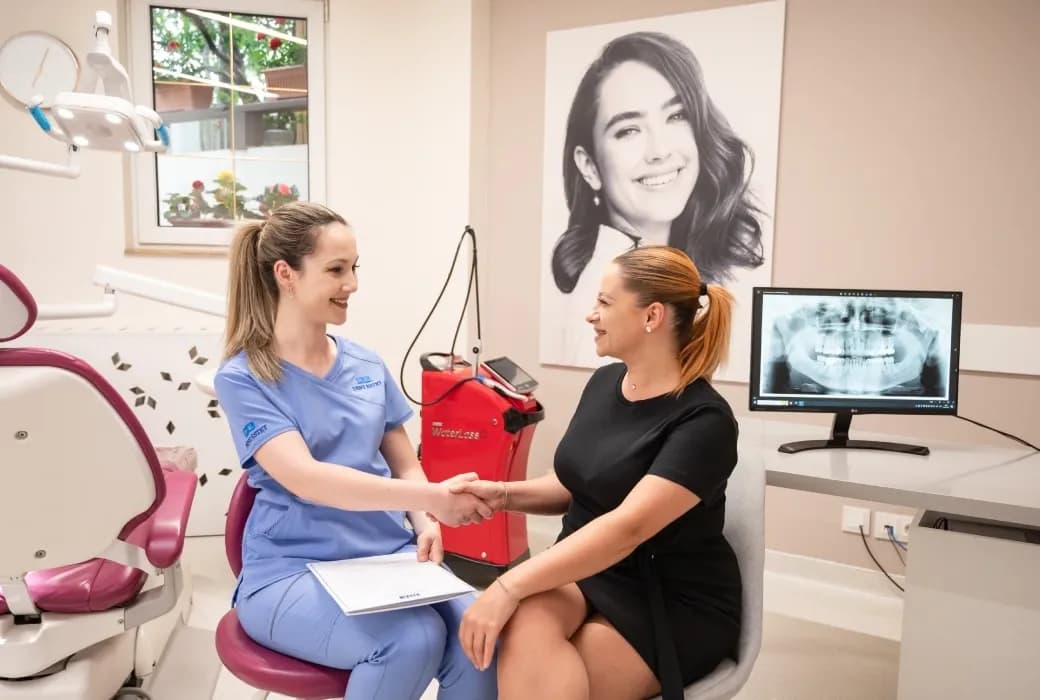
Preparation for an implant always begins in the dental office with a thorough assessment of the patient's health. During this appointment, the bone level, surrounding structures and occlusion are evaluated in order to decide on the appropriate type of implant and prosthetic work.
"This consultation lasts about an hour, during which time we provide the patient with information about the procedure, the pre- and post-operative period. We also answer any questions and curiosities they may have about dental implants. Many of our patients want to be well informed, which is encouraging. Careful preparation before dental implant treatment reduces the risk of complications and increases the success rate of osseointegration, all of which ensures proper, complete and rapid healing," says Dr. Bianca Spătaru.
During the first consultation, you will also be asked about any medication you are taking. If it is found that these interfere with the dental implant procedure, a specialist consultation with the doctor who prescribed the medication (cardiologist, diabetologist or endocrinologist, as appropriate) is necessary.
Imaging examinations
During the first consultation, specialist radiological investigations will also be carried out. Panoramic X-rays and maxillary tomography are recommended to provide a 3D image of the bone, as well as digital scans.
"These investigations provide us with information about the width and height of the bone, its density and proximity to the sinuses or nerve structures. The patient is informed about the need for additional surgical procedures before or during the application of the dental implant. If the tooth was lost a long time ago, the bone may have been resorbed, so bone grafting (augmentation or sinus lift, i.e. lifting the sinus membrane and adding bone) is used," adds Dr. Bianca Spătaru.
Additional medical tests and consultations
Dental implant treatment is a surgical procedure, which is why medical tests are necessary.
The most commonly recommended tests before implant surgery are:
- complete blood count
- coagulation tests
- blood sugar (in patients with diabetes mellitus)
- any additional tests requested by the attending physician.
In the case of patients with uncontrolled diabetes, cardiovascular disease, osteoporosis, oncological treatments or bisphosphonate therapy, it is of utmost importance to collaborate with the attending physician.
Oral hygiene before implantation
In order not to jeopardise the success of the treatment, before inserting the implant, it is recommended to perform professional cleaning, as well as other periodontal treatments, if it is necessary to remove a source of infection.
The dental implant must be inserted into an uninfected environment, and treating gum disease is a mandatory step in preparation.
"Also, if extractions of irrecoverable teeth are necessary and these will be performed in a session other than the implant insertion, a careful hygiene routine is recommended, namely the use of chlorhexidine mouthwash for approximately 2 weeks to disinfect the area. As for hygiene at home, it must be as rigorous as possible both before and after the procedure. Poor hygiene increases the risk of peri-implantitis," says Dr. Bianca Spătaru.
Medicines and preparatory treatments
Your lifestyle plays an important role in the success of dental implants, and smoking is one of the biggest risk factors. Nicotine reduces blood flow to the gums and bone around the implant, which means fewer cells are involved in the healing and osseointegration process.
For this reason, we recommend quitting smoking at least two weeks before the procedure to increase the chances of successful treatment.
We also recommend a diet rich in protein and vitamins for rapid tissue recovery after surgery and the administration of dietary supplements containing vitamin D if medical tests indicate a deficiency.
"To reduce the risk of dental infections and any discomfort, the patient receives the necessary preoperative medication. As a preventive measure, antibiotics can be administered one day or a few hours before the procedure and continued postoperatively together with anti-inflammatories to reduce swelling," explains Dr. Bianca Spătaru.
Recommendations for the day of the procedure
Before the procedure, you will receive all the necessary instructions in writing. If the procedure is performed under conscious sedation, it is important not to eat for at least 6 hours beforehand. In the case of local anaesthesia, it is recommended that you eat lightly before the procedure to avoid dizziness or low blood sugar. On the day of the procedure, choose loose and comfortable clothing, avoiding tight collars. It is advisable not to drive and to come accompanied, especially if the procedure is complex, in order to reduce stress and anxiety. For women, it is recommended to avoid cosmetics so that the area around the mouth is clean and properly prepared for the procedure.
What happens immediately after implantation?
After the procedure, you will receive a list of post-operative instructions and the necessary medication. For the first 24 hours, we recommend:
- cold compresses to prevent swelling
- a semi-solid diet: cream soups, purées at room temperature
- physical rest, no intense effort for 2-3 days
All of these, along with proper oral hygiene, will increase the success rate of the implant and help speed up healing.
"From a psychological point of view, it is absolutely normal for patients to feel nervous before the procedure. The good news is that current technology has advanced greatly, and the application of a dental implant is now a quick procedure, taking about 15-30 minutes. In most cases, the procedure is less painful than a tooth extraction. Communication with the doctor is essential. It is important for the patient to express all their fears. In cases of severe anxiety, we can resort to inhalation sedation or intravenous conscious sedation, under the supervision of an anaesthetist," explains Dr. Bianca Spătaru.
Conclusion
Dental implants are a modern and effective solution for replacing missing teeth, helping to restore a harmonious smile. Careful preparation and adherence to recommendations for constant care and maintenance create the conditions for a successful procedure with long-term results. Trust in the surgeon and active involvement in dental care facilitate a simpler procedure with significantly better results. Take full advantage of the benefits offered by dental implants and enjoy the functionality and comfort they provide.