




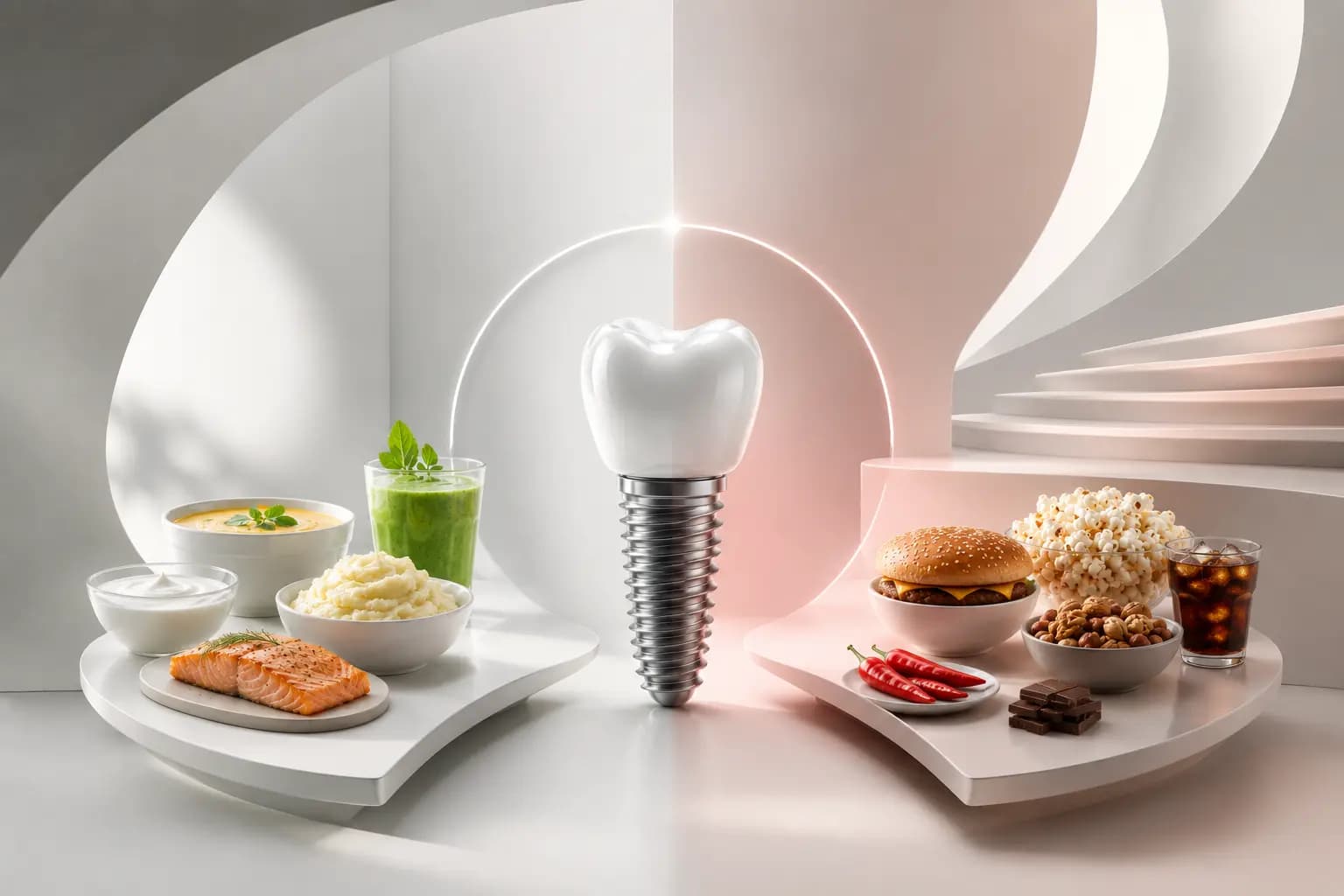
Dental implants: foods you can and cannot eat in the first few weeks
 Author:
  May 19, 2026
Diet plays a vital role in the healing process following dental implant treatment, directly influencing both post-operative comfort and the success of the implant’s osseointegration.
In the first few days after surgery, the tissues are sensitive, and the bone begins a complex process of healing and integrating the implant. At this stage, choosing the right foods is not merely a recommendation, but an important requirement for avoiding complications such as inflammation, pain or failure of osseointegration.
At DENT ESTET, patients always receive personalised advice following the procedure, but there are some general principles that contribute to a faster and safer recovery.
Why is it important to eat the right foods after a dental implant?
After a dental implant has been placed, the body enters a healing phase during which it requires optimal conditions for tissue regeneration and the integration of the implant into the bone. This process, known as osseointegration, can take several months and is essential for the long-term stability of the dental restoration.
Diet influences this process in several ways. On the one hand, certain foods can protect the operated area, reducing the risk of irritation or trauma. On the other hand, essential nutrients – such as protein, vitamin C, zinc or calcium – actively contribute to tissue regeneration and optimal healing.
Conversely, an inadequate diet can slow down healing, promote inflammation and, in more severe cases, compromise the stability of the implant.
Recommended foods and foods to avoid in the first few days after a dental implant
The first 24–72 hours are critical for stabilising the treated area. For a quick recovery without complications, please refer to the table below for a list of foods that are permitted and those that should be avoided in the first few days following dental implant treatment:
| Recommended foods | Foods to avoid |
|---|---|
| Cream soups | Alcoholic drinks |
| Vegetable or fruit purées / Smoothies | Fizzy drinks |
| Plain yoghurts | Fruit juices (due to their acidity) |
| Soft cheeses | Hard foods (nuts, hazelnuts) |
| Boiled eggs/omelettes | Sweets (caramels, sweets) |
“In the first 24–72 hours after a dental implant is inserted, the main objective is to protect the blood clot and reduce any mechanical pressure on the operated area. We recommend only soft foods at a moderate temperature, as even temperature variations or chewing on one side can affect the initial healing process.” – Dr Cătălin Mărtişcă, Specialist in Oral and Maxillofacial Surgery
Recommended and foods to avoid during the recovery period (the first few weeks)
As the discomfort subsides and the tissues begin to heal, your diet can be gradually expanded. However, even at this stage, it is important to follow the implantologist’s advice.
Here is a list of foods that are permitted and those that should be avoided:
| Foods allowed | Foods to avoid |
|---|---|
| Ripe fruit | Hard foods (tough meat, nuts, almonds) |
| Steamed vegetables | Alcohol |
| Rice, pasta | Sweets (caramels, sweets) |
| Tender meat (chicken, fish) | Spicy foods |
“During this period, patients should also pay attention to the texture and temperature of their food. Even if they aren’t hard, some foods can become problematic if they are sticky or require prolonged chewing. Furthermore, very hot dishes can increase local blood flow and exacerbate inflammation, whilst very cold foods can cause discomfort.” – Dr Cătălin Mărtişcă, Specialist in Oral and Maxillofacial Surgery
Essential nutrients for optimal healing
Beyond the texture of food, nutritional quality is essential during the recovery period.
A balanced diet, rich in these nutrients, can make the difference between slow and effective recovery:
Proteins
Protein helps repair tissues and supports cell regeneration. It can be obtained from eggs, dairy products, fish or lean meat.
Vitamin C
Vitamin C plays an important role in collagen synthesis and gum healing, and is found in fruits and vegetables such as kiwis, citrus fruits and peppers.
Zinc
Zinc supports the immune system and regenerative processes, whilst calcium helps maintain bone health and ensures the stability of the implant.
When can you return to your normal diet after dental implant treatment?
The return to a normal diet should not be sudden, but gradual, depending on the rate of recovery. Generally, after a few weeks, most patients can gradually reintroduce their usual foods, provided they do not experience any discomfort.
However, it is important that this transition is carried out carefully and under the guidance of a doctor. In some cases, particularly in complex situations or in the event of immediate stress, recommendations may differ.
Further tips for a speedy recovery after an implant
After treatment, it is recommended that you chew on the side opposite to the procedure, at least for the first 10–14 days, to avoid overloading the treated area.
There are also a few essential rules to follow to ensure a complication-free recovery.
Avoiding smoking is one of the most important recommendations, as nicotine affects blood circulation and can compromise osseointegration.
The patient must follow the dentist’s instructions regarding oral hygiene.
“The success of a dental implant depends not only on the surgical procedure, but essentially on the osseointegration period. At this stage, a proper diet, avoiding smoking and following post-operative instructions play a direct role in the long-term stability of the implant.” – Dr Horațiu Dobre, Specialist in Oral and Maxillofacial Surgery
In conclusion, diet following dental implant surgery is an essential element in the success of the treatment. Choosing the right foods, avoiding risk factors and following medical advice contribute significantly to rapid healing and the long-term stability of the implant.
At DENT ESTET, every stage of treatment is carefully planned, and patients receive comprehensive support, including during the recovery period, to ensure predictable and reliable results.
Frequently asked questions about eating after dental implants
Can I drink coffee after having a dental implant?
Coffee should be avoided in the first few days, especially if it is hot. After that, it can be gradually reintroduced at moderate temperatures.
Can I drink alcohol after the procedure?
It is not recommended in the first few weeks following the implant, as it may interfere with the healing process and the prescribed medication.
How long do I need to eat soft foods?
Generally, between 3 and 7 days, although this may vary depending on the individual case.
Is it normal to experience discomfort when chewing?
Some mild discomfort is normal in the first few days, but if it persists, it is advisable to see a doctor.