




 Author:
  May 18, 2026
Choosing the right dental veneers for your face shape is essential for achieving a harmonious and natural smile. Although recent studies show that there is not always a strict correlation between face shape and tooth shape, modern cosmetic dentistry takes into account a number of principles aimed at achieving visual balance and facial proportions.
Facial features, lip dynamics and the patient’s expressiveness are carefully analysed to create a natural and personalised result.
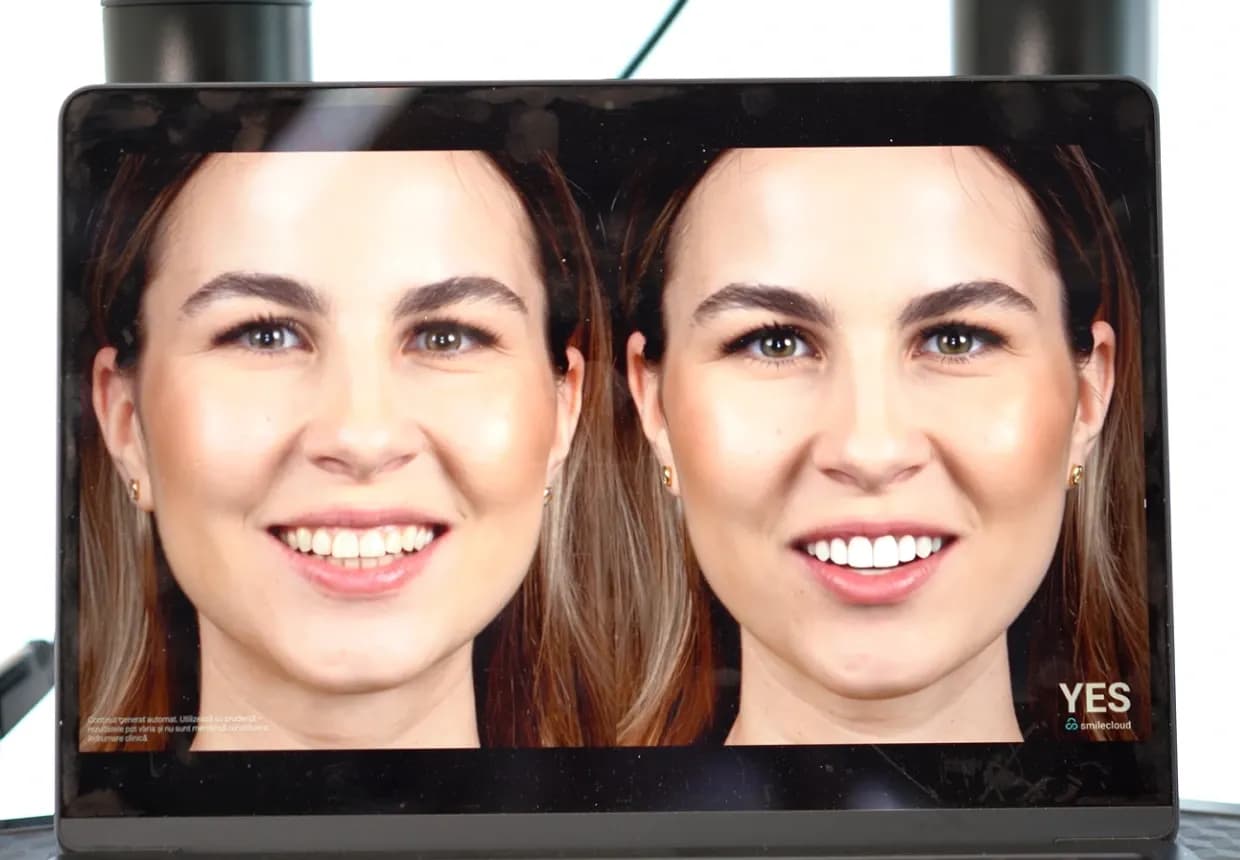
Digital technology plays an essential role in this process, particularly Digital Smile Design (DSD), a software programme that allows the final result to be previewed before treatment begins and facilitates clear communication between the dentist, patient and technician.
Why does the shape of your face matter when choosing dental veneers?
The shape of the face directly influences how a smile is perceived. In cosmetic dentistry, the aim is not to replicate a standard shape, but to create a balance between facial and dental proportions.
“The golden rule in dental aesthetics is balance. Most often, the shape of the teeth is chosen to complement or soften certain features. For example, a face with harsh lines can benefit from more rounded tooth shapes, whilst a round face can be balanced by more elongated teeth,” explains Dr Dorotheea Hotea, Cosmetic Dentist.
In practice, as a general guide, the following correlations can be taken into account:
| Face shape | Characteristics | Recommended shape of veneers |
|---|---|---|
| Oval | Balanced proportions, slightly wide cheekbones. | Suits almost any shape. Rectangular teeth with slightly rounded edges are usually chosen. |
| Round | The length and width of the face are similar. | Longer, narrower teeth to create the illusion of a slimmer face. Very rounded shapes should be avoided. |
| Square | Prominent jawline and broad forehead. | Rounded (oval) teeth to soften the harsh lines of the face and give a more feminine/gentle appearance. |
| Heart | A broad forehead and a narrow, pointed chin. | Teeth rounded at the base or even slightly shorter, so as not to make the face appear even longer. |
These recommendations are not rigid rules, but starting points. The dentist’s role is to adapt every detail to achieve symmetry and a natural look.
Other factors to consider when choosing dental veneers
The shape of the face is just one of the factors taken into account when choosing dental veneers.
The prosthodontist must also take into account other patient characteristics, namely:
- Skin tone and sclera (the white of the eye): A common mistake with dental veneers is choosing the whitest shade (bleach). However, for a natural look, the whiteness of the teeth should not be more intense than the whiteness of the eyes.
- Smile line: The curve described by the edge of the upper teeth should ideally follow the curve of the lower lip when you smile.
- Personality: Straight lines and rectangular shapes often suggest masculinity, strength or rigour. Curved lines and rounded shapes suggest femininity, delicacy and youthfulness.
Types of dental veneers and how they complement facial features
Pressed ceramic dental veneers
Pressed ceramic (or porcelain) veneers are the premium option in cosmetic dentistry, being crafted in the laboratory using high-precision digital impressions.
The main advantage of pressed ceramic veneers is their superior aesthetics. Thanks to its vitreous structure, the ceramic faithfully reproduces the translucency and light reflection of natural enamel, offering a result that is extremely close to that of a real tooth. Furthermore, the material is biocompatible and stain-resistant, meaning it retains its appearance over time.
“Ceramic is extremely resistant to abrasion and immune to stains. You can enjoy coffee, red wine or foods with intense pigments without fear that your smile will yellow over time. However, this benefit comes with a more invasive procedure, as it requires the removal of a thin layer of enamel. The lifespan of these veneers is 10–15 years.” – Dr Dorotheea Hotea, Cosmetic Dentist.
Composite veneers
Composite veneers are usually made directly in the clinic by layering a resinous material.
The major advantage is the preservation of the tooth structure, as the intervention is minimal or even non-existent.
“Treatment with composite dental veneers is quicker and more affordable, often completed in a single session. However, the material is porous, which means it will stain over time and lose its shine, requiring regular visits for polishing. Furthermore, the lifespan is considerably shorter, at around 3–7 years, and the resistance to chipping is lower.” – Dr Dorotheea Hotea, Cosmetic Dentist.
CAD/CAM veneers
Veneers made using CAD/CAM technology represent an evolution in modern dentistry. They are created using 3D scans and digital simulations, which allows for extremely high precision.
The integration of these technologies makes it possible to align dental proportions with facial features right from the planning stage. As a result, the final outcome is much more predictable and tailored to each patient.
How does the customisation process work at DENT ESTET?
The process of creating dental veneers begins with a detailed analysis of facial features and the smile. The use of digital technologies, such as Digital Smile Design (DSD), has revolutionised cosmetic dentistry, radically transforming the way patients perceive and accept their treatment plan.
Stage one: intraoral scanning and photometric analysis
The first stage is 3D intraoral scanning, which replaces traditional impressions and provides an accurate image of the dental arches.
Professional photographs are also taken from specific angles during this stage to analyse lip dynamics.
Previewing the final smile with Digital Smile Design
Using Digital Smile Design (DSD), photographs and facial proportions are analysed to create a simulation of the future smile. The technology allows the creation of a virtual model that integrates facial and dental proportions.
This allows the patient to visualise the result before treatment.
Furthermore, the DSD protocol enhances the visualisation of the relationship between the teeth, gums, lips and face whilst smiling. This approach facilitates interdisciplinary communication, enabling the technician to fabricate the veneers exactly in accordance with the simulation approved by the patient.
“Based on the data, the shape, colour and thickness of the veneers are determined, in accordance with the patient’s facial features. The psychological impact of visualising the final result before any invasive procedure begins is enormous. Patients tend to have greater confidence in the success of the procedure when they see a realistic simulation,” explains Dr Dorotheea Hotea.
Digital wax-up and mock-up
An essential step is the 3D modelling of the future veneers in specialised software and the creation of the mock-up – a physical simulation temporarily applied to the teeth, which allows for aesthetic and functional testing.
Research published in the International Journal of Esthetic Dentistry highlights that the use of digital and physical mock-ups significantly increases patient satisfaction and reduces anxiety regarding the aesthetic outcome.
Aesthetic precision and the ‘Golden Ratio’
Digital technologies available at DENT ESTET clinics use algorithms based on mathematical aesthetic principles, such as the golden ratio (1.618:1) for the width and length of the central teeth, correlated with the interpupillary distance.
A study in the Journal of Clinical and Diagnostic Research demonstrates that the use of digital guides for analysing dentofacial proportions leads to results much closer to the natural aesthetic ideal compared to traditional analogue methods.
Finally, after adjustments, the final veneers are fabricated and applied with precision.
“Although the technology offers an extremely accurate preview, long-term success still depends on the dentist’s clinical expertise and the quality of the materials (pressed or feldspathic ceramic).” – Dr Dorotheea Hotea
Tips for choosing the right veneers
The choice of dental veneers should not be guided solely by aesthetics, but also by functionality and long-term stability.
Here are some important tips for making the right choice:
Prioritise function over aesthetics
Before choosing the shape or colour, the occlusion (bite) must be assessed. If the teeth are crowded or there is an incorrect bite, the forces exerted on the veneers can lead to them becoming loose or fracturing.
Tip: Sometimes, a short course of orthodontic treatment (a few months with braces) is recommended before veneers are fitted, to move the teeth into the ideal position and minimise the amount of enamel removed.
The choice of material is important
The material from which the dental veneer is made is of great importance.
- Pressed ceramic (e.g. E-Max) is the material of choice for strength and aesthetics. It has a success rate of over 95% at 10 years.
- Feldspathic ceramic is the thinnest and most aesthetic, but is more fragile until it is cemented in place.
- Composite is a more suitable solution for minor touch-ups or limited budgets, but requires frequent maintenance.
Tip: The material should be chosen based on aesthetic expectations, as well as the desired durability and lifestyle.
Take gum health into account
Periodontal health is essential; any gum bleeding must be addressed through professional cleaning (scaling, airflow) at least 2 weeks before the impression is taken.
Find out more about the cost of scaling and airflow
If the gums are thinner, the edges of the veneer must be finished with extreme precision to avoid causing irritation or ‘black lines’ over time.
Tip: The gums should not be overlooked when choosing dental veneers, as problems may arise over time.
Phonetics is a key factor
When the mock-up (simulation of the veneers) is applied, we must pay attention not only to aesthetics but also to phonetics. Testing speech during the mock-up stage is essential to avoid subsequent discomfort.
Tip: Speak a lot. Pronounce words containing the letters ‘S’, ‘V’ and ‘F’. If the teeth are too long or too thick, you will notice difficulties in speaking. This is the stage at which adjustments are made, not on the final ceramic veneers.
Frequently asked questions about choosing dental veneers based on face shape
Do dental veneers suit every face shape?
Yes, but their shape and proportions need to be tailored to suit facial features in order to achieve a natural result.
How long does it take to produce customised facades?
The duration varies depending on the complexity, but generally the treatment can take anywhere from a few days to a few weeks, including the digital planning stage.
Which type of dental veneer is the most durable?
Pressed ceramic veneers are considered the most durable, offering superior strength and stability over time.
How much do dental veneers cost in Bucharest?
The cost varies depending on the materials, technology and complexity of the case. To ensure an appropriate treatment plan, a personalised consultation is required at a DENT ESTET clinic.