




I don’t have enough bone for an implant – can I still have fixed teeth?
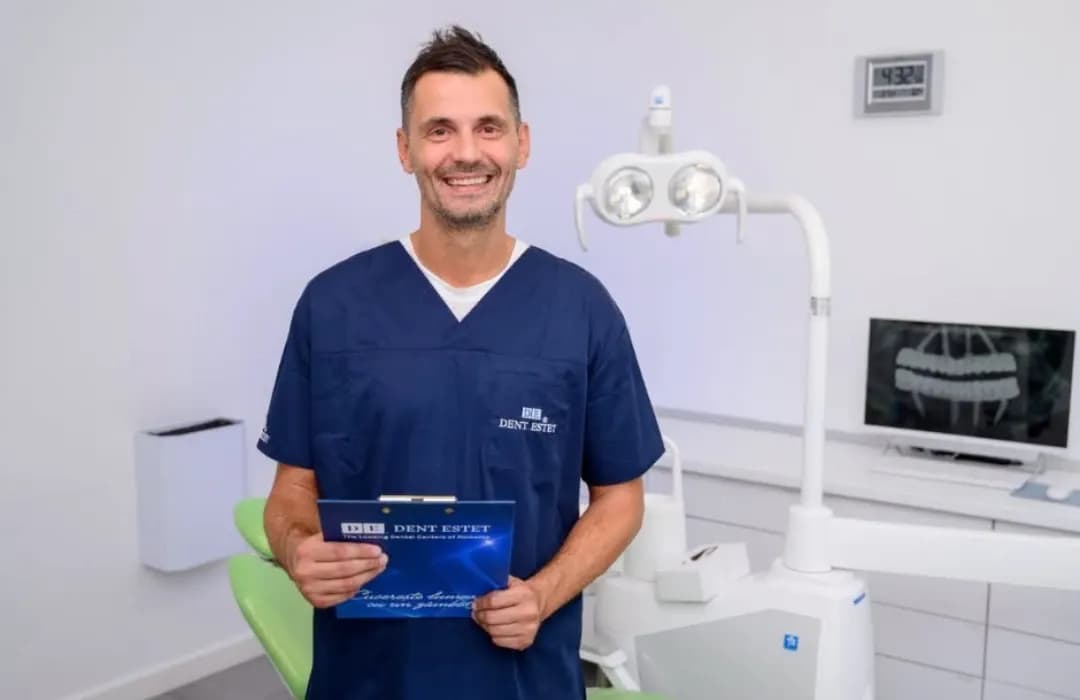
 Author: Dr. Bogdan Bumbu
 September 11, 2026
If you have attended a consultation for dental implant treatment and have been told that you “do not have enough bone,” it is natural to wonder whether fixed teeth are still an option. In reality, reduced bone volume does not automatically rule out dental implant treatment. It means that the situation needs to be carefully assessed and that the appropriate solution may differ from one patient to another.
The amount and position of the available bone, the number of teeth that need to be replaced, the condition of the gums, and the type of restoration required all influence the treatment plan. In some cases, bone volume needs to be restored, while in others, there may be solutions that make effective use of the existing bone.
In this article, Dr. Bogdan Bumbu, Senior doctor Dental and Alveolar Surgery and Specialist doctor in Oral and Maxillofacial Surgery, explains when restoring bone volume is necessary and when the patient’s anatomy allows the available bone to be used effectively.
In short:
- A lack of bone does not automatically rule out implant treatment;
- Bone grafting is not necessary in all cases;
- A CBCT scan is important for the three-dimensional assessment of the bone and anatomical structures in the treatment area;
- Depending on the anatomy, there may be several options for achieving a fixed restoration;
- Treatment must be planned on a case-by-case basis.
What does it mean if you don’t have enough bone for an implant?
The dental implant must be inserted in the correct position, surrounded by a volume of bone appropriate to the clinical situation and the future restoration. When the available bone does not allow for the proper positioning of the implant, this is referred to as a bone deficit.
Following the extraction of a tooth, the alveolar bone undergoes a natural remodelling process, which leads to a progressive reduction in the size of the alveolar ridge. These changes are most pronounced in the period immediately following extraction, but may continue over time.
Bone deficiency can have several causes. Periodontal disease can lead to the destruction of the tissues supporting the teeth, including the bone. Other factors include changes occurring after extractions, any previous infections, and the specific anatomy of the maxilla or mandible.
How is the amount of available bone assessed?
The assessment begins with a clinical consultation and a review of the patient’s medical and dental history. Three-dimensional imaging is also important for implant planning.
Computed tomography (CBCT) allows the dentist to analyse in three dimensions>
- the volume and shape of the bone
- its relationship to important anatomical structures, such as the maxillary sinus or the mandibular canal.
It is important to note that CBCT should not be presented as a method that provides an exact and standardised measurement of ‘bone density’. Its primary role is the three-dimensional assessment of the anatomy and the available volume for planning the procedure.
Can you still have fixed dentures if you’ve lost a lot of bone?
In many cases, yes. The presence of a bone deficit does not automatically mean that the only option left is a removable denture.
“Treatment depends on how much bone is present, where it is located and what type of restoration is required. The situation where a single tooth is missing is different from one where several teeth or the entire arch is missing.
In some cases, bone regeneration is required before implantation. In others, the anatomy allows for the use of implants of different sizes or their placement in areas where there is sufficient bone.” – Dr Bogdan Bumbu, Senior Consultant in Dento-Alveolar Surgery and Specialist in Dental and Maxillofacial Surgery.
Therefore, the question ‘is it possible or not?’ can only be answered correctly following a clinical, imaging and prosthetic assessment of the case.
What options are available when there is insufficient bone?
Bone augmentation
Bone augmentation serves to increase bone volume in an area where there is insufficient bone for the proper placement of the implant.
"Depending on the size and shape of the defect, there are several techniques and materials that can be used. In some cases, bone augmentation and implant placement can be carried out in the same procedure. If the defect is larger and the necessary stability of the implant in the correct position cannot be achieved, the treatment may be carried out in stages.” – Dr Bogdan Bumbu
Sinus lift
In the posterior maxilla, the amount of available bone can be affected by bone resorption and the position of the maxillary sinus.
A sinus lift is a procedure that creates the conditions for increasing the available bone height beneath the sinus. Depending on the technique and the clinical situation, bone augmentation material may also be used.
If the existing bone allows for implant stability, the implant can sometimes be placed in the same stage. In other situations, the augmentation and implantation must be carried out separately.
Can implants be placed without bone augmentation?
In certain cases, yes. Short implants may be an option when bone height is reduced and local conditions permit their use. ITI guidelines consider them a valid alternative in certain situations, including to reduce the need for augmentation procedures.
Furthermore, in the ‘Fixed Teeth in 24 Hours’ treatment, implants are positioned at an angle to make better use of the available bone and to avoid anatomical structures. This approach has specific indications and requires careful surgical and prosthetic planning.
In cases of severe bone atrophy, there are also more complex surgical solutions, reserved for carefully selected situations.
Is bone grafting always necessary?
No. There are patients for whom the available bone volume allows a solution to be found without the need for extensive bone reconstruction. In other cases, bone augmentation is necessary precisely so that the implant can be positioned correctly and to ensure favourable conditions for the desired prosthetic outcome.
The aim of treatment should not be to avoid bone augmentation at all costs. The decision must be made based on the patient’s anatomy, the optimal implant position, the complexity of the procedure and the treatment prognosis.
Planning for bone augmentation must, in turn, be based on the position where the implant is required for the future restoration.
Can I have fixed dentures fitted quickly if I have little bone?
In certain situations, immediate loading may be used, i.e. the attachment of a prosthetic restoration to the implants within less than a week of their placement. This involves a temporary fixed restoration, which will be replaced with a permanent restoration following the osseointegration process.
Key factors for immediate loading:
- bone characteristics;
- the number and distribution of implants;
- achieving adequate primary stability;
- the type of restoration;
- occlusion.
If primary stability is insufficient or the case involves significant bone augmentation, a healing period of several months may be preferred before the implants are loaded.
What do you need to find out at your implant consultation?
If you have been told that you have low bone density, the consultation should clarify a few key points:
- how much bone is available and in which areas;
- whether a bone graft is necessary;
- what alternatives are available in your case;
- how many implants are required;
- whether a fixed restoration can be carried out;
- whether there is an indication for immediate loading;
- how many stages the treatment involves;
- what the estimated timeframe is until the final restoration.
The treatment plan must be tailored to your specific case, not simply chosen based on a desire to avoid a particular procedure.
Frequently Asked Questions
Can I have an implant fitted if I don’t have enough bone?
Yes, in many cases there are solutions, but the answer depends on the volume and position of the available bone. Sometimes bone augmentation is necessary, whilst at other times there may be alternatives that make use of the existing bone.
Is it possible to have an implant fitted without bone grafting?
Yes, in certain cases. Short implants, or – in certain full-arch rehabilitation cases – strategically positioned implants, may make it possible to avoid augmentation procedures. The indication is determined on a case-by-case basis.
How long do bone grafting and healing take?
The duration depends on the type of defect, the augmentation technique, the materials used, and whether the implant can be inserted at the same time or at a later stage. There is no standard timeframe for every patient.
Can I have fixed bridges if I’ve lost a lot of bone?
There may be options available even in cases of significant bone deficiency, but these require a more complex assessment. The solution may involve bone augmentation or other implant techniques, depending on the patient’s anatomy.
Can I have fixed temporary teeth fitted straight after the implant?
In some cases, yes. The possibility of immediate loading depends primarily on the stability of the implants and the clinical circumstances of the case, and cannot be guaranteed prior to assessment and planning.
In conclusion, if you have been told by other clinics that you do not have sufficient bone for an implant, we invite you to book an appointment at the DENT ESTET clinic in Oradea.
Following an assessment, Dr. Bogdan Bumbu can determine whether bone reconstruction is necessary or whether there is another suitable option for achieving a fixed restoration.