




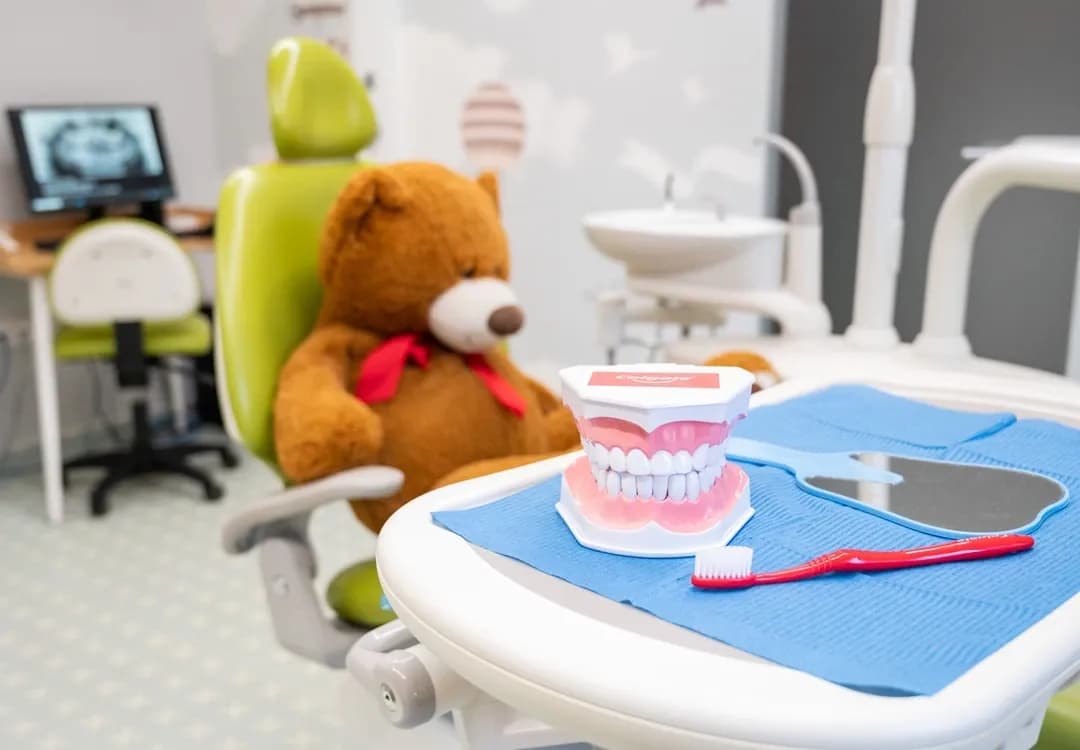
How should you use an interdental brush correctly, depending on your age?
 Author: Dr. Ruxana Teodor
 August 13, 2026
An interdental brush cleans the spaces between the teeth, where a regular toothbrush cannot reach effectively. When used correctly, it removes food debris and bacterial plaque, helping to prevent tooth decay, gum inflammation and bad breath. Thanks to its small size, the interdental brush reaches areas that are difficult for a regular toothbrush to access and helps maintain gum health.
Dr Ruxana Teodor, a paediatric dentist at the DENT ESTET 4 KIDS clinic in Sibiu, explains in this article when an interdental brush can be introduced into an oral hygiene routine, the importance of using an interdental brush by age group (children, teenagers, adults), as well as how to choose the right one.
Why is an interdental brush important for healthy gums?
An interdental brush complements regular brushing, as it cleans the spaces between the teeth, where food debris and bacterial plaque often accumulate.
Regular use of an interdental brush helps prevent gum inflammation and bleeding, as well as reducing the risk of periodontal disease. Bacterial plaque left between the teeth or at the gum line can, over time, damage the tissues and bone that support the teeth.
At the same time, cleaning the spaces between the teeth reduces the risk of cavities developing between the teeth, which can be difficult to spot in the early stages. Removing bacteria and food debris also helps to keep your breath fresh.
When incorporated into your daily oral hygiene routine, alongside brushing and the products recommended by your dentist, an interdental brush helps to maintain the long-term health of your teeth and gums.
When can an interdental brush be introduced into your oral hygiene routine?
An interdental brush can be incorporated into your daily routine when the spaces between your teeth allow it to be used safely. In most cases, your dentist will recommend the right time, type and size of brush, depending on your individual dental anatomy.
Conventional brushing mainly cleans the visible surfaces of the teeth, whilst dental floss is suitable for narrow interdental spaces. An interdental brush is particularly useful in wider or hard-to-reach areas, such as those around braces, implants or dental prostheses. These methods complement one another to ensure effective oral hygiene.
Choosing the correct size is important. A brush that is too large can damage the gums, whilst one that is too small does not clean effectively. For this reason, a dentist’s assessment is recommended.
Interdental brushes are particularly recommended for those who:
- have wider spaces between their teeth;
- suffer from gum inflammation or bleeding;
- wear fixed braces, as orthodontic wires and brackets make proper oral hygiene difficult;
- have undergone implant treatment or have dental prosthetics.
“When used correctly, it helps to reduce bacterial plaque and prevent gingivitis and periodontal disease.” – Dr. Ruxana Teodor
Interdental brushes for children: when they are suitable and how to use them
As a child’s teeth develop, it becomes necessary to clean the spaces between them as well. An interdental brush is particularly recommended for mixed or permanent dentition – that is, from the age of 5–6 years – when there are areas that are difficult to clean, wider spaces or frequent build-up of bacterial plaque and food debris.
The size of the brush should be adapted to the child’s interdental spaces:
- a model that is too large may cause discomfort or gum irritation;
- one that is too small may not clean effectively.
Therefore, the right type should be chosen on the advice of a dentist.
“Learning proper oral hygiene begins in childhood. That is why parents need to know that the toothbrush should be gently guided between the teeth, without applying pressure or forcing it, using gentle movements. At first, parents should help their child, then supervise to ensure they are using it correctly. For very narrow spaces, dental floss may be more suitable than an interdental brush.” – Dr. Ruxana Teodor
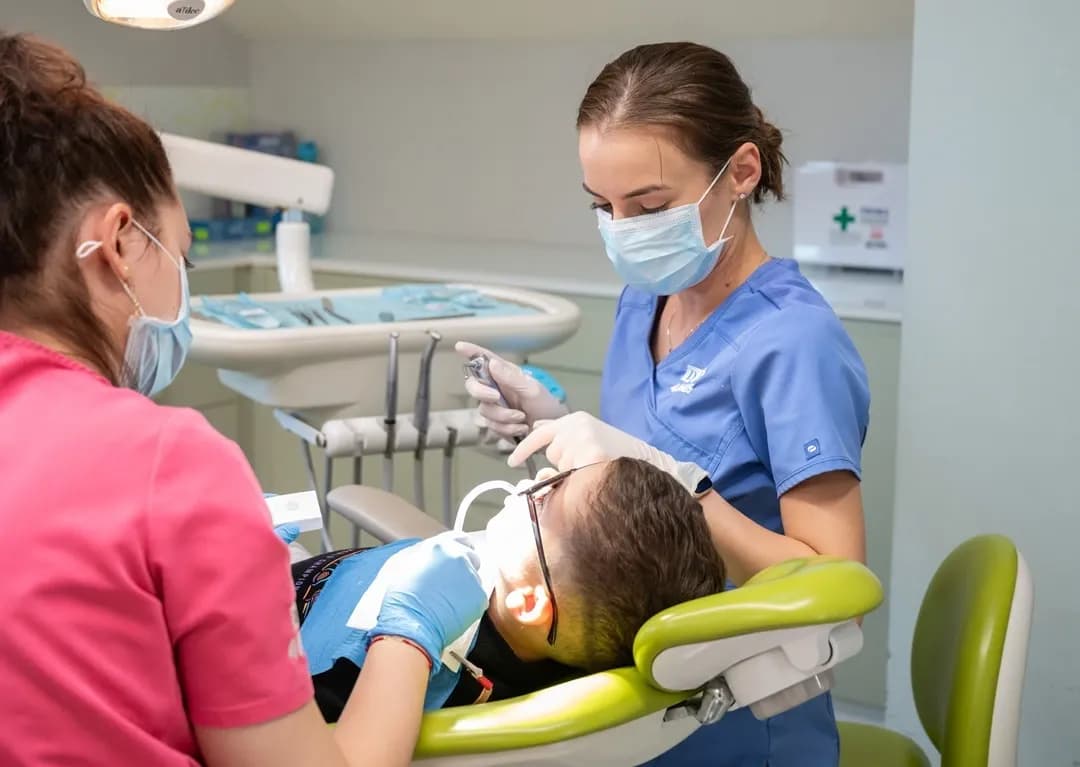
Interdental brushes for teenagers
During adolescence, interdental brushes can become an essential aid in maintaining oral health, particularly during orthodontic treatment. The brackets and wires of braces can encourage the build-up of bacterial plaque and food debris in areas that are difficult for a regular toothbrush to reach.
When used correctly, an interdental brush helps to:
- clean the spaces between the teeth and the areas around the braces;
- reduce the risk of tooth staining, gum inflammation, sensitivity and bleeding;
- prevent gingivitis;
- maintaining oral health throughout orthodontic treatment.
The size of the interdental brush should be suited to the spaces between your teeth, and it should be used with gentle movements, without applying pressure. Your orthodontist or dentist can recommend the right model and explain the correct cleaning technique.
Regular check-ups remain important for monitoring the health of your teeth and gums and for adjusting your oral hygiene routine.
Interdental brushes for adults
In adults, cleaning the spaces between the teeth is becoming increasingly important, particularly where there is:
- gum recession;
- wider interdental spaces;
- dental restorations, such as crowns, bridges and implants.
In these areas, bacterial plaque and food debris can easily accumulate, and conventional brushing does not always manage to remove them effectively.
Regular use of an interdental brush helps to:
- preventing interdental caries;
- preventing gingivitis and periodontal disease by removing bacterial plaque from hard-to-reach areas;
- maintaining healthy gums and good overall oral hygiene.
“An interdental brush is recommended for daily use, preferably in the evening, after brushing your teeth. Furthermore, for optimal results, it should be incorporated into a comprehensive oral hygiene routine, alongside toothbrushing, regular dental check-ups and professional cleanings.” – Dr. Ruxana Teodor
For effective use, it is important that the size of the brush is suited to the spaces between the teeth:
- a toothbrush that is too large can irritate the gums;
- one that is too small will not clean properly;
- a soft-bristled toothbrush is recommended for people with sensitive gums or who experience bleeding gums.
Interdental brushes for older people
As we get older, we may experience gum recession, wider gaps between the teeth and dental restorations such as crowns, bridges or implants. These changes encourage the build-up of bacterial plaque in areas that are difficult to reach with a standard toothbrush.
An interdental brush helps to clean the spaces between the teeth and the areas around dental restorations. In the case of implants, careful oral hygiene is essential for preventing gum inflammation and peri-implant problems.
When used correctly, an interdental brush helps to:
- reducing the risk of bleeding, inflammation and gum disease
- maintaining comfort when chewing and fresh breath.
For safe and effective cleaning, the size of the interdental brush should be chosen on the advice of your dentist.
How to choose the right interdental brush
Choosing the right interdental brush is important for effective and safe cleaning. The size, shape and type of bristles must be suited to the spaces between the teeth and each person’s individual needs.
Size is the most important criterion
A toothbrush that is too small does not clean effectively, whilst one that is too large can cause discomfort, irritation or bleeding gums.
The toothbrush should glide easily between the teeth, without pressure and without being forced.
The shape of the handle affects access:
- straight-handled models are useful for the front teeth;
- angled ones make it easier to clean the molars.
What sort of toothbrush do we use?
Soft-bristled toothbrushes are recommended in most cases, particularly for people with sensitive gums, gum inflammation or bleeding gums.
There are situations where medium-bristled brushes may be used, such as where there are wider spaces between the teeth or when more thorough cleaning is required, but they should be used with caution.
There are also interdental brushes designed for people with braces, implants, crowns, bridges or other dental restorations. In some cases, different sizes may be required for different areas of the teeth.
Frequently asked questions about interdental brushes
How often should you use an interdental brush?
Generally speaking, an interdental brush is used once a day, preferably in the evening, after brushing your teeth.
At what age should you start using an interdental brush?
The use of an interdental brush is recommended once mixed or permanent teeth have come through, as advised by your dentist.
Can an interdental brush replace dental floss?
The two methods can complement each other. Dental floss is useful for very narrow spaces, whilst an interdental brush works better in wider spaces.
Can I use an interdental brush if I have braces?
Yes. It is actually recommended as a cleaning method for people with braces, around the brackets and orthodontic wires.
Is it normal for your gums to bleed at first?
It is normal to experience slight bleeding when you first start using it, especially if your gums are slightly inflamed. This will subside as bacterial plaque is removed and the health of your gums improves.
Is an interdental brush recommended for dental implants?
Yes. The toothbrush is very useful for cleaning the areas around dental implants and for preventing the build-up of bacteria that can affect the health of the peri-implant tissues.