





Periodontal disease: effects on oral and general health. Treatment methods
 Author:
  September 30, 2024
Periodontal disease, also known as ‘periodontitis’, is a chronic inflammatory condition affecting the tissues that support the teeth, namely the gums and the alveolar bone. This disease is one of the main causes of tooth loss in adults and affects a large proportion of the global population, making it a major public health issue. If left untreated, it can negatively impact the success of other dental treatments, such as prosthetic rehabilitation, orthodontic treatments and dental implants.
How widespread is periodontal disease worldwide?
Studies show that periodontal disease affects around 10–15% of the global population in its severe form, though moderate or early-stage forms are far more widespread. According to the World Health Organisation (WHO), periodontal disease is one of the most common chronic diseases worldwide, affecting 50–90% of adults over the age of 35. Furthermore, this condition does not discriminate by gender, affecting both men and women in a similar way, although men appear to be slightly more prone to severe forms.
The prevalence of periodontal disease is influenced by access to dental services, education regarding oral hygiene, and socio-economic factors. However, even in countries with well-developed healthcare systems, periodontal disease remains a significant problem, particularly amongst the elderly population.
Risk factors for the development of periodontal disease
Periodontal disease has a multifactorial aetiology, the main risk factors being:
Poor oral hygiene: The build-up of bacterial plaque and tartar is the main cause of gum inflammation.
Smoking: Studies show that smokers are much more likely to develop periodontal disease and to suffer from severe forms of the condition.
Systemic diseases: Diabetes, particularly when uncontrolled, is a major risk factor due to its impact on the immune response.
Stress: Chronic stress can affect the immune system and contribute to the development of gum inflammation.
Advanced age: The incidence of periodontal disease increases with age, due to the build-up of bacterial plaque and a decline in the body’s ability to fight infections.
The impact of periodontal disease on general health
Periodontal disease affects not only oral health but also the body’s general health. Research over the past few decades has highlighted links between periodontal inflammation and a range of systemic diseases, such as:
Cardiovascular diseases: People suffering from periodontitis have an increased risk of developing cardiovascular diseases, such as heart attack and stroke. Gum inflammation can contribute to inflammation of the blood vessels and the formation of atherosclerotic plaques.
Diabetes: Diabetes and periodontal disease have a bidirectional relationship. Uncontrolled diabetes increases the risk of periodontitis, whilst periodontal inflammation can worsen blood sugar control.
Complications in pregnancy: Pregnant women with severe periodontitis are at greater risk of giving birth prematurely or having babies with low birth weight.
Respiratory diseases: Bacteria from the oral cavity can be inhaled and contribute to the development of respiratory infections, such as pneumonia.
Signs and symptoms of periodontal disease
It usually begins with mild gingivitis, which, if left untreated, can progress and lead to tooth loss. Although periodontal disease may develop without pain in its early stages, it is essential to recognise the early signs and symptoms so that we can intervene promptly to prevent serious complications.
Periodontal disease can present a variety of signs and symptoms, and these vary depending on the stage of the disease. Among the most common symptoms are: bleeding gums, swollen and red gums, gum recession, loose teeth, persistent bad breath (halitosis), pus between the teeth and gums, pain or discomfort when chewing, and changes in bite.
If you notice that your teeth no longer meet as they used to when you bite or chew, it could be a sign that periodontal disease has caused your teeth to shift.
Periodontal disease also affects the outcome of other dental treatments; however, fortunately, there are a number of effective interventions and measures to prevent complications.
1. Prosthetic rehabilitation and periodontal disease
Prosthetic rehabilitation involves the use of crowns, bridges or dentures to restore the function and aesthetics of the teeth. The success of prosthetic treatments is closely linked to periodontal health.
Periodontal disease causes the loss of supporting bone and gum recession, making it difficult to achieve adequate stability for prosthetic devices. A prosthetic restoration or crown placed on a tooth affected by periodontitis is far more likely to fail due to a lack of support.
Furthermore, if periodontal disease is not treated prior to prosthetic rehabilitation, the progression of the condition may compromise the prosthetic devices, leading to their loss. For this reason, it is essential that patients are assessed by a specialist periodontist and receive appropriate treatment for periodontal disease before any prosthetic procedure.
2. Orthodontic treatments and periodontal disease
Orthodontic treatments, such as braces, are used to correct misaligned teeth and bite abnormalities. However, when a patient suffers from periodontal disease, these treatments may present additional risks.
Periodontal disease leads to a weakening of the supporting structure of the teeth, and the application of orthodontic forces to affected teeth can accelerate bone loss and even tooth mobility. Furthermore, orthodontic appliances can make oral hygiene more difficult, which can exacerbate inflammation and the progression of periodontal disease.
To minimise risks, it is essential that periodontal disease is controlled before and during orthodontic treatment. The orthodontist may collaborate with a periodontist to ensure the stability of the supporting tissues throughout treatment. Rigorous oral hygiene and constant monitoring are essential to prevent the condition from worsening.
3. Dental implants and periodontal disease
Dental implants are an excellent solution for replacing missing teeth, but their long-term success depends largely on the patient’s periodontal health. Patients with a history of periodontal disease are at greater risk of developing peri-implantitis, an inflammation of the tissues surrounding the implant, which can lead to bone loss and, ultimately, implant failure.
Before placing a dental implant, it is essential that any signs of periodontal disease are treated and managed appropriately. A careful assessment of the condition of the alveolar bone and the health of the gums is crucial to determine whether the implant will have sufficient support.
In addition to treating pre-existing periodontal disease, maintaining strict oral hygiene and regular monitoring of the condition of the implants are essential to prevent the onset of peri-implantitis.
Prevention of periodontal disease
Prevention is essential in combating periodontal disease. Preventive measures include:
Proper oral hygiene. Regular brushing of teeth twice a day, using dental floss and mouthwash to remove bacterial plaque.
Regular visits to the dentist. Routine dental check-ups and professional cleanings are essential for preventing tartar build-up and periodontal disease.
Giving up smoking. Smoking is one of the most significant risk factors for periodontitis, and giving up smoking can significantly reduce the risk of developing the disease.
Managing chronic conditions. Keeping diabetes and other systemic conditions under control can help prevent periodontal complications.
Laser treatments: an innovative and minimally invasive method
Laser treatments have gained popularity in the management of periodontal disease due to the benefits they offer compared to traditional methods. Compared to traditional surgical methods, laser treatments are minimally invasive, meaning less pain and discomfort for the patient, as well as a shorter recovery time. The laser’s ability to sterilise the treated area and cauterise blood vessels can reduce the risk of post-treatment infection.
Their benefits in the treatment of periodontal disease include:
- Removal of bacterial plaque and tartar
- Disinfection of periodontal pockets
- Reducing inflammation and bleeding
- Stimulating tissue regeneration
- Less invasive and more comfortable procedures
- Reduced need for anaesthesia
- Reduced risk of infection
These advantages make the laser an attractive choice for treating periodontal disease, particularly in moderate and advanced cases where tissues are severely affected. However, the effectiveness of laser treatment depends on the severity of the disease and the technology used.
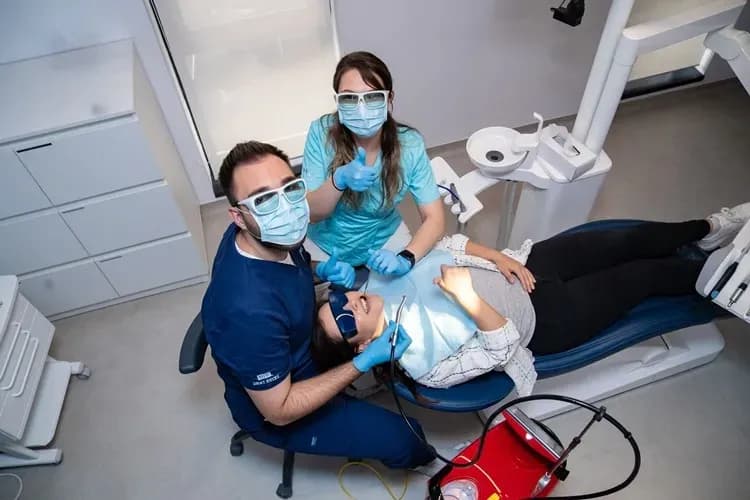
The Waterlase laser is an innovative device that combines laser energy with water and air to treat a variety of dental conditions, including periodontal disease. The main ways in which Waterlase treats periodontal disease are as follows:
1. Removal of subgingival plaque and tartar
Waterlase can effectively clean and remove bacterial plaque and tartar that have accumulated beneath the gums. The laser vaporises these deposits without affecting the surrounding healthy tissues.
2. Decontamination of periodontal pockets
Using the laser, periodontal pockets (the spaces between the tooth and gum where bacteria accumulate) are disinfected. The laser energy sterilises these pockets, destroying the pathogenic bacteria that cause inflammation and tissue damage.
3. Removal of diseased tissue
The Waterlase laser is used to remove diseased or damaged gum tissue without affecting healthy tissue. This process is precise and gentle, contributing to faster and less painful healing compared to traditional surgical methods.
4. Stimulation of tissue regeneration
The Waterlase laser can stimulate the regeneration of connective and bone tissue. By activating certain biological processes, the laser can help regenerate bone and periodontal ligaments, preventing tooth loss and improving tooth stability.
5. Reducing inflammation and bleeding
Thanks to its coagulation effect, Waterlase can reduce bleeding during and after the procedure. Furthermore, this laser minimises gum inflammation, accelerating the healing process.
6. Minimising pain and discomfort
Waterlase is minimally invasive, meaning patients typically experience less pain and discomfort compared to traditional surgical methods. In many cases, the need for anaesthesia is also reduced.
7. Shorter recovery time
Patients who opt for Waterlase laser treatment benefit from a faster recovery time, thanks to the laser’s precision and its ability to stimulate natural tissue healing.
The main advantages of the Waterlase laser in periodontal disease:
- Minimally invasive procedure
- Reduction in infections and post-operative complications
- Rapid healing and reduced post-treatment discomfort
- Ability to treat moderate and advanced cases of periodontal disease
Waterlase represents a modern and effective option for the treatment of periodontal disease, offering a comfortable and precise alternative to traditional techniques.
Maintenance therapy for periodontal disease and the frequency of follow-up visits
Although initial treatments are essential for controlling the infection and halting the progression of the disease, long-term results are achieved through a maintenance therapy protocol. This involves both rigorous oral hygiene carried out by the patient and regular visits to the periodontist for monitoring and treatment sessions. In this context, establishing the optimal frequency for recall (maintenance visits) is crucial for preventing the recurrence of the disease.
What is maintenance therapy in periodontal disease?
Maintenance therapy in periodontal disease, also known as supportive periodontal therapy, is a continuous care plan dedicated to preventing relapses and maintaining gum health after active treatment has been completed. This involves continuous monitoring of periodontal health, early identification of signs of relapse, and regular professional cleanings to remove bacterial plaque and tartar.
Maintenance therapy is an essential part of periodontal treatment, as periodontal disease is chronic and the risk of recurrence is high, particularly in patients with risk factors such as smoking, diabetes or poor oral hygiene.
Regular visits to the periodontist for maintenance therapy are essential for long-term success. During these visits, the periodontist will perform a professional clean (usually supragingival and subgingival) and assess the condition of the gums, the depth of the periodontal pockets and the presence of signs of inflammation or infection. Any changes observed can be treated promptly to prevent the condition from worsening.
How often are visits necessary?
The ideal frequency of maintenance visits depends on a number of factors, including the severity of previous periodontal disease, the response to initial treatment, the risk of recurrence, and the presence of other systemic conditions that may exacerbate the disease (such as diabetes). In general, the recommendations for the frequency of recall visits are as follows:
- Every 3 months: This is the standard frequency for most patients with periodontal disease. Studies have shown that, on average, after 3 months, pathogenic bacteria begin to reappear in quantities that can cause inflammation and tissue damage. Therefore, a professional cleaning carried out at this interval helps prevent the build-up of tartar and harmful bacteria.
- Every 4–6 months: This frequency is reserved for patients who have a lower risk of recurrence or who have had a milder form of periodontal disease. These patients have demonstrated stabilisation of their periodontal health following treatment and are able to manage bacterial plaque more effectively at home.
- More frequently than every 3 months: In certain cases, particularly for high-risk patients (smokers, diabetics, those with a history of severe bone loss or a poor response to initial treatments), more frequent visits may be necessary, for example every 6–8 weeks. This helps to ensure stricter control of the disease and prevent recurrence.
The benefits of a correctly implemented maintenance therapy
Adherence to the maintenance therapy protocol and recall appointments has numerous benefits:
- Prevention of disease recurrence
- Improved oral health
- Reducing the risk of systemic complications
Maintenance therapy is an essential element in the long-term management of periodontal disease. Establishing an appropriate frequency for recall appointments and constant monitoring are key to preventing recurrence and maintaining the health of gums and teeth. Furthermore, collaboration between dentist and patient, as well as the patient’s responsibility to maintain proper oral hygiene, are crucial to the long-term success of treatment.
Periodontal disease is a global health issue affecting millions of people, with significant consequences for both oral and general health. Prevention, access to appropriate medical care and education on oral hygiene are essential to reducing the impact of this disease on the population. Awareness and early intervention can help maintain oral health and improve the quality of life for those affected.