




 Author:
  April 8, 2026
A white, healthy smile is more than just a matter of appearance; it actually reflects the body’s overall state of health. There is already a proven link between oral hygiene and oral health, and the prevention of tooth decay, periodontal disease and even certain systemic conditions.
Although many people believe that daily brushing is sufficient, the reality is that a complete routine involves more: correct techniques, suitable products, a balanced diet and regular check-ups at the dentist.
“A white smile is important, but the health of your teeth and gums always remains the priority. In practice, many aesthetic issues are, in fact, signs of underlying conditions, which must be identified and treated correctly before any whitening procedure.” – Dr Diana Hîrjanu.
Why a proper oral hygiene routine is important
Oral health affects the whole body. Studies show that conditions such as periodontal disease can be linked to cardiovascular problems, diabetes or complications during pregnancy. Furthermore, there are studies on the link between dental conditions, such as tooth loss, and neurodegenerative diseases, such as Alzheimer’s or dementia.
In this context, it is important to note that proper oral hygiene is not limited to the teeth; it includes the gums, the tongue and the entire oral cavity. A well-established daily routine helps remove bacterial plaque and prevents the build-up of tartar.
The right daily routine for healthy teeth
Adopting the correct dental hygiene routine is essential for maintaining a healthy smile. It is important to brush correctly, clean between your teeth at least once a day, preferably in the evening, and finish by rinsing with mouthwash.
Tooth brushing – the foundation of any routine
Teeth should be brushed twice a day for at least two minutes. It is recommended to use a soft-bristled toothbrush and fluoride toothpaste.
Technique is just as important as frequency: movements should be gentle and circular to clean effectively without damaging the enamel or gums.
Dental floss and mouthwash
Brushing cannot clean the spaces between the teeth. Dental floss or a mouthwash are essential for removing food debris and bacteria from between the teeth.
Using them daily significantly reduces the risk of tooth decay and gum inflammation.
“A water flosser does not replace dental floss, but it is an extremely effective aid, especially for patients with prosthetic treatments, implants or orthodontic appliances. The water jet reaches hard-to-reach areas and helps reduce subgingival bacterial load, contributing to long-term gum health.” – Dr Diana Hîrjanu.
Mouthwash – essential for a proper routine
Mouthwash can complement your routine, especially for those prone to tooth decay or gum problems. It helps reduce bacteria and keep your breath fresh.
From a medical point of view, mouthwashes have different roles depending on their composition. Those containing antibacterial agents (such as chlorhexidine or essential oil-based compounds) help reduce bacterial biofilm and control gum inflammation. At the same time, fluoride-containing formulas support the process of enamel remineralisation and help prevent tooth decay.
It is important, however, that the use of mouthwash is tailored to each patient’s needs and does not replace brushing or interdental cleaning, but merely complements them.
Professional scaling and polishing – how often should they be carried out?
Even with proper oral hygiene at home, bacterial plaque can mineralise and turn into tartar, which cannot be removed by ordinary brushing. That is why professional scaling and polishing are essential.
General recommendation:
• once every 6 months for most patients
• more frequently (every 3–4 months) for patients with periodontal disease
“These procedures not only clean the teeth thoroughly, but also help to maintain their natural colour. At DENT ESTET clinics, we use modern, globally recognised professional hygiene techniques, such as Guided Biofilm Therapy (GBT), which ensures patient comfort and maximum effectiveness.” – Dr Diana Hîrjanu.
The best products for whitening your teeth at home
At-home teeth whitening is becoming increasingly popular, but its effectiveness and safety depend on the products used.
Types of home whitening products
- Whitening toothpastes;
- Whitening strips;
- Gels applied in mouth trays;
- Teeth whitening pens.
These products can deliver visible results, but they are limited in terms of the intensity of the whitening effect.
Advantages:
- accessible;
- easy to use;
- lower costs.
Limits:
- slower results;
- reduced effectiveness on deep stains;
- risk of tooth sensitivity.
Why professional teeth whitening remains the most effective solution
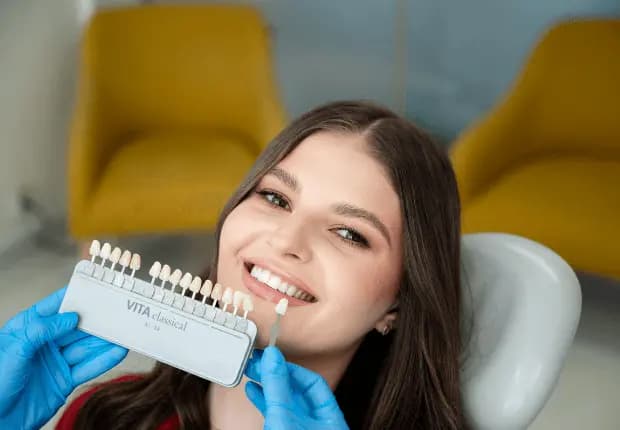
Although at-home products can help with maintenance, professional teeth whitening carried out in a clinic delivers superior results in terms of both intensity and longevity.
Unlike home-based methods, in-clinic teeth whitening involves the use of whitening agents in controlled concentrations, activated by special technologies (LED light or laser), which break down the pigments in the enamel structure effectively and safely. In addition, the soft tissues are protected, and the entire process is monitored by the dentist.
Another key benefit is the personalised nature of the treatment: the protocol is tailored to the type of discolouration (extrinsic or intrinsic), the patient’s dental history and their level of sensitivity.
At DENT ESTET, modern teeth-whitening techniques enable us to achieve a visibly whiter smile in a short space of time, safely and under the supervision of a dentist.
“In-clinic teeth whitening is a controlled and personalised process, in which we use advanced technologies such as the Beyond II Ultra lamp, a professional ultrasonic-activated accelerator. This enhances the action of the whitening gel, allowing for rapid, visible results with increased efficiency and reduced tooth sensitivity. At the same time, the treatment is tailored to each patient, ensuring both safety and comfort throughout the procedure.” – Dr Diana Hîrjanu
Foods that stain teeth and how to avoid them
The colour of your teeth is influenced not only by oral hygiene, but also by your diet.
Foods and drinks that stain teeth
• Coffee;
• Black tea;
• Red wine;
• Fizzy drinks;
• Brightly coloured fruits (blueberries, pomegranates);
• Dark-coloured sauces.
These contain pigments that can become embedded in the enamel, leading to tooth discolouration.
Solutions for preventing stains
In addition to daily oral hygiene and professional treatments, certain habits play a key role:
- rinsing your mouth with water after eating;
- using a straw for coloured drinks;
- avoiding brushing immediately after eating acidic foods;
- maintaining rigorous oral hygiene.
It is also important that your oral hygiene routine is tailored to your age and individual needs.
Habits that contribute to a healthy smile in the long term
In addition to daily oral hygiene and professional treatments, certain habits play a vital role:
- Regular visits to the dentist;
- Avoiding smoking;
- Limiting sugar intake;
- Staying properly hydrated;
- Using fluoride products.
It is also important that your oral hygiene routine is tailored to your age and individual needs.
Conclusion
A white, healthy smile is the result of a proper, consistent routine tailored to each person’s needs. Daily oral hygiene, complemented by regular visits to the dentist and professional treatments, is the key to preventing dental problems and maintaining an attractive appearance.
Investing in oral health means not only whiter teeth, but also a general sense of well-being and self-confidence.
Frequently asked questions about oral hygiene and teeth whitening
How often should I brush my teeth?
Twice a day, in the morning and in the evening, for at least two minutes.
Is brushing alone enough to ensure thorough oral hygiene?
No. Flossing and regular check-ups are essential for good oral hygiene.
Does teeth whitening damage the enamel?
When carried out correctly under a dentist’s supervision, teeth whitening is safe and does not damage the enamel.
How long do the results of teeth whitening last?
The results can last between 6 months and 2 years, depending on your lifestyle and eating habits.
Bibliography
- Milone A., Williamson K., Hall M. – Oral Hygiene and Minor Oral Disorders, McGraw-Hill Medical (AccessPharmacy)
- Casado B.G.S., Moraes S.L.D., Souza G.F.M., Guerra C.M.F., Souto-Maior J.R., Lemos C.A.A., Vasconcelos B.C.E., Pellizzer E.P. – Efficacy of Dental Bleaching with Whitening Dentifrices: A Systematic Review, International Journal of Dentistry, 2018
- Papathanasiou A., Kugel G., Perry R.D. et al. – Clinical evaluation of a 35% hydrogen peroxide in-office whitening system – Compendium of Continuing Education in Dentistry, 2002
- Dr Mark Burhenne, DDS – The Top 3 Manual Toothbrushes I Recommend to Patients – Ask the Dentist