



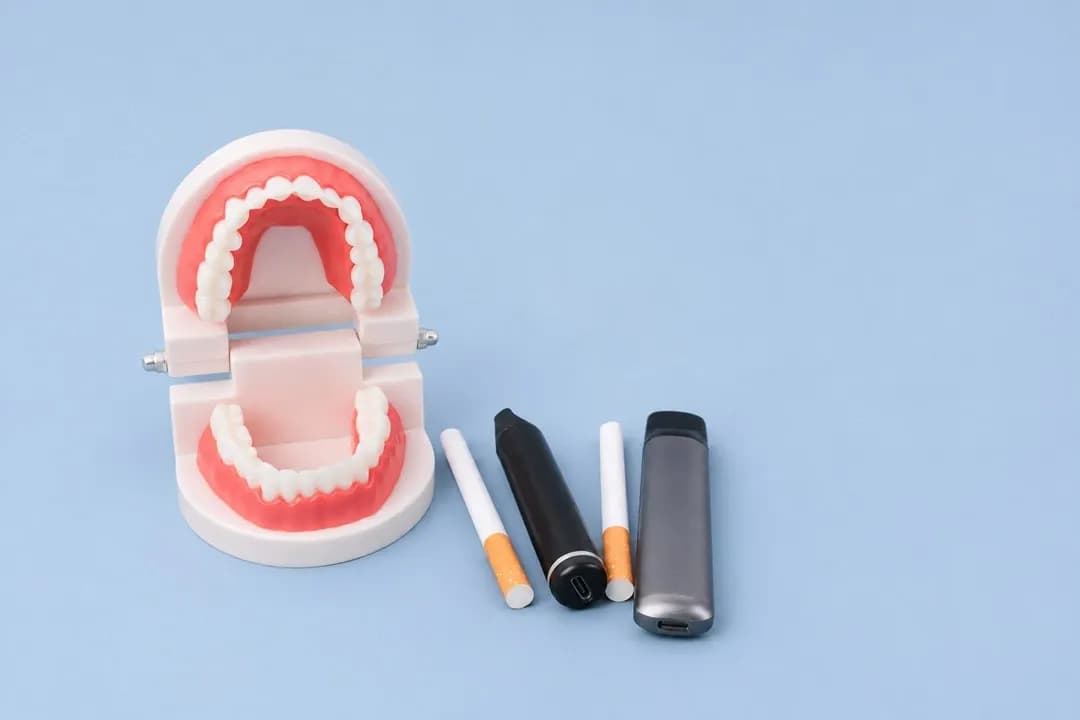
Does vaping affect your teeth and gums? What you need to know about e-cigarettes
 Author: Dr. Roberta Cmeci
 November 13, 2026
Vaping may affect the health of your teeth and gums, with some studies linking it to dry mouth, oral irritation, changes in the oral microbiome, and gum problems. Although e-cigarettes do not produce smoke through tobacco combustion, their aerosols may contain nicotine and other potentially harmful substances. The long-term effects of vaping on oral health are not yet fully understood, and vaping cannot be considered risk-free.
What is vaping and what do e-cigarettes contain?
Vaping involves inhaling aerosols produced by an electronic device that heats a special liquid. Unlike traditional cigarettes, there is no combustion of tobacco, but the resulting aerosol does not consist solely of water vapour.
The liquids used typically contain propylene glycol, vegetable glycerine, flavourings and, in many cases, nicotine. Depending on the product and the heating conditions, the aerosols may also contain other potentially irritating or toxic substances.
The absence of combustion may reduce exposure to certain substances present in cigarette smoke, but it does not eliminate the risks to oral health.
How does vaping affect your teeth and gums?
The effects of vaping on the oral cavity are still being studied. Research suggests possible changes to saliva and the oral microbiome, the development of problems such as bacterial plaque, gum inflammation and xerostomia (dry mouth), as well as a link to tooth decay.
| Possible effect on oral health | What the research shows |
| Tooth decay | Some studies have identified links between the use of e-cigarettes and the presence of tooth decay or factors that may contribute to its development. |
| Gingival inflammation and periodontal problems | Research suggests changes in periodontal parameters, but evidence regarding the extent and causality of the effects is still limited. |
| Dry mouth | Users may report a more frequent sensation of a dry mouth, which can reduce oral comfort and the protection provided by saliva. |
| Changes to the oral microbiome | Exposure to e-cigarette aerosols has been associated with changes in oral bacterial communities. |
| Irritation of the oral mucosa | Oral irritation and lesions have been reported, but not all can be directly attributed to vaping. |
Vaping and the risk of tooth decay
Some ingredients in e-liquids may influence the build-up of bacteria on the surface of the teeth, whilst the dry mouth sensation frequently reported by users may reduce the natural protection provided by saliva. Saliva plays a vital role in neutralising the acids produced by bacteria and in protecting tooth enamel.
A study published in 2021 in The Journal of the American Dental Association, which analysed data from 4,618 participants, identified an association between the use of e-cigarettes and the presence of untreated tooth decay. People who used e-cigarettes were more likely to have untreated tooth decay compared with those who had never smoked, even after taking demographic factors into account.
“Although the study does not prove that vaping directly causes tooth decay, the results suggest that this habit may represent an additional risk factor for dental health.” – Dr Roberta Cmeci, specialist in clinical periodontology at DENT ESTET Oradea
The effects of vaping on the gums and periodontal health
Vaping can affect gum health through the action of nicotine and other substances present in e-cigarette aerosols. Nicotine affects blood circulation in the gums, whilst repeated exposure to aerosols can alter the bacterial balance in the oral cavity and the inflammatory response of the tissues.
A review published in 2024 in the journal Medicina highlighted an association between the use of e-cigarettes and an increased risk of gingivitis and periodontitis. These conditions can cause inflammation of the gums and, in advanced stages, the destruction of the tissues and bone that support the teeth.
Find out more about the treatment of periodontal disease at DENT ESTET clinics
“Nicotine may reduce visible gum bleeding, but the absence of this symptom does not rule out the presence of periodontal disease. It is important for people who vape to recognise the symptoms of gingivitis and periodontal disease, such as bleeding gums, swelling or receding gums, persistent bad breath and, in advanced cases, loose teeth.” – Dr Roberta Cmeci
Dry mouth and bad breath
The sensation of a dry mouth, also known as xerostomia, is one of the symptoms reported by e-cigarette users. Repeated exposure to the aerosols produced by these devices may affect saliva production and the bacterial balance, contributing to the sensation of a dry mouth.
A systematic review published in 2026 in the Journal of Clinical Medicine identified a higher prevalence of dry mouth amongst e-cigarette users. One of the included studies reported this symptom in 33.1 per cent of users, compared with 23.4 per cent of non-smokers. The research also highlighted possible changes in salivary flow and the composition of the oral microbiome.
“Saliva plays a vital role in the natural cleansing of the oral cavity, neutralising acids and controlling bacteria. When saliva secretion is reduced, oral discomfort, the build-up of bacterial plaque and bad breath (halitosis) may occur. Persistent symptoms of this nature require a dental assessment.” – Dr Roberta Cmeci
Irritation of the oral mucosa and tooth sensitivity
Repeated exposure to aerosols may be associated with irritation and lesions of the oral mucosa. Some people who vape may experience a burning sensation, discomfort on the tongue or cheeks, and oral ulcers.
A review of the medical literature, published in 2026 in the International Journal of Paediatric Dentistry, identified associations between the use of e-cigarettes and the occurrence of oral mucosal lesions, including ulcers. However, the researchers emphasise that the available evidence is still limited and does not allow a direct causal relationship to be established.
"Tooth sensitivity can have many causes, such as gum recession, enamel erosion or tooth decay, and should not automatically be attributed to vaping. Lesions of the oral mucosa that persist for more than two weeks require a dental assessment." – Dr Roberta Cmeci

Are e-cigarettes less harmful to teeth than traditional cigarettes?
Traditional smoking is a well-documented risk factor for periodontal disease, affecting the immune response, blood flow in the gums and tissue healing.
E-cigarettes do not produce smoke through combustion and may result in lower exposure to certain toxic substances compared with conventional cigarettes. However, this does not mean that they are safe for teeth and gums.
Studies on vaping are relatively recent, and the effects of long-term exposure are not yet fully understood. Furthermore, the results may be influenced by participants’ smoking history and the concurrent use of both types of products.
Therefore, e-cigarettes should not be regarded as a risk-free alternative for oral health.
How can you prevent dental problems associated with vaping?
Giving up vaping is the most effective way to eliminate exposure to e-cigarette aerosols. At the same time, good oral hygiene and regular monitoring of dental health are essential.
Recommendations include:
- Brushing your teeth twice a day with fluoride toothpaste.
- Cleaning between your teeth every day.
- Staying properly hydrated, especially if you experience a dry mouth.
- Limiting sugary foods and drinks.
- Regular dental check-ups and professional cleanings, depending on individual needs.
These measures help to prevent dental problems, but do not negate the potential effects of vaping.
What dental treatments might be necessary if you vape?
Using e-cigarettes does not automatically mean that dental treatment is required. Recommendations depend on the condition of your teeth and gums, as determined during your consultation.
Professional dental cleaning and the prevention of tooth decay
Professional scaling and polishing help to remove tartar and bacterial build-up that cannot be completely eliminated through home oral hygiene.
Your dentist can assess your individual risk of tooth decay and recommend additional preventive measures, including fluoride products, as required.
Treatment of gingivitis and periodontal disease
If signs of gingival inflammation or periodontal disease are identified, treatment is tailored to the severity of the condition.
This may include professional cleaning, non-surgical periodontal treatment and regular monitoring. Managing risk factors, including nicotine use, is important for maintaining the results.
Frequently asked questions about vaping and oral health
Does nicotine-free vaping affect your teeth and gums?
Yes, it may pose risks. Even without nicotine, aerosols may contain irritants, and their effects on oral tissues are still being studied.
Can vaping cause gum recession?
There is insufficient evidence to suggest that vaping directly causes gum recession. This can have several causes, including periodontal disease and trauma caused by brushing.
Do e-cigarettes stain your teeth yellow?
E-cigarettes do not produce the same deposits associated with tobacco smoke, but the possibility of discolouration cannot be ruled out. Smoking is one of the causes of yellowing teeth, as are ageing, frequent consumption of foods and drinks containing pigments, and poor oral hygiene.
Can vaping affect healing after a tooth extraction or an implant?
Nicotine can affect healing processes, and the use of e-cigarettes raises concerns regarding post-operative recovery. Although the impact of smoking on dental implants is well documented, the effects of vaping on implant osseointegration and post-operative healing are still being studied.
To reduce the risk of complications, it is recommended that you avoid vaping during the healing period following a tooth extraction or implant placement and that you follow your dentist’s instructions.
What happens to your oral health once you stop vaping?
Quitting eliminates ongoing exposure to e-cigarette aerosols. Some symptoms, such as dry mouth or oral irritation, may improve, but existing dental and periodontal problems require assessment and, where necessary, treatment.
Conclusion
Vaping may be associated with changes in oral health, including dry mouth, irritation and gum problems. Although the long-term effects are still being studied, the absence of combustion does not mean there are no risks.
If you vape and notice bleeding gums, persistent bad breath, a dry mouth or other changes in your mouth, book an appointment at DENT ESTET for a personalised assessment.
Bibliography
- Vemulapalli, S. Mandapati, A. Kotha, S. Aryal – Association between vaping and untreated caries – A cross-sectional study of data from the 2017–2018 National Health and Nutrition Examination Survey, The Journal of the American Dental Association, 2021
- Alin M. Iacob 1, Matías F. Martínez et al. – Effects of Vape Use on Oral Health: A Review of the Literature, Revista Medicina, 2024
- Machuca-Portillo, C. Caleza-Jiménez 1 and others – Association Between E-Cigarette Use (Vaping) and Oral Health in Adolescents and Young Adults: A Systematic Review, Journal of Clinical Medicine, 2026