




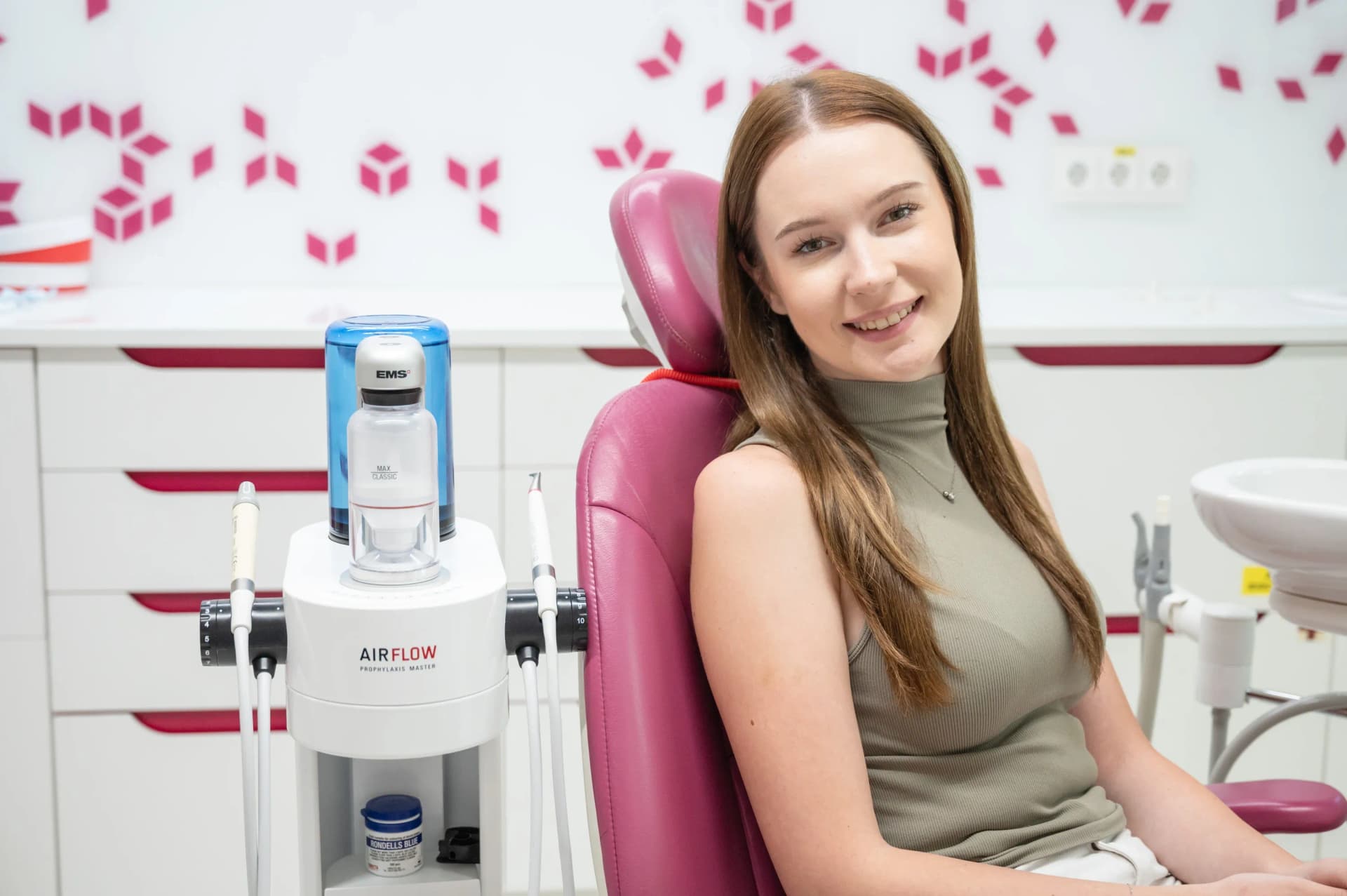
Dental Air Flow: What it is, benefits, procedure and price
 Author:
  April 25, 2025
What is Air Flow and how does it work?
Air Flow is a modern and effective method of professional dental prophylaxis, used to remove bacterial plaque from the surface of the teeth. Unlike traditional scaling, which focuses on removing tartar deposits, Air Flow specifically targets the removal of stains and soft deposits, such as bacterial plaque and extrinsic stains.
The Air Flow procedure uses a special device that projects a controlled jet consisting of a mixture of:
- Water, which helps to wash away and remove deposits,
- Sodium bicarbonate or glycine, in the form of fine particles that act as a gentle yet effective cleaning agent.
- Air, which accelerates the jet and helps propel the particles.
This jet is directed towards the surface of the teeth, including areas that are difficult to reach with a toothbrush or other oral hygiene tools, such as the interdental spaces and gingival sulci. Fine particles of sodium bicarbonate or glycine effectively remove bacterial plaque, stains and soft deposits without damaging the tooth enamel.
The benefits of Air Flow for the health and appearance of your smile
Air Flow is not just a cleaning procedure, but an investment in the long-term health of your teeth and gums, with a visible impact on the aesthetics of your smile. This modern technique offers a number of significant benefits.
The Air Flow jet is capable of cleaning hard-to-reach areas, such as interdental spaces, gingival sulci and the surfaces of teeth with orthodontic appliances. It is a biocompatible and safe procedure that is well tolerated by most patients.
At DENT ESTET clinics, we use state-of-the-art Air Flow technology, tailored to the specific needs of each patient, ensuring optimal results in a wide range of clinical situations:
Removal of stains and superficial discolouration
One of the most appreciated benefits of Air Flow dental treatment is its ability to effectively remove stains and discolouration from the surface of the teeth. These stains can be caused by:
- Drinking coffee, tea or red wine
- Smoking
- Certain foods and drinks
- Tartar build-up
- Genetic factors
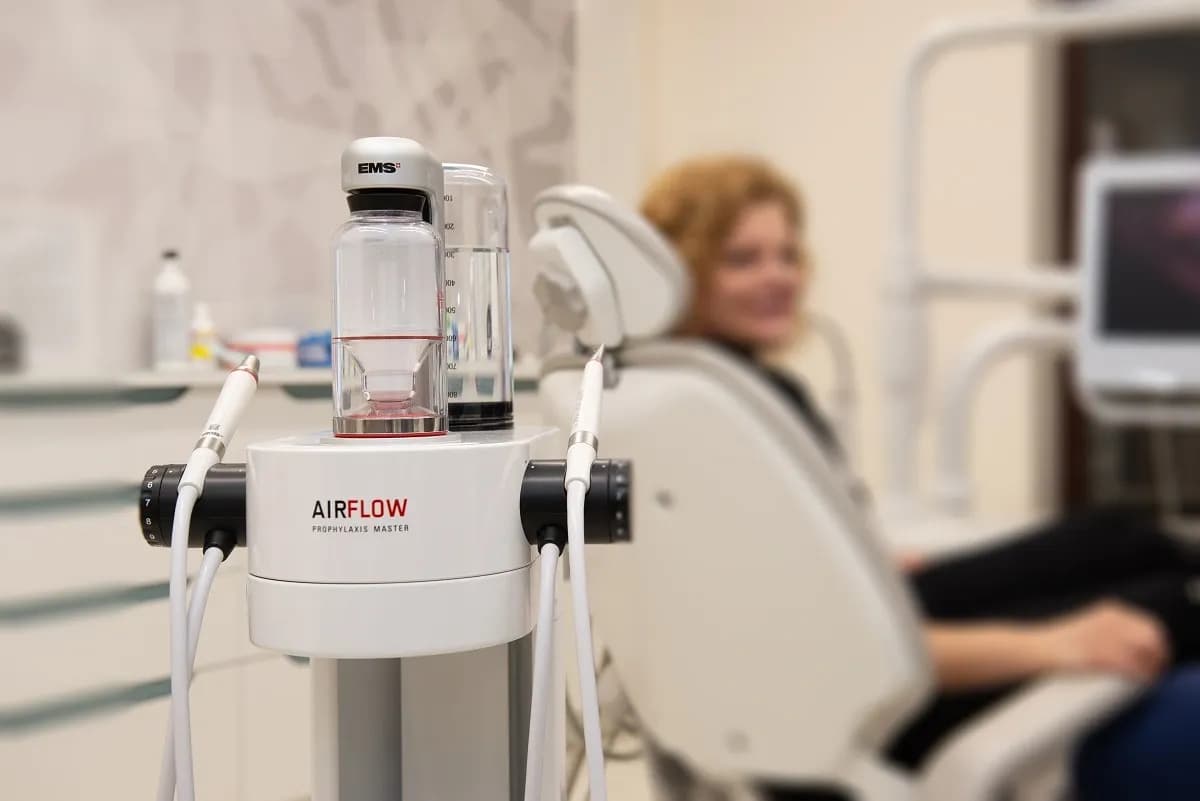
Unlike traditional methods, Air Flow uses a fine jet of particles to remove these stains without damaging the tooth enamel. The result is a noticeably brighter and cleaner smile, with a significant improvement in appearance.
Improving gum health
Dental Air Flow also plays an important role in maintaining gum health. The procedure helps to:
Removing bacterial plaque: Bacterial plaque is the main cause of gum inflammation (gingivitis) and periodontal disease. Air Flow effectively removes bacterial plaque, even from hard-to-reach areas.
Reducing inflammation: By removing bacteria and toxins, Air Flow helps reduce gum inflammation, preventing bleeding and discomfort.
Prevention of periodontal disease: If left untreated, gingivitis can progress to periodontitis, a serious condition that can lead to tooth loss. Air Flow, as part of a regular professional cleaning routine, helps prevent this progression.
Preparing for teeth whitening
Dental Air Flow is often recommended as a preparatory step for professional teeth whitening procedures. By removing stains and deposits from the surface of the teeth, Air Flow allows the whitening agent to work more effectively and evenly. This leads to:
Better results: Whitening is more effective on a clean tooth surface.
Uniformity: It prevents uneven whitening caused by the presence of stains.
Enamel protection: Air Flow prepares the teeth for whitening without damaging them
In conclusion, dental Air Flow offers benefits for both oral health and the aesthetics of the smile, from stain removal and improved gum health to optimising the results of teeth whitening procedures.
Clinical indications: When is Air Flow treatment recommended?
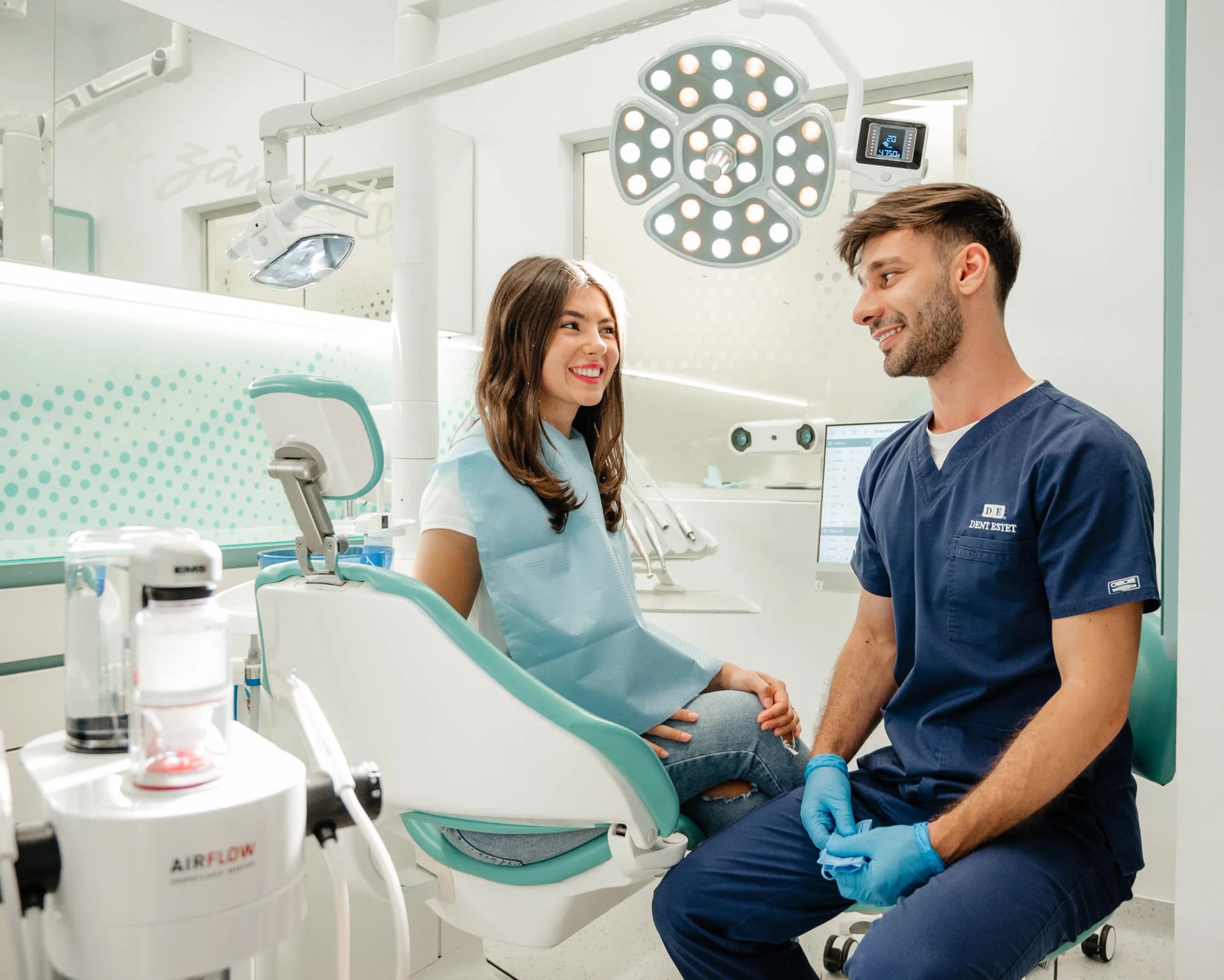
Dental Air Flow is a versatile procedure with numerous applications in dentistry. At DENT ESTET, we recommend Dental Air Flow in a variety of clinical situations to ensure optimal oral health and an attractive smile. Here are some of the main indications:
At DENT ESTET clinics, we carry out a professional cleaning session using Air Flow prior to any dental treatment, whether it involves dental implants, prosthetic work, fillings or root canal treatments.
We believe this is the only way to ensure that we remove dental plaque, tartar and bacterial deposits, reducing the risk of contamination and subsequent infections. We also recommend Air Flow cleaning before applying dental sealants or orthodontic treatments, to ensure optimal adhesion of the materials and better results.
Before fitting braces
Fitting braces requires a perfectly clean tooth surface. Dental Air Flow is essential at this stage as it removes bacterial plaque and tartar, ensuring optimal adhesion of the orthodontic brackets. This reduces the risk of tooth decay during orthodontic treatment, a period when oral hygiene can be more difficult.
For patients with dental implants
Patients with dental implants require special care to maintain the health of the tissues surrounding the implant. Air Flow is a safe and effective method for these patients, as it cleans the surface of the implants effectively yet gently without damaging them.
In this way, we take every possible measure to prevent peri-implantitis, an inflammation of the tissues surrounding the implant that can lead to its loss. By maintaining the health of the soft tissues, Air Flow helps to keep the gums around the implants healthy.
For smokers and coffee drinkers
Smoking and regular coffee consumption can lead to unsightly stains on the surface of the teeth, which are difficult to remove using traditional brushing methods. Dental Air Flow is an ideal solution for these patients, as it removes stubborn stains caused by nicotine and caffeine. It can also motivate patients to maintain better oral hygiene, with the aim of preserving the aesthetic appearance of their smile.
In addition to these specific indications, dental Air Flow is also recommended as part of a regular dental prophylaxis routine, to maintain optimal oral health and prevent the onset of dental problems.
Air Flow vs. traditional scaling: differences, benefits and price
At DENT ESTET, we are committed to offering our patients the most advanced and effective methods of dental prophylaxis. To this end, we compare the Airflow Prophylaxis Master from EMS with traditional professional scaling and polishing, highlighting the differences and benefits of each procedure.
What is the Air Flow Prophylaxis Master from EMS?
The Airflow Prophylaxis Master is a modern dental prophylaxis system that uses a combination of air, water and fine powder to remove biofilm, stains and soft deposits from the surface of the teeth. The EMS system features technologies such as AIRFLOW®, PERIOFLOW® and PIEZON®, which enable effective and minimally invasive cleaning of teeth, gums and hard-to-reach areas. The procedure is more comfortable for patients, being less invasive than traditional methods. It has the advantage of effectively removing stains and biofilm, including in hard-to-reach areas. It can be used for various applications, including cleaning natural teeth, implants and orthodontic appliances.
What does classic professional scaling and polishing involve?
Scaling is the procedure of removing tartar (hard deposits) from the surface of the teeth, carried out using manual instruments. Traditional professional polishing involves the use of an abrasive paste and a rotating brush to smooth the surface of the teeth and remove superficial stains.
These methods have numerous limitations. They are far more invasive as they are applied mechanically. Consequently, traditional scaling can be uncomfortable and may cause tooth sensitivity. For certain types of dental conditions, traditional instruments are insufficient to access all areas, particularly in patients with periodontal problems or orthodontic appliances.
Furthermore, the method is limited in its effectiveness, removing only tartar, but it is not as effective at removing biofilm and superficial stains as Air Flow.
Both the Air Flow Prophylaxis Master from EMS and professional scaling and polishing have their place in maintaining oral health. At DENT ESTET, we recommend the Airflow Prophylaxis Master for its superior benefits in terms of comfort, efficiency and versatility. Discuss with your dentist to determine which is the most suitable option for your specific needs.
The cost of the Air Flow procedure
Although Air Flow has a higher cost due to its advanced technology, it offers long-term benefits by preventing dental problems. Whilst at first glance the lower cost of traditional procedures may seem more attractive, these often require additional procedures to address problems caused by bacterial plaque or stains.
At DENT ESTET clinics, the price of Air Flow procedures varies depending on the clinical case.
Air Flow prophylaxis sessions, generally applicable to patients as part of routine clean-ups, are carried out using the EXCLUSIVE EMS Airflow® Prophylaxis Master. In addition to Air Flow, the session includes supragingival and subgingival Perioflow, as well as scaling with Piezon. The protocol was developed by the Swiss company EMS and is known as Guided Biofilm Therapy. At the end, you will also receive personalised recommendations for improving your home dental hygiene routine.
For patients wearing braces, the Air Flow prophylaxis procedure is recommended to be carried out more frequently, depending on individual needs. The reason is that braces with fixed brackets make brushing more difficult. To avoid the risk of demineralisation, it is recommended that plaque and tartar be removed more frequently. At DENT ESTET clinics, prophylaxis sessions during orthodontic treatment are called Ortho Cleaning. The price of the procedure is lower than for general procedures.
How does a dental Air Flow treatment work at DENT ESTET?
At DENT ESTET clinics, the Air Flow dental procedure is carried out by a dentist following a clearly defined protocol known as Guided Biofilm Therapy, using EMS Air Flow Prophylaxis Master technology.
The steps in this procedure include:
- Initial consultation: The dentist examines the patient’s mouth to assess the general condition of the teeth and gums and to determine whether Air Flow is suitable. The patient’s expectations are also discussed, as well as the need to adapt the procedure to any pre-existing dental conditions.
- Protection: To protect the patient’s eyes from fine particles and the air jet, protective goggles are fitted. A protective gel is also applied to the lips. For patients with tooth sensitivity, an anaesthetic gel may also be used.
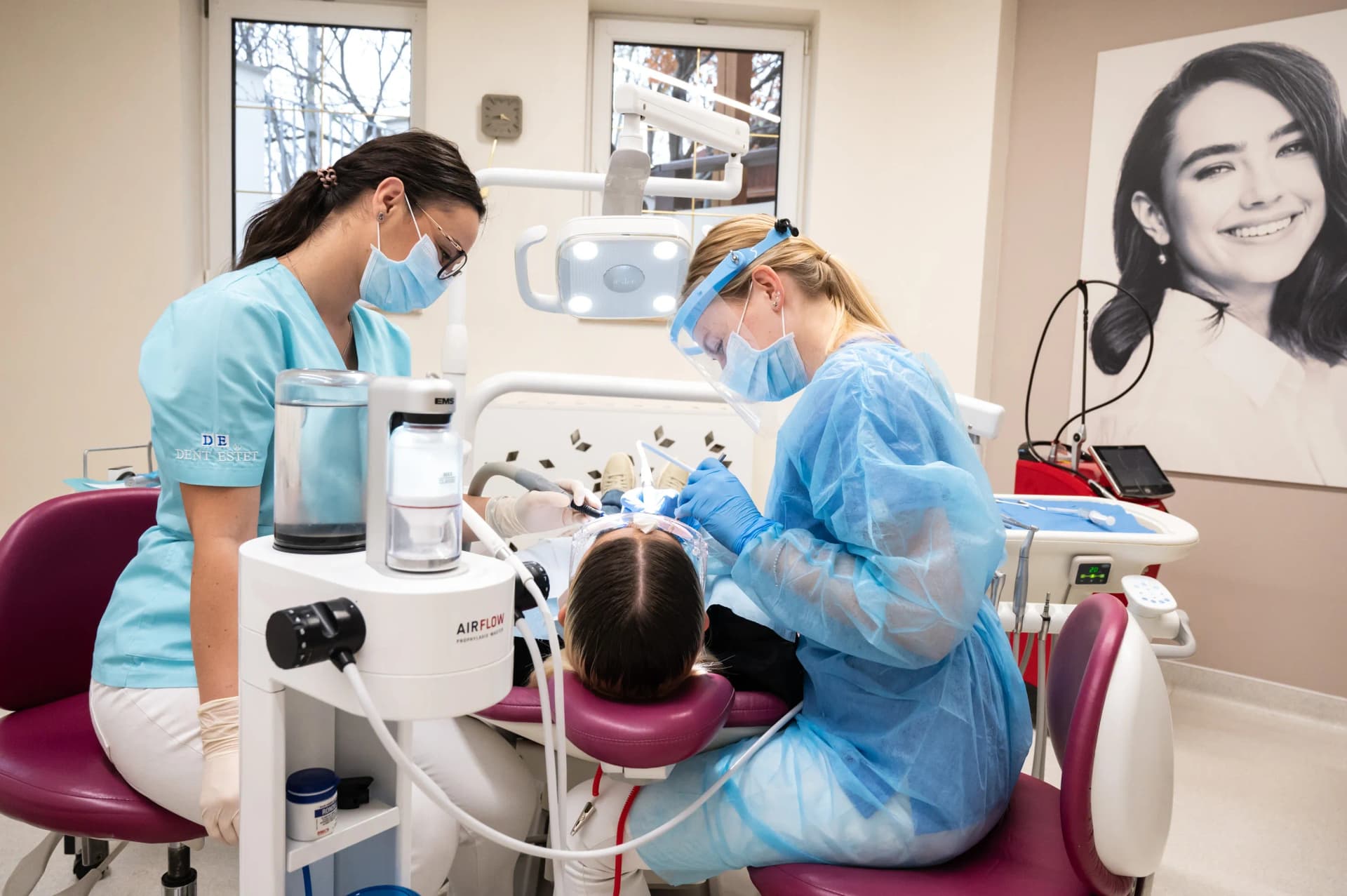
- Tartar removal: If the Air Flow treatment was not sufficient to completely remove tartar deposits, the dentist will use a special handpiece called the PIEZON® PS. This handpiece is also used to remove subgingival tartar.
- Rinsing: After the bacterial plaque and tartar have been removed, the patient rinses their mouth thoroughly with water to remove any residue.
- Fluoride application (optional): To protect the tooth enamel and reduce sensitivity, a fluoride gel or solution may be applied.
- Post-treatment instructions: The dentist provides the patient with instructions on oral hygiene at home, including brushing techniques and the use of dental floss, and recommends scheduling regular check-ups to maintain oral health.
The entire procedure takes between 45 minutes and an hour, depending on the extent of the build-up. Patients may experience slight sensitivity during the procedure, but this subsides quickly.
What to expect after Air Flow cleaning
After a professional Air Flow cleaning, most patients enjoy a sensation of freshness and intense cleanliness. As it is a non-invasive procedure that is gentle on the enamel, recovery is quick, with no significant pain or discomfort. However, there are a few important points to bear in mind to maintain the results for as long as possible.
Mild temporary sensitivity. Some patients may experience mild tooth sensitivity immediately after the procedure, particularly if there are areas of gum recession or thinned enamel. This is, however, short-lived and resolves on its own within a few hours.
Avoid coloured foods for 24 hours to prevent stains from reappearing on the freshly cleaned surface of your teeth. It is recommended that you avoid coffee, black tea, red wine, coloured juices or strongly pigmented foods for at least 24 hours after treatment.
Maintain the oral hygiene routine recommended by your dentist. After Air Flow, your teeth are more receptive to the benefits of proper hygiene. Brushing twice a day, using dental floss and alcohol-free mouthwash will help maintain the results achieved in the clinic.
Regular visits to the dentist. Air Flow does not replace routine check-ups. At DENT ESTET, we recommend that this procedure be incorporated into your professional cleaning plan, twice a year, or as advised by your dentist.
A brighter smile and fresher breath. Immediately after treatment, you will notice a visible difference in the appearance of your teeth and noticeably fresher breath. This is an excellent opportunity to regain confidence in your smile!
Frequently asked questions about Air Flow
How long does an Air Flow Dentar preventive treatment take at DENT ESTET?
An Air Flow dental cleaning procedure takes, on average, between 45 and 60 minutes.
The duration may vary depending on the level of bacterial plaque and the stains present on the teeth.
Is the Air Flow treatment painful?
No, Air Flow is a painless and non-invasive procedure.
Most patients experience only a slight sensation of pressure or a refreshing feeling. For those with sensitive teeth, desensitising gels can be applied for added comfort.
How often is it recommended to come back for an Air Flow treatment?
Air Flow is generally recommended once every six months as part of a professional dental clean.
In cases such as smoking, wearing braces or periodontal disease, the frequency may be adjusted by your dentist.
What are the advantages of Air Flow compared to other professional sanitisation methods?
Air Flow effectively removes plaque and stains without damaging the enamel.
Key benefits:
- removes stains caused by coffee, tea or tobacco
- cleans hard-to-reach areas, including the spaces between teeth
- involves no direct contact with hard instruments
- offers a high level of comfort for the patient
- complements scaling for comprehensive dental hygiene
Are there any contraindications for the Air Flow dental treatment?
Air Flow is safe for most patients, but there are a few contraindications.
These may include:
- allergies to certain types of powders (e.g. bicarbonate of soda)
- respiratory conditions
- severe gum disease requiring prior treatment
The correct indication is determined by the doctor following a consultation.
How can you maintain the results achieved through professional cleaning with Air Flow?
The results are maintained through proper oral hygiene and regular check-ups.
Recommendations:
- avoid coloured foods and drinks for the first 24 hours
- brush your teeth twice a day
- floss daily
- attend regular check-ups
- avoid smoking
Is Air Flow suitable for children?
Yes, Air Flow is suitable for children, usually from the age of 6.
It is a gentle and quick cleaning method, particularly recommended for children with braces or who are prone to plaque build-up.
What types of Air Flow Dentar are available, and which one is right for me?
There are several types of dental Air Flow, chosen according to each patient’s needs.
Main types:
- sodium bicarbonate – for removing stubborn stains
- glycine – for patients with sensitive gums
- erythritol – for gentle cleaning and periodontal treatments
The right type is chosen in consultation with your dentist.
Bibliography
- Nancy K. Richardson, MSEd, RDH, ‘5 reasons to adopt air polishing using AIRFLOW Therapy’, DentistryIQ, 16 July 2019
- Dr Nadine Strafela-Bastendorf and Dr Klaus-Dieter Bastendorf, Update on Airflow Technology, PLAQUE N CARE Vol. 15, 165–167, Issue 03, September 2021.
- Nancy K. Richardson, MSEd, RDH, AIRFLOW Therapy: The better way, DentistryIQ, 11 July 2019
- CLINICAL EVIDENCE FOR AIR-FLOW® PERIO ON NATURAL TEETH AND IMPLANTS SCIENTIFIC LITERATURE IN PERIODONTOLOGY, 4-26, Hu-Friedy and EMS
- Momen A. Atieh BDS, MSc, DClinDent, PhD, Aisha Almatrooshi BDS, Maanas Shah BDS, MSD, CAGS, Haifa Hannawi BDS, DClinDent, PhD, FRACDS, Andrew Tawse-Smith DDS, CertPeriodontology, PhD, Nabeel H. M. Alsabeeha DMD, MSc, MFDS RCPS (Glasg), PhD, Airflow for initial nonsurgical treatment of peri-implantitis: A systematic review and meta-analysis, onlinelibrary.wiley.com, 13 February 2022
- Atieh MA, Almatrooshi A, Shah M, Hannawi H, Tawse-Smith A, Alsabeeha NHM. Airflow for initial non-surgical treatment of peri-implantitis: A systematic review and meta-analysis. Clin Implant Dent Relat Res. 2022 Apr;24(2):196-210. doi: 10.1111/cid.13072. Epub 13 February 2022. PMID: 35156296.
- Ruth Christophel, Marcel Donnet and Neha Dixit (2023), "Keep your teeth for life, but how?", Open Access Government July 2023, pp.212-213. Available at https://www.openaccessgovernment.org/article/teeth-cleaning-airflow-plus-biofilm-oral-health/163413/.
- Donnet M. (2022). A novel method shaping the future of oral hygiene. Research Outreach, 128. Available at: https://researchoutreach.org/articles/a-novel-method-shaping-the-future-of-oral-hygiene/
- Klein R. Exploring the Role of Aerodynamics in Dentistry: A Scientific Perspective. RRJ Dental Sci. 2024;12:008
- Khursheed, Dler Ali1; Muhsin, Bnar Mohammed2; Rauf, Aras Maruf3. Potential for Spatial Laminar Airflow to Prevent Interdental-Chair Contamination in Multichair Dental Operatories. Dental Hypotheses 12(3):pp. 161–167, Jul–Sep 2021. | DOI: 10.4103/denthyp.denthyp_47_21