




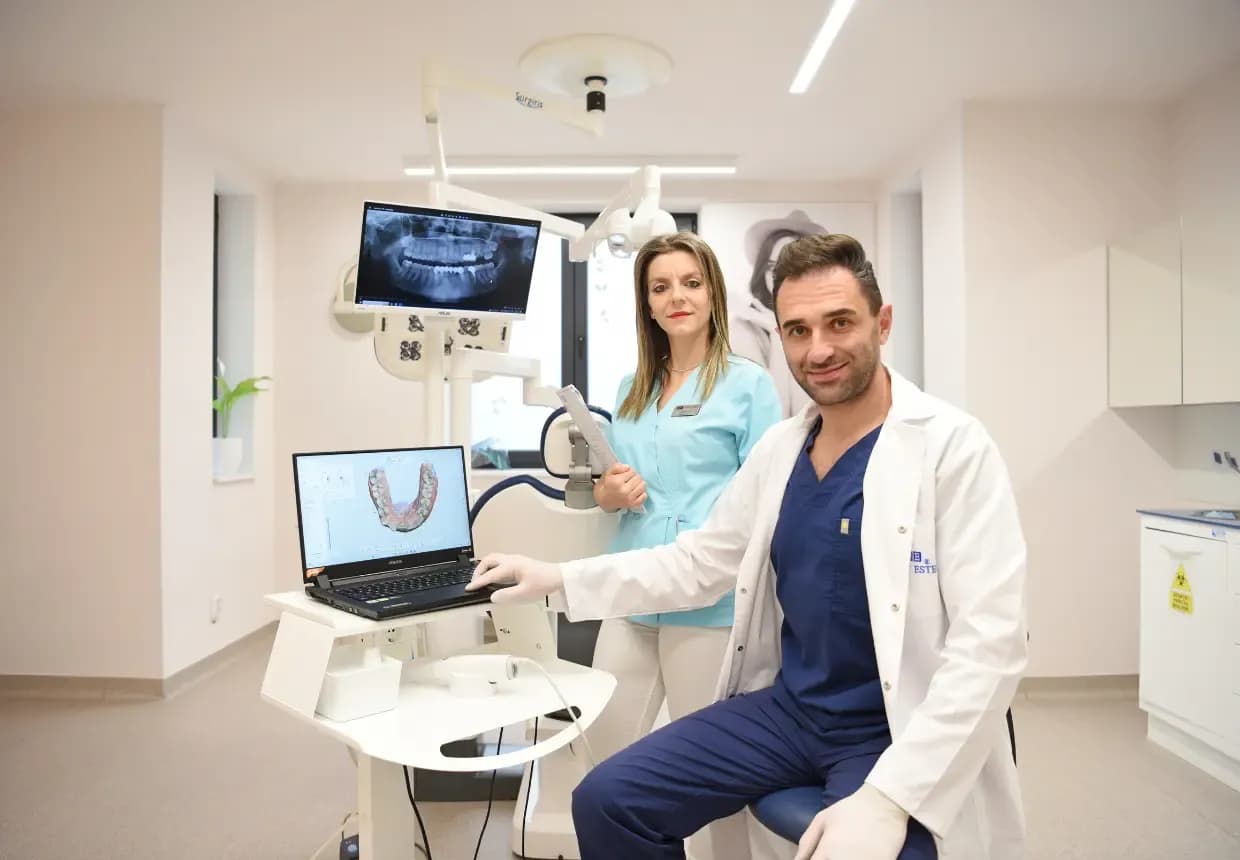
Artificial intelligence makes prosthetic work faster and more accurate
 Author: Dr. Dan Straja
 April 20, 2026
In recent years, digital technologies have transformed the way dental prosthetics are produced. From the initial consultation through to the completion of treatment, every stage can be supported by digital systems that enhance precision and reduce turnaround times.
However, it is important to understand that not all of these technologies are artificial intelligence. In modern dental prosthetics, AI plays a specific role, and most stages are carried out using advanced digital technologies, integrated into a workflow controlled by the dentist and technician.
What role does artificial intelligence play in dentistry?
Artificial intelligence refers to the use of algorithms capable of analysing medical data and identifying patterns. In dentistry, AI is used in particular for the analysis of radiological images and to support the diagnostic process.
For example, solutions such as Pearl AI can highlight lesions or changes that may be difficult to spot at first glance. This type of support helps the dentist make better-informed decisions and establish the right treatment plan from the outset.
In the digital workflow, AI does not replace the dentist or perform the treatment, but contributes to a more precise analysis of the data. The remaining stages – scanning, design and execution – are carried out using computer-assisted digital technologies, not autonomous AI.
The stages of AI-assisted prosthetic work
The creation of a modern prosthetic restoration involves a well-structured digital workflow, in which each stage contributes to the accuracy of the final result. This process begins with data collection and continues with the design and fabrication of the restoration.
Compared to traditional methods, the digital workflow enables better communication between the dentist, the patient and the dental technician. Furthermore, each stage is monitored and optimised, which reduces the risk of errors and the need for subsequent adjustments.
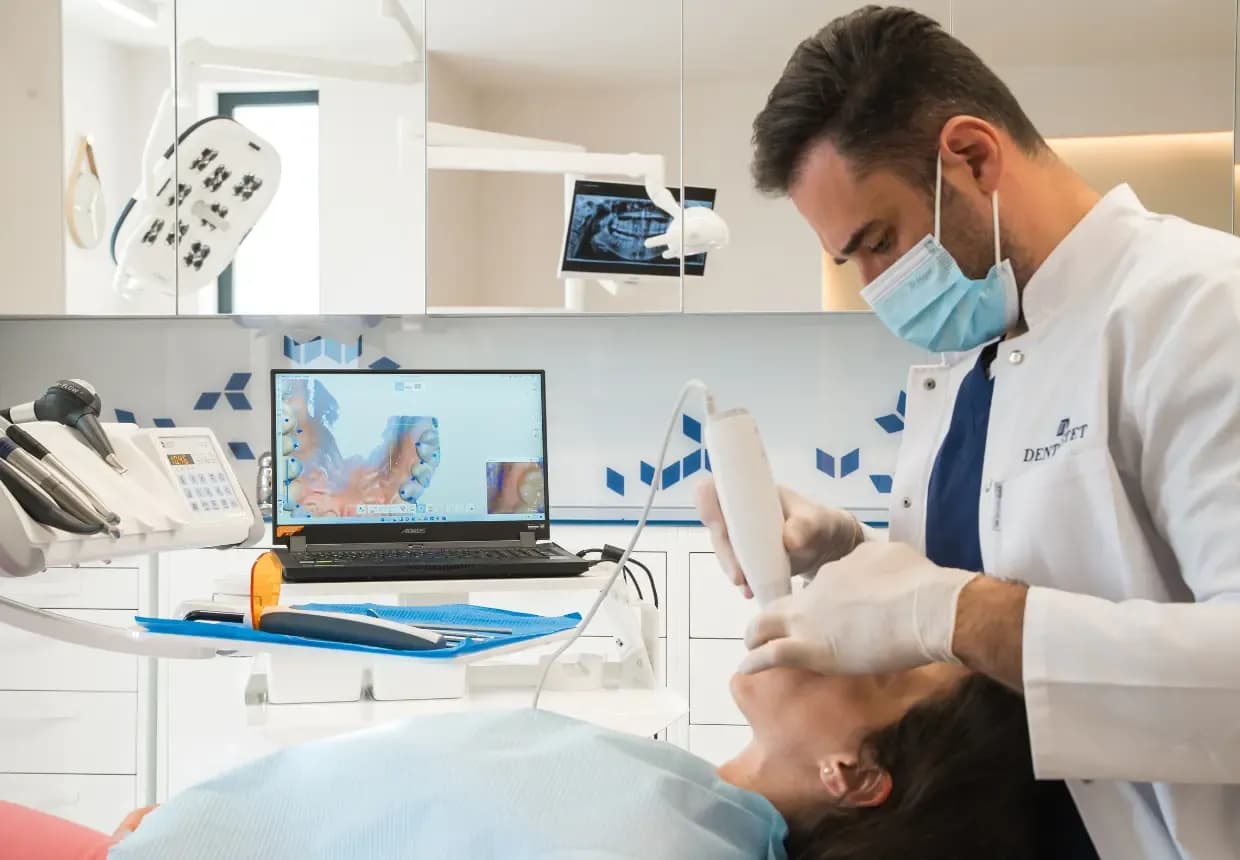
3D intraoral scanning: 3Shape® TRIOS
Intraoral scanning is the first step in creating a digital prosthetic restoration. Using the 3Shape TRIOS scanner, the dentist obtains a precise digital impression of the teeth and gums in just a few minutes.
This technology captures detailed 3D images and eliminates the need for traditional impressions using uncomfortable materials. The result is a faithful digital model that can be used immediately in treatment planning.
Creating the patient’s digital model
After scanning, the data is converted into a complete digital model of the patient. This model includes the position of the teeth, the relationships between the arches and, in some cases, information about facial structure.
Integrating data from the RayFace facial scanner and occlusal analysis systems, such as Modjaw 4D, enables the creation of a ‘virtual patient’. This allows the dentist to analyse not only the static appearance of the dentition, but also how it functions during mastication.
Designing the digital prosthetic restoration with CAD/CAM
During the design stage, the dental technician uses CAD software to design the prosthetic restoration. This process allows for detailed control of the shape, dimensions and occlusal contacts.
Modern systems may include automated functions that suggest dental anatomy or optimise contacts, but these functions are based on software algorithms and should not be confused with autonomous execution via AI. The primary role remains that of the technician, who validates every detail.
Execution of the prosthetic work using AI
The prosthetic work is fabricated using CAD/CAM technology within the ASPEN dental laboratory. The digital design is transformed into a physical restoration through milling or other digitally controlled processes.
It is important to note that artificial intelligence does not directly produce the prosthetic work. AI contributes indirectly, by optimising the diagnosis and design stages, but the actual fabrication is carried out by digital equipment and specialised technicians.
What technologies do we use at DENT ESTET?
At DENT ESTET clinics, prosthetic work is carried out using a fully digital workflow that integrates both artificial intelligence and advanced digital technologies.
Pearl AI is used to analyse radiological images and assists the dentist in establishing an accurate diagnosis. This stage is essential for the correct planning of prosthetic treatment.
The 3Shape TRIOS intraoral scanner enables the creation of fast and accurate digital impressions, which form the basis of the entire workflow. This data is complemented by the RayFace facial scanner, which helps to integrate facial aesthetics into smile planning.
Modjaw 4D adds an important functional dimension by recording mandibular movements in real time. As a result, prosthetic work is tailored not only aesthetically, but also to the way the patient bites and chews.
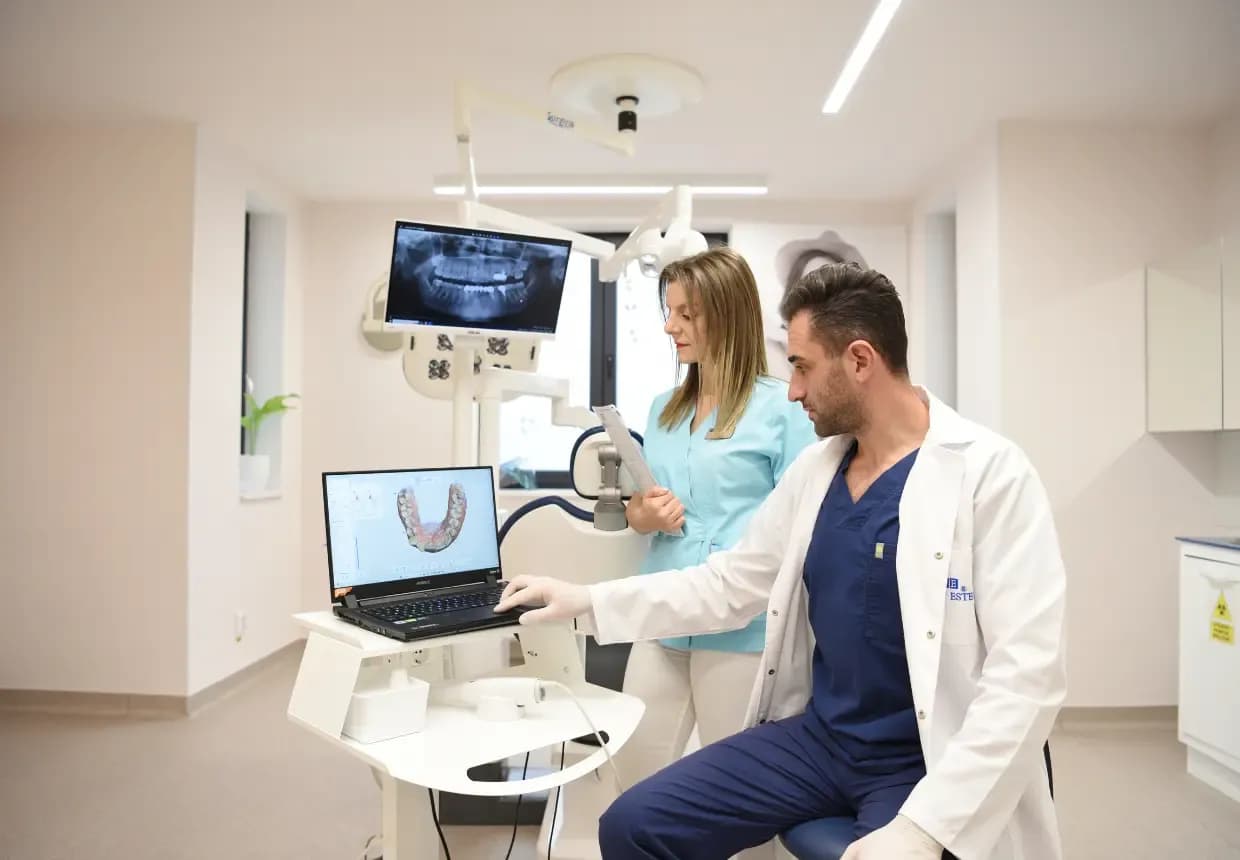
Digital Smile Design allows the final result to be simulated before treatment begins, giving the patient a clear picture of their future smile and facilitating communication with the dentist.
At the ASPEN dental laboratory, CAD/CAM technology is used to produce prosthetic work, ensuring a high level of precision and consistent quality.
See the technologies used at DENT ESTET
By integrating these technologies, DENT ESTET offers patients modern, predictable and personalised treatments, in which every stage is monitored and optimised for long-lasting results.