



Rinsing with bicarbonate of soda for inflamed gums: benefits, risks and recommendations
 Author: Dr. Bianca Spătaru
 October 14, 2026
Rinsing with bicarbonate of soda is a commonly used remedy for inflamed or bleeding gums. Thanks to its alkaline properties, bicarbonate of soda can help to temporarily neutralise acidity in the mouth and remove some food debris. However, there is no solid clinical evidence that gargling with bicarbonate of soda, used on its own, treats gingivitis or periodontitis.
Although it may provide temporary relief from discomfort, bicarbonate does not address the cause of gum inflammation and is no substitute for brushing, professional cleaning or treatment recommended by a dentist.
In short:
- Rinsing with bicarbonate of soda may temporarily neutralise acidity in the mouth, but it is not a proven treatment for gingivitis or periodontitis.
- Rinsing with a diluted solution may be used in certain situations as an adjunct to oral care, in accordance with medical advice.
- Bicarbonate does not remove tartar and is no substitute for brushing or flossing.
- Toothpastes formulated with bicarbonate of soda are different from home-made solutions and have been evaluated separately in clinical trials.
- If your gums are bleeding, swollen or painful, it is important to identify the cause through a dental consultation.
Is gargling with bicarbonate of soda effective for inflamed gums?
Gargling with bicarbonate of soda may have certain effects on the oral environment, but its effectiveness in treating inflamed gums is limited. It is important to distinguish between a temporary change in oral pH and the treatment of a gum condition.
How does bicarbonate of soda work in the mouth?
Bicarbonate of soda (NaHCO₃) is a substance with alkaline properties. When dissolved in water and used as a mouthwash, it can help to temporarily neutralise acids in the mouth.
By altering the pH, bicarbonate can influence the environment in which certain microorganisms thrive. However, this effect does not mean that the solution eliminates the bacteria responsible for gum disease or that it can replace dental treatments.
In the case of inflamed gums, the cause is often the build-up of bacterial plaque on the teeth and along the gum line. Mechanical cleaning methods, such as brushing and flossing, are necessary to remove this plaque.
What benefits can it have for the gums?
The benefits of gargling with bicarbonate of soda are mainly supplementary and should not be confused with the effects of actual treatment.
These include:
- Temporary neutralisation of oral acidity: bicarbonate helps to raise the pH in the mouth.
- Removal of some food debris: rinsing the mouth can help remove food particles left over after a meal.
- A temporary sensation of freshness: using the solution can provide a feeling of cleanliness in the mouth.
- Modification of the oral environment: altering acidity may affect the conditions under which certain microorganisms grow, although this does not constitute a sufficient antimicrobial treatment.
Another aspect discussed in relation to bicarbonate is its influence on the growth of fungi of the genus Candida.
Oral candidiasis is a fungal infection most commonly caused by Candida albicans. Changing the oral pH can influence the environment in which these microorganisms grow, but gargling with bicarbonate is not a proven antifungal treatment and cannot replace medicines prescribed by a doctor.
What cannot be treated with bicarbonate of soda?
Bicarbonate of soda does not eliminate the underlying causes of gum inflammation. Even if some symptoms improve temporarily, the condition causing them may continue to progress.
| What can bicarbonate of soda do? | What it cannot treat |
|---|---|
| It temporarily neutralises acids in the mouth, helping to alter the pH. | It does not treat gingivitis or eliminate the cause of gum inflammation. |
| It can influence the environment in which certain microorganisms thrive. | It does not effectively remove bacterial plaque and tartar from the teeth or from beneath the gums. |
| It may help to remove some food debris by rinsing the mouth. | It does not replace brushing, flossing or professional dental cleaning. |
| It may provide a temporary sensation of freshness. | It does not treat gum infections, dental abscesses or the causes of persistent bad breath. |
| It may be used occasionally as a mouthwash when your dentist considers it appropriate. | It does not treat periodontitis and does not restore tissue or bone affected by periodontal disease. |
Please note: If your gums are red, swollen or bleeding, it is important to identify the cause of these symptoms, rather than simply trying to alleviate them.
How do you gargle with bicarbonate of soda?
Gargling with bicarbonate of soda involves using a diluted solution, prepared by dissolving bicarbonate of soda in water. This method should be regarded as a supplementary measure for oral care, not as a treatment for gingivitis or other gum conditions.
How do you prepare a bicarbonate of soda mouthwash?
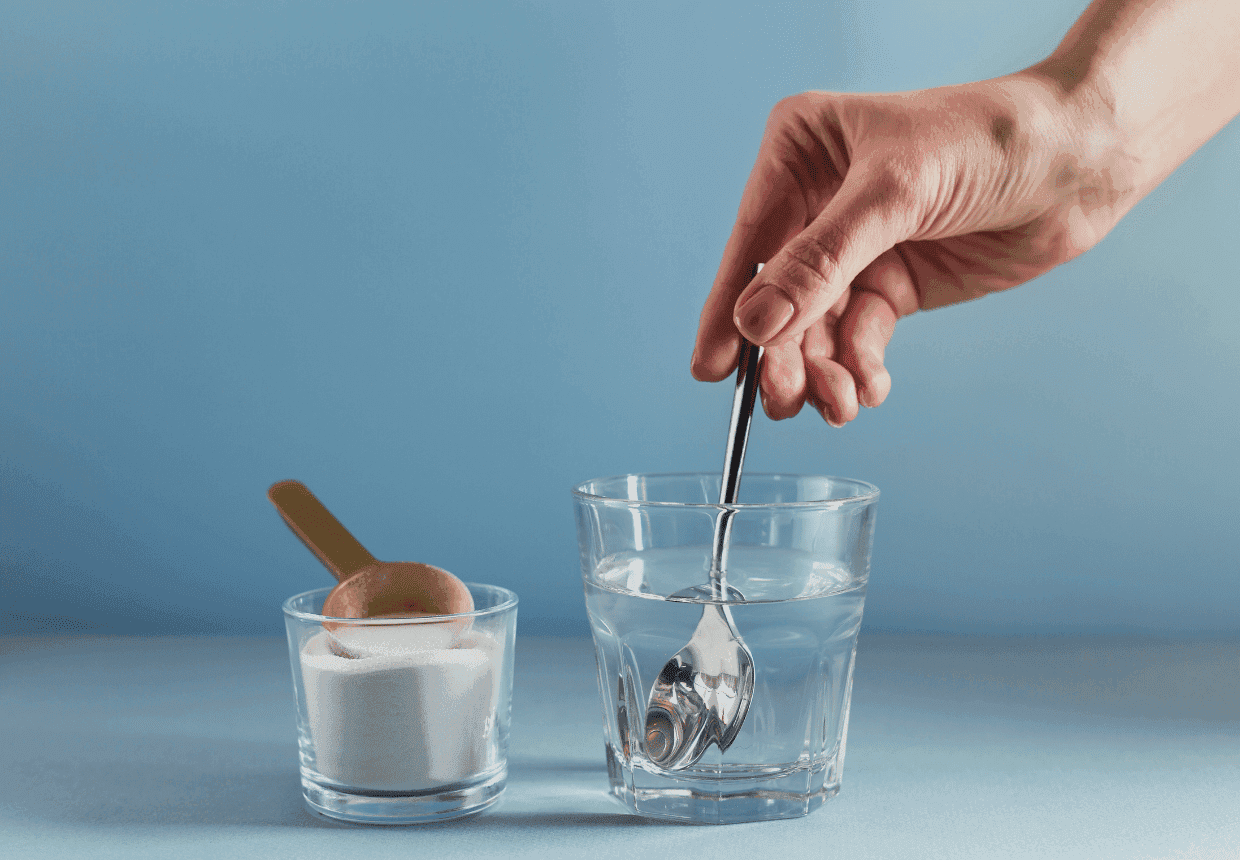
One method involves dissolving half a teaspoon of bicarbonate of soda in approximately 200 ml of lukewarm water.
It is important to stir the solution thoroughly until the bicarbonate has completely dissolved.
The resulting solution can be used in small amounts to rinse the mouth, after which it should be spat out and not swallowed.
This ratio is merely an example of how to prepare the solution and should not be interpreted as a universal recommendation or as a treatment plan for inflamed gums.
How often can you rinse your mouth with bicarbonate of soda?
Rinsing with bicarbonate of soda should be used in moderation and is not recommended as a permanent method of oral care.
The frequency of use depends on each patient’s individual circumstances and the reason for using the solution. In the absence of medical advice, daily, long-term use to treat gum symptoms is not recommended.
If the inflammation persists, repeating the rinses should not delay a dental consultation.
What precautions should be taken?
Before using bicarbonate of soda as a mouthwash, a few precautions should be borne in mind:
- The solution must not be swallowed.
- The bicarbonate must be completely dissolved before use.
- It is not recommended to apply the powder directly to the gums.
- Repeated use should not replace your usual oral hygiene routine.
- People with certain kidney or cardiovascular conditions, including high blood pressure, should seek medical advice before use, particularly if there is a risk of swallowing the solution.
If a burning sensation, irritation or increased discomfort occurs, discontinue use.
What are the risks of using bicarbonate of soda on your gums?
Although bicarbonate of soda is a common household ingredient and is also found in some oral hygiene products, using it incorrectly can cause problems.
There are important differences between the occasional use of a diluted solution and the repeated application of bicarbonate of soda powder directly onto the teeth or gums.
Can bicarbonate of soda irritate the gums?
Yes. Using solutions that are too concentrated or applying bicarbonate directly to the oral tissues can cause irritation, particularly in people who already have sensitivity or lesions on the mucous membrane.
Furthermore, frequent use does not guarantee better results and may delay the identification of the actual cause of gum inflammation.
If your gums are bleeding or painful, it is important to have them assessed by your dentist.
Is it safe to apply bicarbonate of soda directly to the gums or to brush your teeth with it?
It is not recommended to apply bicarbonate of soda in powder form directly to the gums or to use it for brushing your teeth.
When the powder is rubbed repeatedly and with pressure against the teeth and gums, it can cause irritation and contribute to mechanical wear of the tooth surfaces.
Oral hygiene products containing sodium bicarbonate, such as certain toothpastes, have formulations specifically designed and tested for this purpose. These should not be confused with the use of baking soda as a powder for brushing.
To maintain gum health, it is preferable to use a soft-bristled toothbrush and a fluoride toothpaste.
Who should avoid using it without a doctor’s advice?
Caution is advised, particularly for people with:
- Kidney or cardiovascular conditions, including high blood pressure;
- Lesions, ulcers or irritation of the oral mucosa;
- Persistent bleeding gums;
- Recurrent gum inflammation or diagnosed periodontal disease.
In the case of oral lesions or ulcers, it is important to establish the cause before using any home remedies.
Why do gums become inflamed, and when is bicarbonate of soda not enough?
Gum inflammation can have several causes, ranging from the build-up of bacterial plaque to periodontal conditions that require specialist treatment.
Gargling with bicarbonate of soda does not address these underlying causes, which is why temporary relief of symptoms should not be mistaken for a cure.
Bacterial plaque, tartar and gingivitis
One of the most common causes of gum inflammation is the build-up of bacterial plaque.
Dental plaque is a soft deposit that constantly forms on the surface of the teeth. If it is not removed through proper oral hygiene, it can cause inflammation of the gums.
Gingivitis is inflammation of the gums, often characterised by redness, swelling and bleeding when brushing. It is generally reversible once the cause has been removed and care recommendations are followed.
Over time, bacterial plaque can mineralise, forming dental tartar. Unlike food debris, tartar cannot be removed simply by rinsing your mouth. Find out how tartar affects gum health and why professional cleaning is necessary.
To remove it, professional dental cleaning is required, which includes scaling.
Periodontitis and other causes of gum inflammation
Periodontitis is an inflammatory condition that affects the tissues supporting the teeth, including the alveolar bone.
Unlike gingivitis, periodontitis can lead to irreversible loss of supporting tissues, tooth mobility and, in advanced cases, tooth loss.
Rinsing with bicarbonate of soda cannot eliminate bacteria from periodontal pockets, cannot restore affected bone, and cannot halt the progression of the disease.
Other possible causes of gum inflammation include local trauma, hormonal changes, certain systemic conditions or dental infections.
The correct treatment depends on identifying the cause.
Signs indicating the need for a dental consultation
Persistent gum bleeding should not be considered normal, even if it only occurs whilst brushing.
Similarly, redness, swelling of the gums, pain and persistent bad breath may indicate the presence of a condition requiring dental assessment.
When should you see a dentist for inflamed gums?
| Symptom | Recommendation |
|---|---|
| Recurrent bleeding when brushing | Dental consultation |
| Persistently red and swollen gums | Assessment of the cause |
| Persistent bad breath | Dental and periodontal examination |
| Severe pain, pus or significant swelling | Prompt assessment |
| Fever associated with significant oral swelling | Urgent medical assessment |
| Difficulty breathing or swallowing | Emergency medical care |
The sooner the cause of the inflammation is identified, the more effectively complications can be prevented.
What can you do for sore gums, instead of using bicarbonate of soda?
To maintain gum health, the most important measures are the regular removal of bacterial plaque and treating the causes of inflammation.
Home remedies can, at best, play a supporting role and should not replace oral care methods of proven effectiveness.
Proper oral hygiene and the removal of bacterial plaque
A proper oral hygiene routine involves:
- Brushing your teeth twice a day for about two minutes, using a soft-bristled toothbrush and fluoride toothpaste;
- Cleaning between your teeth daily, using dental floss or interdental brushes, as recommended by your dentist;
- Avoiding aggressive brushing, which can damage the gums;
- Regular dental check-ups and professional cleanings at intervals tailored to individual risk.
Even if your gums are bleeding, you should not stop your oral hygiene routine; instead, carry it out gently and have the cause of the bleeding assessed.
Salt water, mouthwash and other solutions: what you need to know
Rinsing with salt water or bicarbonate of soda is frequently used as a home remedy. These may provide temporary relief in certain situations, but they are not treatments for gingivitis or periodontitis.
Mouthwashes containing antiseptic ingredients may be recommended in certain clinical situations, but the choice of product and duration of use must be determined according to the patient’s needs.
For example, products containing chlorhexidine are used for limited periods, as directed by a dentist, as prolonged use may have undesirable effects, such as tooth discolouration or changes in taste perception.
No mouthwash can replace the mechanical removal of bacterial plaque
Professional treatment of gingivitis and periodontitis
In the case of gingivitis, treatment aims to remove bacterial plaque and tartar, whilst improving oral hygiene at home.
If periodontitis is diagnosed, the dentist may recommend a comprehensive periodontal assessment and a treatment plan tailored to the severity of the condition.
This may include professional cleaning, subgingival scaling and, in certain situations, other periodontal procedures.
The aim of treatment is to control inflammation, reduce the bacterial load and maintain the health of the tissues supporting the teeth.
If periodontal disease is diagnosed, your dentist may recommend a personalised treatment plan. Find out about the stages of periodontal treatment, from diagnosis and controlling inflammation to long-term monitoring.
“Rinsing with bicarbonate of soda can temporarily alter the acidity in the mouth, but it does not treat the cause of gum inflammation. If your gums are bleeding or inflamed, it is important to identify the cause and treat it with appropriate dental methods, not just with home remedies.” – Dr Bianca Spătaru

Frequently asked questions about gargling with bicarbonate of soda
Does gargling with bicarbonate of soda cure gingivitis?
No. Rinsing with bicarbonate of soda is not a proven treatment for gingivitis. Although it may temporarily alter the pH of the mouth, it does not effectively remove the bacterial plaque and tartar that are often responsible for inflammation. The treatment of gingivitis involves removing these deposits and maintaining good oral hygiene.
Does bicarbonate of soda help with swollen gums?
Bicarbonate of soda may provide temporary relief when used to rinse the mouth, but there is no solid clinical evidence that it effectively reduces gum inflammation. If your gums remain swollen, are painful or bleed, it is advisable to see a dentist to identify the cause.
Is it a good idea to gargle with bicarbonate of soda every day?
Long-term, daily use of a bicarbonate of soda mouthwash is not recommended without a doctor’s advice. The appropriate frequency depends on the clinical situation and the purpose of use. Repeated rinsing is no substitute for oral hygiene and may delay the diagnosis of gum disease.
Which is better for sore gums: bicarbonate of soda or salt water?
Both bicarbonate of soda and salt water are used for mouth rinses, but neither of these solutions treats the cause of gingivitis or periodontitis. The choice depends on the clinical situation and the dentist’s recommendation. For inflamed gums, removing bacterial plaque and undergoing a dental examination are more important than choosing a mouthwash.
Can bicarbonate of soda stop bleeding gums?
There is no solid clinical evidence that gargling with bicarbonate of soda can stop gum bleeding by treating its cause. Recurrent bleeding frequently occurs in the context of gum inflammation, but may also have other causes. If you notice blood when brushing your teeth, a dental check-up is recommended.
Can bicarbonate of soda be used as a substitute for mouthwash?
Bicarbonate of soda does not automatically replace a mouthwash recommended by a doctor, as oral hygiene products may contain ingredients that serve specific purposes. Furthermore, neither mouthwash nor a bicarbonate solution can replace brushing and flossing. The choice of products should be tailored to individual needs.