
Does coffee stain your teeth? How can you reduce the stains without giving up coffee?
 Author: Dr. Dorotheea Hotea
 October 15, 2026
For many of us, the day begins with a cup of coffee. And at the surgery, almost every week, I hear the question: ‘Doctor, do I have to give up coffee to keep my teeth clean?’
The short answer is: not necessarily. Coffee can change the appearance of your teeth, but the stains don’t appear the same in everyone. It depends on how often you drink coffee, how you drink it and how you look after your teeth.
It’s also important to distinguish between surface stains and the natural colour of the tooth, as they aren’t treated in the same way. And the good news is that there are several things you can do without giving up coffee altogether.
Why can coffee stain your teeth?
Coffee contains pigments that can settle on the surface of the enamel. The more frequently it is consumed, the more opportunities these pigments have to build up.
Oral hygiene also influences the build-up of stains, and other habits, such as smoking or frequent consumption of tea and red wine, can accentuate the appearance of stains.
What are extrinsic stains?
Extrinsic stains are discolorations found on the surface of the tooth.
They are frequently associated with:
- coffee;
- tea;
- red wine;
- tobacco;
- other strongly pigmented products.
These differ from intrinsic stains, which are located within the tooth structure, have different causes and cannot be removed simply by cleaning the surface.
Do all types of coffee stain teeth in the same way?
Not exactly. Black coffee, being richer in pigments, may have a greater potential to stain than coffee with milk.
However, the frequency of consumption, the length of time the coffee remains in contact with the surface of the teeth, and oral hygiene also play a very significant role.
Added sugar does not directly ‘stain’ the teeth, but it can affect oral health by promoting the build-up of bacterial plaque. And when bacterial plaque is present, pigments can adhere more easily to the tooth surface.
Does it matter how often you drink coffee?
Yes. The frequency of consumption can influence the build-up of stains.
There is a difference between drinking a coffee in a relatively short space of time and sipping it in small sips over several hours. In the latter case, the tooth surface is repeatedly exposed, and the pigments remain in contact with the teeth for longer.
This exposure can be compounded by other sources of staining throughout the day, such as tea, red wine or certain foods.
How can you reduce coffee stains without giving up coffee?
You don’t necessarily need to cut out coffee completely to minimise the appearance of stains. What matters most is how you drink it and your hygiene habits throughout the day.
Drink water after your coffee
Once you’ve finished your coffee, you can take a few sips of water or rinse your mouth.
This reduces the time the pigments spend on the surface of your teeth, and staying hydrated also helps maintain a balanced oral environment.
Avoid drinking coffee throughout the day
If you drink it over a shorter period, you reduce repeated exposure and prolonged contact between the pigments and the surface of your teeth.
A coffee consumed gradually over several hours means more episodes of exposure than one drunk within a limited time frame.
Maintain good oral hygiene
Brushing twice a day and cleaning between your teeth helps to control bacterial plaque and staining.
It is important to:
- brush your teeth twice a day;
- clean between your teeth with dental floss or interdental brushes;
- use a suitable toothpaste;
- avoid brushing too hard.
Excessive pressure does not whiten your teeth and can irritate your gums or cause wear to the tooth surfaces.
Don’t brush your teeth straight after drinking coffee
In an effort to quickly remove traces of coffee, some people brush their teeth immediately after drinking it.
Coffee can be acidic, and brushing straight away can be harsher on the tooth surface. It is better to rinse your mouth with water first and wait a while before brushing.
Generally, a break of around 30–60 minutes before brushing is recommended.
Can a professional deep clean remove coffee stains?
In many cases, yes.
Professional cleaning helps to remove bacterial plaque and tartar and can reduce extrinsic staining caused by coffee or other sources of pigments.
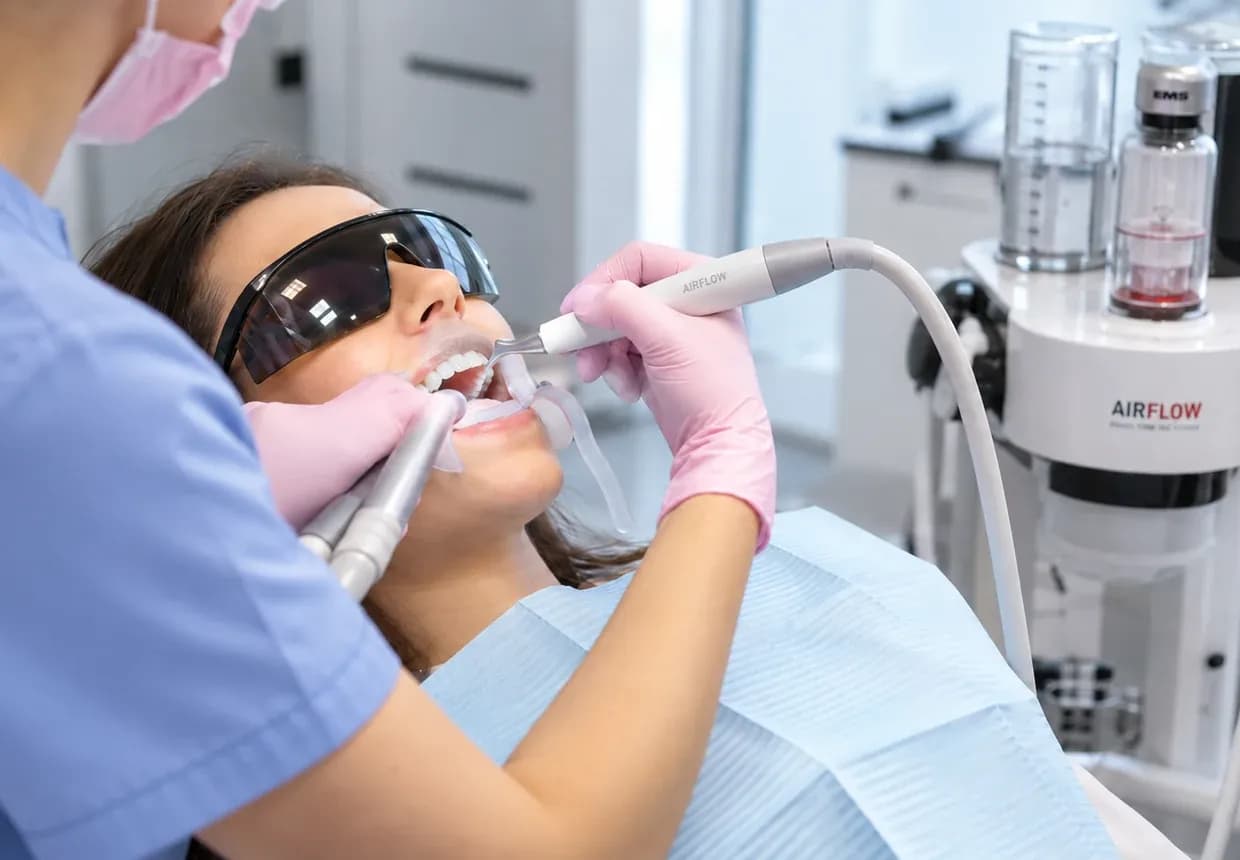
Depending on the situation, procedures such as professional prophylaxis with AirFlow may be used.
After cleaning, the teeth return to a colour closer to their natural shade. However, it is important to distinguish between cleaning and teeth whitening: the former removes surface deposits and stains, whilst the latter aims to change the shade of the natural teeth.
When is cleaning sufficient, and when might bleaching be recommended?
The choice of treatment depends on the type of discolouration. If the problem mainly involves surface stains, a professional cleaning may be sufficient. If the patient wishes to achieve a shade lighter than their natural tooth colour, teeth whitening may be discussed.
Professional cleaning
Cleaning is effective for extrinsic stains, such as many of those associated with coffee, tea or tobacco.
However, it does not significantly alter the natural colour of the teeth; rather, it removes surface deposits and discolouration.
Teeth whitening
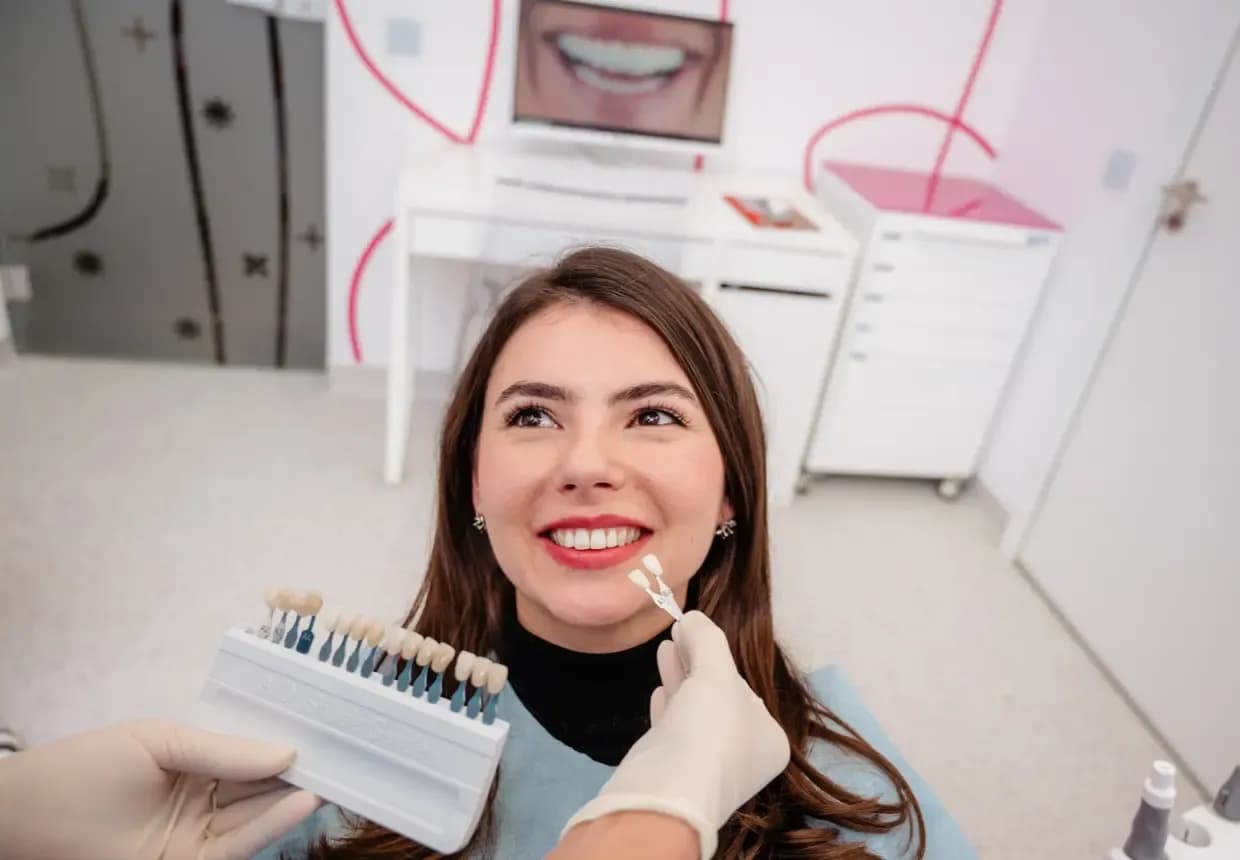
Teeth whitening may be considered when the patient wishes to achieve a shade lighter than their natural colour.
The procedure is carried out following an assessment of the health of the teeth and gums.
Existing restorations must also be taken into account, as crowns, veneers and fillings do not change colour in the same way as natural teeth.
| The problem | Recommended procedure |
| Superficial stains caused by coffee, tea or tobacco | Professional cleaning, including AirFlow if indicated |
| Bacterial plaque and tartar | Professional cleaning |
| Desire for a shade lighter than the natural colour | Teeth whitening, following assessment by the dentist |
| Stains that do not disappear after cleaning | Consultation to identify the cause |
Can whitening toothpaste remove coffee stains?
It may help to reduce certain superficial stains.
However, it does not alter the internal colour of the tooth to the same extent, and its effect must be distinguished from that of a teeth-whitening procedure.
Products with high abrasiveness should not be used excessively. The choice of toothpaste should be tailored to the condition of the enamel and any tooth sensitivity.
Does coffee affect tooth enamel or just the colour of your teeth?
Coffee can primarily affect the colour of the tooth surface through the deposition of pigments, but it is also acidic.
The frequency of consumption, whether it is consumed with sugar or syrups, oral hygiene and hydration can all influence its effects on oral health.
It is important to distinguish between two phenomena:
- tooth staining, where pigments are deposited on the tooth surface;
- tooth erosion, in which the enamel structure is progressively lost.
They are not the same thing and require different approaches.
When should stains on the teeth be assessed by a dentist?
Not every stain on your teeth is caused by coffee.
An assessment is recommended if:
- the stains do not disappear after cleaning;
- a single tooth changes colour;
- brown or black stains appear;
- you experience tooth sensitivity;
- pain or other symptoms occur.
The dentist can distinguish between simple superficial discolouration, tooth decay and a change occurring inside the tooth.
Frequently asked questions about coffee and tooth stains
Does coffee stain my teeth even if I brush them twice a day?
Yes, perhaps. Brushing reduces the build-up of colour, but it does not completely prevent pigment deposits, especially with frequent use.
Does coffee with milk stain your teeth less?
It may contain a lower concentration of pigments than black coffee, but the frequency of consumption and the length of time it comes into contact with the surface of the teeth also matter.
Does drinking water after coffee help reduce blemishes?
It can help by reducing the amount of time that pigments remain on the tooth surface.
Can I brush my teeth straight after having a coffee?
It is best to rinse your mouth with water first and wait a little while before brushing.
Does whitening toothpaste remove coffee stains?
It can reduce certain surface stains, but does not alter the internal colour of the tooth to the same extent.
Can AirFlow remove coffee stains?
It may help to remove surface discolouration where appropriate.
Does teeth whitening remove coffee stains?
For surface stains, the first step may be professional cleaning. Whitening serves a different purpose and aims to lighten the natural shade of the teeth.
Can coffee stains become permanent?
Many surface stains can be reduced through professional cleaning. If a stain persists, an assessment is recommended to determine the cause.
You don’t have to give up coffee altogether to protect your smile
“I tell my patients that how often and how you drink coffee plays a part in the development of stains. Water and proper oral hygiene can limit the build-up of stains, and professional cleaning can remove many of the superficial stains. If persistent stains appear, it is advisable to come in for a consultation to investigate the possible causes. Teeth whitening serves a different purpose and should not be confused with preventive care.” – Dr. Dorotheea Hotea