




Dental crowns – Everything you need to know about them
 Author:
  May 8, 2025
Dental crowns are commonly used in modern dentistry to protect and restore teeth that are damaged or have suffered significant structural loss. If you have a damaged, cracked or broken tooth, a dental crown can restore both its functionality and its appearance.
But what types of dental crowns are available? How long does a dental crown last, and which is the best choice? In this article, we’ll explore everything you need to know about dental crowns, the materials they’re made from, and the importance of modern technologies in their manufacture.
What is a dental crown and when is one needed?
A dental crown is a prosthesis that completely covers a damaged tooth, serving to restore both its shape and function. In most cases, crowns are required when a tooth has suffered significant damage due to tooth decay or an accident; they are often used to replace large fillings or when a tooth is brittle.
Crowns can be made from various types of materials, such as zirconium – which is actually a metal – ceramic, or combinations of the two, and the choice of material depends on several factors, including the tooth’s location in the mouth, the patient’s preferences and, of course, the dentist’s recommendations.
The main types of dental crowns available
There are several types of dental crowns, each with unique characteristics that make them suitable for specific situations. Here are some of the most common types of crowns:
Ceramic (porcelain) crowns
Ceramic or porcelain crowns are a popular choice due to their natural appearance. They are ideal for front teeth, as they match the colour of natural teeth and look very natural. Ceramic is also biocompatible, meaning it will not cause irritation to the gums or other tissues in the mouth.
Zirconia-ceramic crowns
Zirconia-ceramic crowns are a combination of zirconia and ceramic. They are very strong, yet their appearance is very similar to that of a natural tooth. These crowns are most commonly used for back teeth, where both strength and appearance are important.
Zirconia crowns
Zirconia is an extremely durable and strong material, and zirconia crowns are often preferred due to their natural appearance and high resistance to wear. These crowns are biocompatible and are an excellent option for front teeth.
Which is the best dental crown for you?
Choosing the best dental crown depends on several factors, including the type of tooth requiring a crown, the patient’s budget and aesthetic preferences. For example, for front teeth, ceramic crowns are the most recommended due to their natural appearance. In contrast, for back teeth, zirconia or zirconia-ceramic crowns may be a more suitable choice due to their superior strength.
It is essential that the decision is made in consultation with the dentist, who will assess the specifics of each case and offer the most suitable recommendation for the patient.
The importance of the materials used to make dental crowns
The materials used to make dental crowns play a vital role in their durability, aesthetics and biocompatibility. For example, ceramic is a superior aesthetic material, but it is not as wear-resistant as zirconia. This is why dentists will choose materials based on the tooth’s location and the patient’s needs.
A study carried out by the American Dental Association (ADA) showed that zirconia-based materials are the most durable and wear-resistant, with a much longer lifespan compared to crowns made from other materials. Studies have also highlighted the importance of tailoring the crown material to the patient’s individual needs.
How long does a dental crown last?
The lifespan of a dental crown depends largely on the material it is made from, but also on proper care. Generally, a dental crown can last between 10 and 15 years. However, zirconia crowns can last even longer, whilst those made of ceramic or porcelain may have a slightly shorter lifespan.
Proper care is essential for extending the lifespan of a dental crown. Good oral hygiene, including regular brushing and flossing, can help keep the crown and the tooth in good condition in the long term. Regular visits to the dentist are also important for monitoring the condition of the crown and the tooth.
Study on the durability of zirconia crowns
A study published in the Journal of Prosthetic Dentistry analysed the durability of zirconia crowns and concluded that this material offers exceptional resistance to masticatory forces and long-term durability. The study highlighted that, on average, zirconia crowns can last up to 20 years, with a low failure rate, making them one of the best options for long-term dental restorations.
“Zirconia crowns have remarkable durability and are resistant to wear caused by chewing, making them an excellent choice for patients seeking a long-lasting solution.” – Journal of Prosthetic Dentistry, 2018.
The importance of the dental laboratory
The dental laboratory plays a vital role in the fabrication of dental crowns. The dental technician is responsible for fabricating and customising the crown in accordance with the specifications set by the dentist.
The dental technician’s training and experience are fundamental to the success of the procedure. The technician must have a thorough understanding of the materials used, the techniques for processing them, and how to adapt them to the patient’s dental structure. They must also possess excellent aesthetic skills to create crowns that perfectly match the colour and shape of the patient’s natural teeth.
An experienced dental technician will know how to adjust every detail of the crown, from the thickness of the material to the final shade, so as to achieve the most natural-looking result. It is important for the technician to work closely with the dentist to ensure a perfect fit.
Modern technologies in the fabrication of dental crowns
Nowadays, modern technologies have revolutionised the field of dentistry, and the process of making dental crowns is more precise and faster than ever before. Among the most important technologies used by the DENT ESTET dentist at the clinic for treatment planning and designing the future dental crown are:
The Trios intraoral scanner
The intraoral scanner enables a precise image of the oral cavity to be captured, eliminating the need for traditional soft-material impressions, which often cause discomfort to patients. This scanner captures detailed images of the teeth and their structure, and these images are used to create a perfectly fitted crown.
Ray Face facial scanner
Ray Face technology enables three-dimensional scanning of the patient’s face, creating a detailed image of the facial structure. This technology helps to create dental crowns that are not only functional but also aesthetic, with a completely natural appearance.
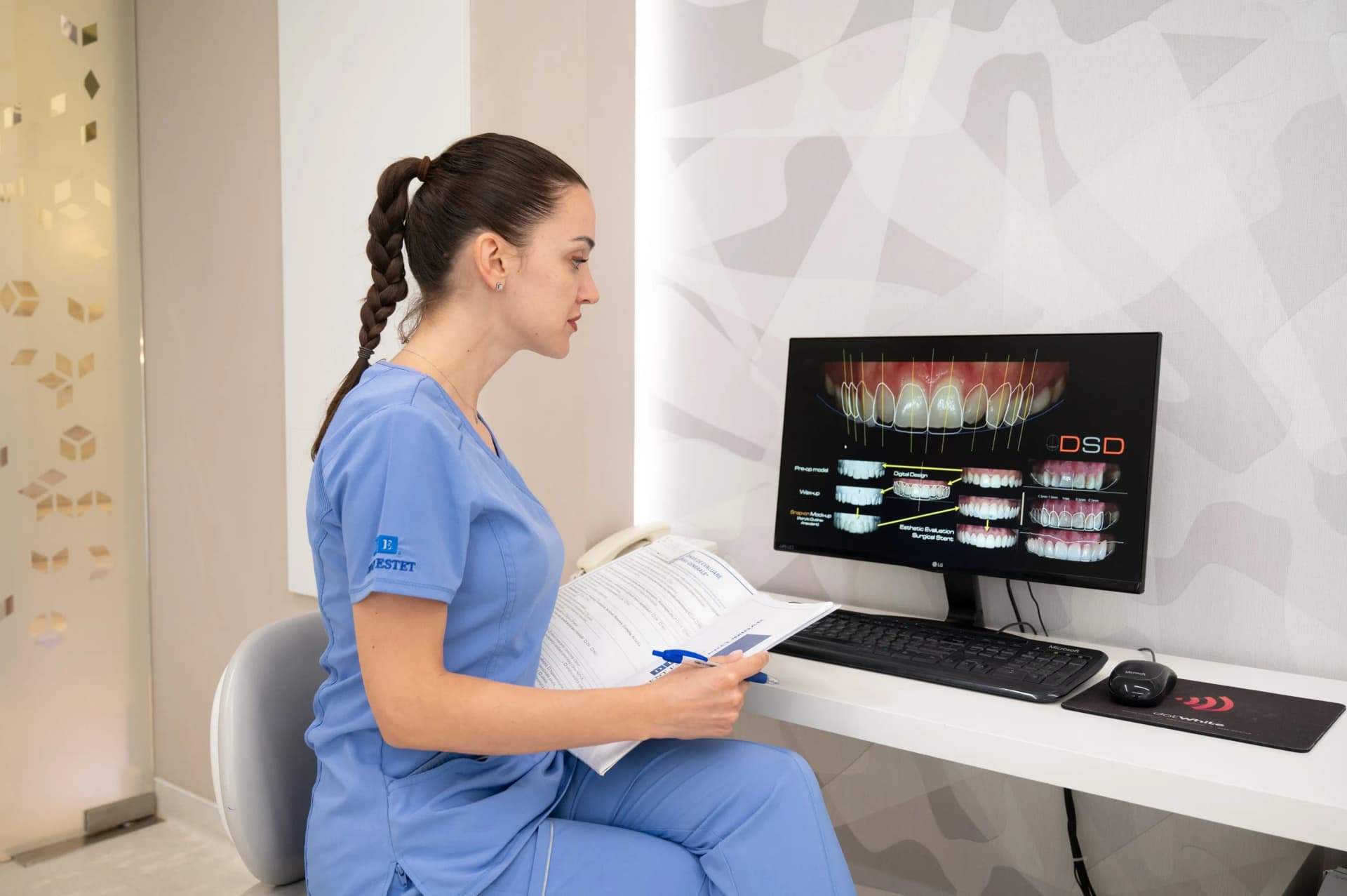
Digital Smile Design (DSD) preview software
Digital Smile Design is a technology that enables the creation of a detailed plan for restoring the patient’s smile, including dental crowns. Using digital images and simulations, DSD helps to create crowns that are perfectly suited in terms of aesthetics and functionality, taking into account the shape and size of the patient’s face.
Conclusion
“Zirconia and ceramic dental crowns are not merely aesthetic solutions; they strike the perfect balance between durability and a natural appearance, offering patients not only a beautiful smile but also long-term confidence.”– Dr. Roxana Gheorghe, dentist at DENT ESTET.
Dental crowns are an excellent option for patients who need a durable and aesthetic restoration of damaged teeth. The choice of crown type, the material used and modern fabrication techniques are crucial factors that influence the success of this procedure. With proper oral hygiene and regular visits to the dentist, a dental crown can last for many years, providing the patient with both functional and aesthetic benefits.
When considering a dental crown, it is important to discuss the available options with your dentist and to take all relevant factors into account in order to make the best choice for you.

Bibliography
- Soleimani F, Jalali H, Mostafavi AS, Zeighami S, Memarian M. Retention and Clinical Performance of Zirconia Crowns: A Comprehensive Review. Int J Dent. 15 October 2020;2020:8846534. doi: 10.1155/2020/8846534. PMID: 33123199; PMCID: PMC7584951.
- Bankoğlu Güngör M, Karakoca Nemli S. Fracture resistance of CAD-CAM monolithic ceramic and veneered zirconia molar crowns after ageing in a mastication simulator. J Prosthet Dent. March 2018;119(3):473–480. doi: 10.1016/j.prosdent.2017.05.003. Epub 20 June 2017. PMID: 28645670.
- Daou EE. Zirconia ceramics: strengths and weaknesses. Open Dent J. 18 April 2014;8:33–42. doi: 10.2174/1874210601408010033. PMID: 24851138; PMCID: PMC4026739.
- Yu Takaesu, Yusuke Taniguchi, Naoyuki Kaga, Yuichiro Yamaguchi, Kae Kakura, Nao Suzuki, Takashi Matsuura, Long-term clinical outcomes of posterior monolithic and porcelain-fused zirconia crowns: A retrospective cohort study, The Journal of Prosthetic Dentistry, 2025, ISSN 0022-3913