




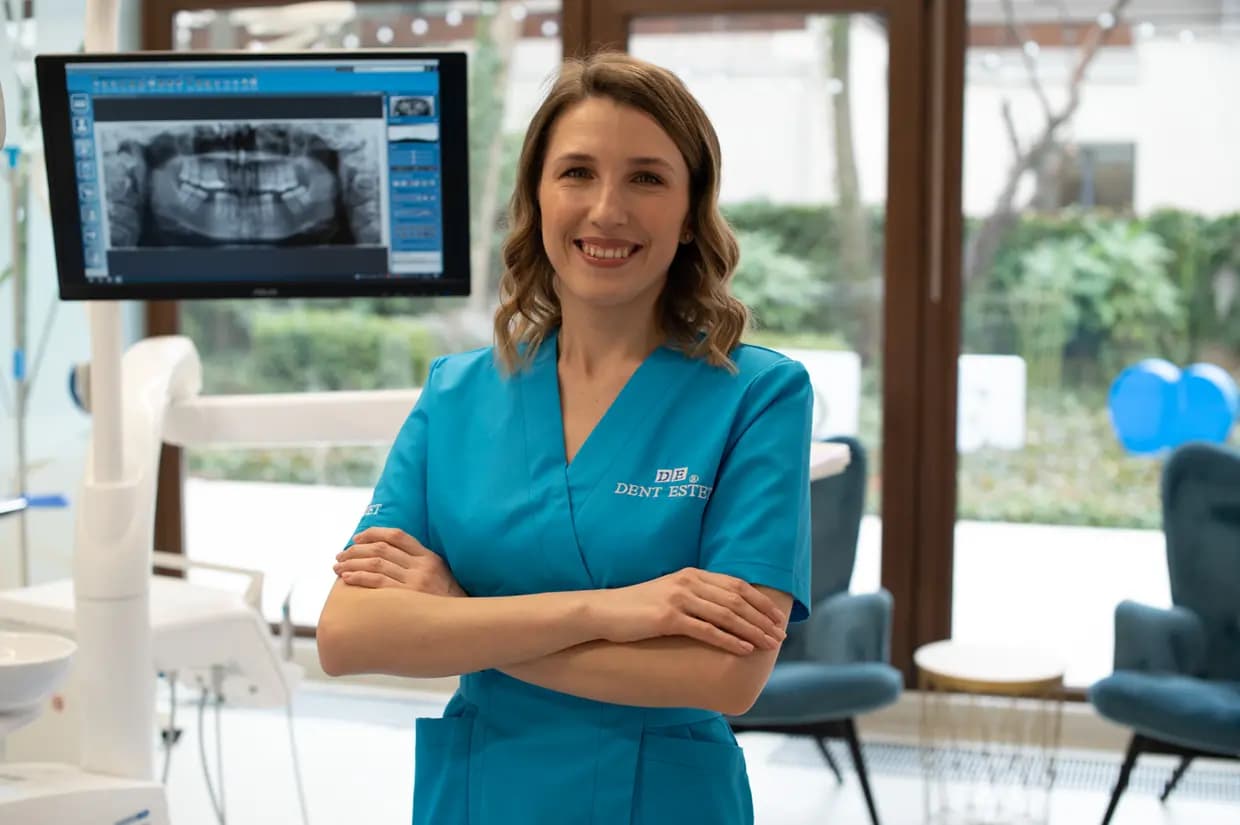
Dental scaling – what it involves, the benefits, and why it is essential for dental health
 Author: Dr. Cristina Stănescu
 October 23, 2024
What is dental scaling?
Dental hygiene at home is an important part of maintaining good oral health. However, even with a good brushing routine, certain areas of the mouth can be difficult to reach, and biofilm can build up in these places.
That is why professional clean-ups carried out at the dentist’s surgery are essential. They allow for a thorough and complete cleaning of the teeth and gums, ensuring the removal of bacterial plaque and tartar that build up over time.
Dental scaling is an essential procedure for maintaining oral health. It involves the removal of tartar and bacterial plaque accumulated above and below the gum line, thereby helping to prevent dental and gum diseases.
What is dental plaque?
Dental plaque is a soft, yellowish-white substance found on the surface of teeth, gums, fillings, dentures or dental implants. Bacterial plaque consists of 70–80 per cent bacteria. It begins to form approximately one hour after brushing, through the deposition of an organic layer from saliva, known as a film. Clinically speaking, this cannot be removed by a water jet or simply by rinsing.
If plaque is not removed by regular brushing, it mineralises and turns into tartar, which is much harder to remove.
Recommendations for dental scaling
A prophylaxis session should be effective in removing deposits from the teeth or from beneath the gums. However, the procedure should not be painful, but should be tailored to the patient’s needs and individual circumstances.
- For patients undergoing orthodontic treatment, i.e. those wearing braces, the build-up of bacterial plaque is increased; therefore, dental scaling should be carried out every 3–4 months. In this way, we are able to better control the build-up of plaque on the teeth, with the aim of preventing periodontal problems and tooth decay. Scaling must be carried out with particular attention to the interdental spaces, which are difficult for patients to clean properly at home. At DENT ESTET clinics, the medical team uses a range of procedures for professional scaling, taking care around the areas surrounding braces to ensure they do not come loose.
- Scaling for patients with dental implants and crowns is more complex and focuses on cleaning them without causing damage. Teflon scalers, specially designed for scaling implants or crowns, are used. The dentist also has access to gels or medicated solutions, which play an important role in maintaining oral health and prolonging the lifespan of implants.
- Patients with a history of periodontal disease require special attention during a prophylaxis session, particularly if this takes place following active periodontal treatment. During the scaling session, the dentist identifies problem areas using a plaque disclosing agent. This helps the patient realise which areas require more attention and how to clean them properly at home.
“Scaling appointments as part of periodontal maintenance therapy should be scheduled at shorter intervals of 3–4 months. The procedure must be tailored to the patient’s risk profile and periodontal status following active therapy. It is very important that this is carried out by a periodontist who can monitor oral health and prevent the recurrence of periodontal disease,” explains Dr Cristina Stănescu, a specialist in periodontology.
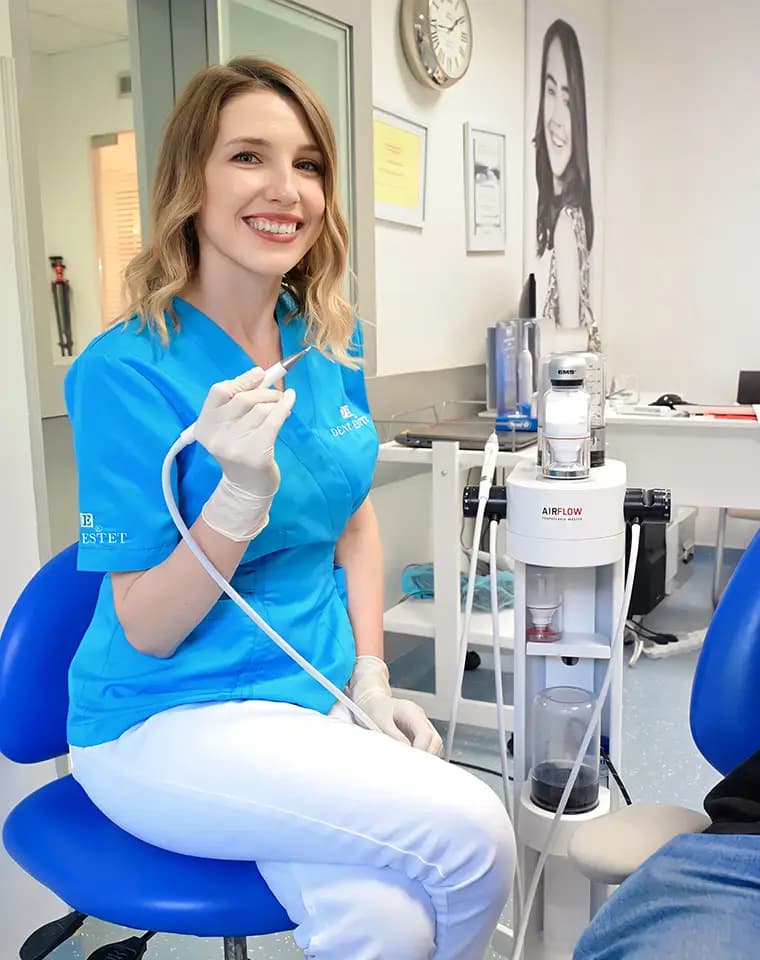
Modern techniques for professional teeth scaling
In this context, the Guided Biofilm Therapy (GBT) technology developed by EMS (Electro Medical Systems) represents a revolutionary change in the way dental cleaning is carried out. GBT is a modern and highly effective protocol for removing bacterial biofilm, based on the latest scientific research and the use of advanced equipment.
The main advantages of EMS GBT technology:
1. Precise removal of biofilm
GBT uses a special dye to highlight the biofilm present on the teeth and gums. This allows the dentist to identify exactly where the bacteria are located and clean them effectively, without affecting healthy tissue. This step is essential, as many traditional cleaning methods may overlook certain areas or cause discomfort to the patient.
2. Minimally invasive and pain-free technology
Unlike traditional methods, which use manual instruments to remove tartar, Guided Biofilm Therapy uses a device that emits a jet of air, water and glycine or erythritol particles to clean biofilm and deposits from the teeth and gums. This method is much gentler, minimally invasive and comfortable for patients.
3. Prevention of dental conditions
By removing biofilm effectively and regularly, GBT helps prevent gingivitis, periodontitis and tooth decay. It also facilitates the thorough cleaning of dental implants and restorations (such as crowns or bridges), thereby extending their lifespan.
4. Protecting Enamel and Gums
EMS
technology allows biofilm to be removed without damaging tooth enamel or the gums. This is a major difference from traditional methods, which can cause abrasion or irritation to the gums.
5. A personalised and guided approach
Each GBT session is tailored to the individual needs of each patient. Once the biofilm has been identified, the dentist can adapt the treatment to focus on the most affected areas, thereby ensuring thorough and effective cleaning.
Why should you have your teeth scaled every 6 months?
According to a Eurobarometer survey carried out by the European Commission, 57 per cent of Europeans visit a dentist at least once a year. By contrast, Romania ranks last in this respect, with just 34 per cent. In terms of the number of visits to the dentist, Romania ranks first, which suggests that when Romanians do visit dental practices, they do so for more complex treatments rather than just routine check-ups.
The
ADA (American Dental Association) recommends that teeth be scaled every six months, taking into account risk factors and the patient’s oral health. Adopting a preventive care programme tailored to the patient’s needs is a very important aspect of dental care, as approximately 50 per cent of the adult population suffers from some form of periodontal disease and there is an increase in the prevalence of peri-implantitis (a gum condition affecting people with dental implants).
The
progression of periodontal disease from gingivitis to periodontitis in natural teeth is similar to the progression from peri-mucositis to peri-implantitis in the case of dental implants, which is why professional scaling carried out in the dentist’s surgery can prevent the onset of these conditions.
Check-ups and scaling carried out every 6 months (or more frequently, in the case of certain conditions) can spare us a great deal of discomfort by enabling the early detection of dental problems, such as tooth decay or periodontal issues, which can progress rapidly and cause significant discomfort.
In conclusion, regular professional scaling carried out at the dentist’s surgery, once every six months or even every three to four months, depending on each patient’s needs and individual circumstances, is very important as it helps maintain excellent oral health and can prevent the onset of dental problems that may affect quality of life. Prevention is always better than treatment.