





Can you have All-on-4® treatment if you have diabetes?
 Author: Dr. Dr Alexandru Georgescu
 August 9, 2026
Diabetes does not automatically rule out treatment with All-on-4® dental implants. The procedure may be considered when blood sugar levels are under control, the patient’s general health permits the procedure, and oral health has been assessed and stabilised prior to treatment. However, uncontrolled diabetes can delay healing and increase the risk of infection, bone loss and peri-implantitis. The recommendation is therefore determined on a case-by-case basis, following a multidisciplinary assessment and recent medical tests.
Diabetes and its impact on oral health
Diabetes is a metabolic condition in which the body does not produce enough insulin or does not use it effectively. Without proper management, blood glucose levels remain elevated and, over time, can affect the blood vessels, the immune system and the body’s ability to repair tissues.
The effects are not limited to general health. Diabetes and oral health influence each other: high blood glucose levels promote inflammation and infections, whilst persistent oral inflammation can make it more difficult to control blood glucose levels.
Some of the most common problems experienced by people with diabetes include:
- dry mouth;
- inflammation and bleeding of the gums;
- periodontal disease;
- slower healing after dental procedures;
- increased susceptibility to infections;
- bone loss around the teeth or implants.
Periodontal disease requires special attention prior to implant treatment. Active inflammation and bacterial plaque can compromise the health of the tissues surrounding the future implants.
Find out more about the link between diabetes and dental diseases.
Under what circumstances might the All-on-4® treatment be recommended for a patient with diabetes?
Treatment can be considered once diabetes is under control, the patient is following their diabetes specialist’s advice, and there are no active oral infections or other issues that would significantly increase the risk of the procedure.
The All-on-4® concept enables the restoration of a dental arch using a fixed prosthesis, usually supported by four implants. It is suitable for people who have lost all or almost all of their teeth in one arch, or whose remaining teeth cannot be preserved.
In certain cases, a configuration with six implants may be recommended. The number of implants and the possibility of immediate loading are determined based on bone volume and quality, implant stability, the distribution of masticatory forces and the patient’s general state of health.
For patients with diabetes, the main advantage is not directly related to the condition itself, but to the characteristics of the restoration:
- a fixed restoration supported by a small number of implants;
- reconstruction of a dental arch as part of a comprehensive treatment plan;
- a reduction in the time spent without teeth;
- the possibility of avoiding certain bone augmentation procedures, if the anatomy permits;
- easier-to-manage oral hygiene compared with severely compromised teeth with recurrent infections.
These benefits do not eliminate the risks associated with diabetes. Recently published studies show that implants can yield good results in patients with adequate glycaemic control, whilst uncontrolled diabetes is associated with a higher risk of peri-implantitis, bone loss and treatment failure. The decision to proceed should therefore not be based solely on a diagnosis of diabetes or a single blood glucose reading.
Key criteria for patients with diabetes
The first step is a comprehensive assessment of your general health. Your dentist should be informed about the type of diabetes you have, the treatment you are receiving, any recent episodes of hypoglycaemia or hyperglycaemia, and any complications arising from the condition.
The assessment may include:
- a clinical consultation and review of your medical history;
- a panoramic X-ray and CBCT scan;
- examination of the gums and supporting tissues;
- identification of dental or periodontal infections;
- assessment of bone volume and quality;
- assessment of oral hygiene and risk factors, such as smoking;
- recent test results, including glycated haemoglobin (HbA1c);
- a referral or approval from a diabetes specialist, where necessary.
HbA1c reflects the average blood glucose level over the last two to three months. A lower value generally suggests better metabolic control, but there is no universal threshold that guarantees the success of a dental implant.
Systematic reviews published in recent years have shown that patients with well-controlled diabetes frequently achieved results similar to those of people without diabetes. Conversely, HbA1c levels above 8 per cent were associated, in the studies analysed, with less favourable outcomes in the peri-implant tissues. These values must be interpreted on a case-by-case basis by the diabetes specialist and the dental team, and should not be used in isolation to accept or exclude a patient.
For further information on assessment, risks and indications, please refer to the guide on dental implants for patients with diabetes.
“In the case of a patient with diabetes, it is not the diagnosis itself that determines whether we can carry out All-on-4® treatment, but rather how well the condition is managed and the condition of the oral tissues. We need to look at the patient’s overall health, carefully assess each risk factor and choose the protocol that offers the best prospects for healing and for the long-term stability of the implants.”
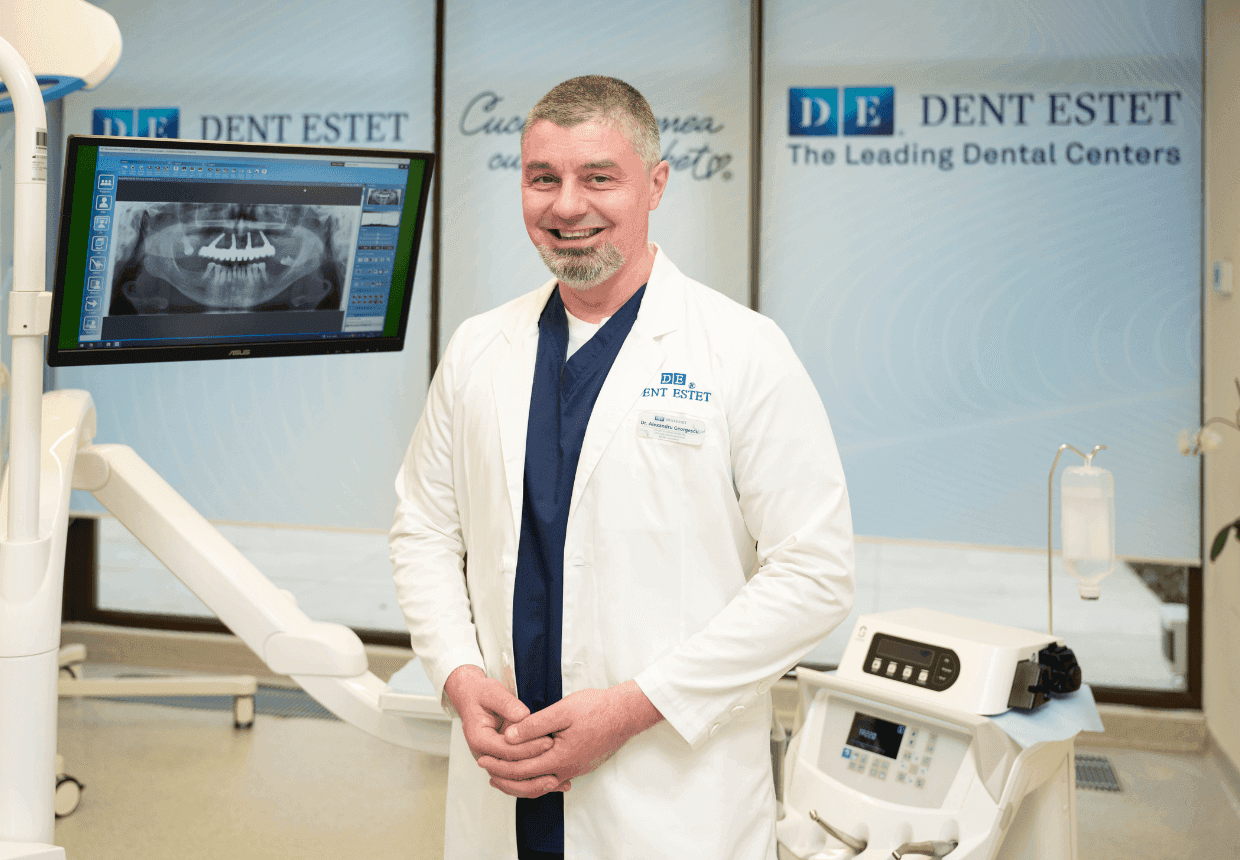
The stages of the All-on-4® procedure for people with diabetes
Preparation begins by stabilising the patient’s general and oral health. If there is periodontal disease, infections or significant build-up of bacterial plaque, these must be treated before the implants are inserted. The patient will continue their diabetes treatment as directed by their GP and will receive instructions regarding diet and medication from the day of the procedure.
Treatment planning aims to:
- medical assessment and blood glucose monitoring;
- clinical and imaging analysis of the jawbones;
- determining the position of the implants and the type of restoration;
- necessary tooth extractions, with alveolar curettage of infected areas;
- preparation of a temporary restoration, if immediate loading is possible.
During the procedure, the implants that will support the fixed restoration are placed. Depending on the clinical situation, the necessary extractions and implant placement may take place during the same appointment.
A fixed temporary restoration may be fitted on the day of the procedure or shortly thereafter only if the implants achieve the necessary stability and the biological and mechanical risks are considered acceptable. Diabetes does not automatically preclude immediate loading, but requires careful case selection.
Following the osseointegration period – the process by which the bone fuses around the implants – the temporary restoration is replaced with the permanent one. The duration of this stage varies depending on the patient’s healing capacity, bone quality, implant stability and tissue response.
Post-operative care and recovery
The first few days following the procedure require close monitoring of both the operated area and blood glucose levels. Changes to the patient’s diet, the stress of the procedure and the prescribed medication may affect blood glucose levels.
The patient must follow personalised instructions regarding:
- taking their medication;
- a diet suited to the recovery period;
- keeping the surgical site and the tissues around the implants clean;
- avoiding smoking;
- limiting the pressure exerted on the temporary restoration;
- attending scheduled check-ups;
- monitoring blood glucose levels as recommended by your diabetologist.
Antibiotics or other medicines must not be taken preventively on your own initiative. The need for them, the type of medication and the duration of treatment are determined by the dentist based on the procedure and the patient’s medical history.
Local swelling, tenderness and moderate discomfort may occur in the first few days. Any worsening pain, persistent bleeding, discharge, fever, loosening of the restoration or difficulty controlling blood glucose levels should be reported to the medical team.
Once healed, the maintenance of the implants remains essential. The fixed restoration must be cleaned both on the surface and in the area where it contacts the gums, using the methods recommended by your dentist. Regular check-ups and professional cleanings help with the early detection of peri-implantitis.
Could All-on-4® be a safe option for a patient with diabetes?
Yes, All-on-4® may be an option for certain people with diabetes, particularly when the condition is well-controlled, there are no active oral infections, and the patient is able to adhere to the monitoring and hygiene regime. A diagnosis of diabetes, on its own, is not an absolute contraindication for dental implants.
However, the safety of the treatment depends on several factors:
- the level and stability of glycaemic control;
- the presence of diabetic complications;
- the health of the gums and bone;
- healing capacity;
- oral hygiene;
- smoking;
- associated treatments and conditions;
- implant stability;
- compliance with long-term follow-up appointments.
Poorly controlled diabetes may lead to the procedure being postponed until metabolic control has improved. In other situations, the dental team may recommend a phased approach, a longer healing period or a prosthetic alternative.
Therefore, the relevant question is not simply ‘Can I have implants if I have diabetes?’, but ‘Is my diabetes sufficiently well-controlled, and does my oral condition allow for this treatment under appropriate medical conditions?’.
Frequently asked questions about All-on-4® implants for people with diabetes
Can I have All-on-4® treatment if I have diabetes?
Yes, treatment may be possible if the diabetes is under control and the patient’s oral health allows for the insertion of implants. Prior to the procedure, a clinical and imaging assessment, recent blood tests and, in certain cases, consultation with a diabetes specialist are required. The decision is not based solely on the diagnosis of diabetes, but on the complete risk profile.
When is the All-on-4® treatment suitable for people with diabetes, and when is it not?
Treatment may be considered when blood glucose levels are stable, oral infections have been treated, there is sufficient bone support, and the patient is able to maintain rigorous oral hygiene.
The procedure may be postponed in the event of uncontrolled diabetes, an active infection, uncontrolled systemic complications, or when the anaesthetic and surgical risks are too high. An elevated HbA1c level should not be interpreted in isolation, but in consultation with the diabetes specialist.
How long does recovery take after All-on-4® treatment in patients with diabetes?
Local discomfort and inflammation usually subside gradually over the first few days, but the biological integration of the implants takes several months. Poorly controlled diabetes can slow down the healing process. The exact time taken to complete the final restoration depends on blood glucose control, bone quality, implant stability and tissue healing.
How much does a fixed bridge on 4 or 6 implants cost?
The cost varies depending on the number and type of implants, the material used for the temporary and permanent restorations, the necessary examinations and the complexity of the case. Any extractions or additional procedures may affect the total cost. The exact price is determined following a consultation and once the treatment plan has been drawn up.
If you have diabetes and are considering All-on-4® dental rehabilitation, book a consultation at DENT ESTET. The medical team will assess your oral health, review your imaging scans and medical history to determine whether the treatment can be carried out and which protocol is best suited to your situation.