




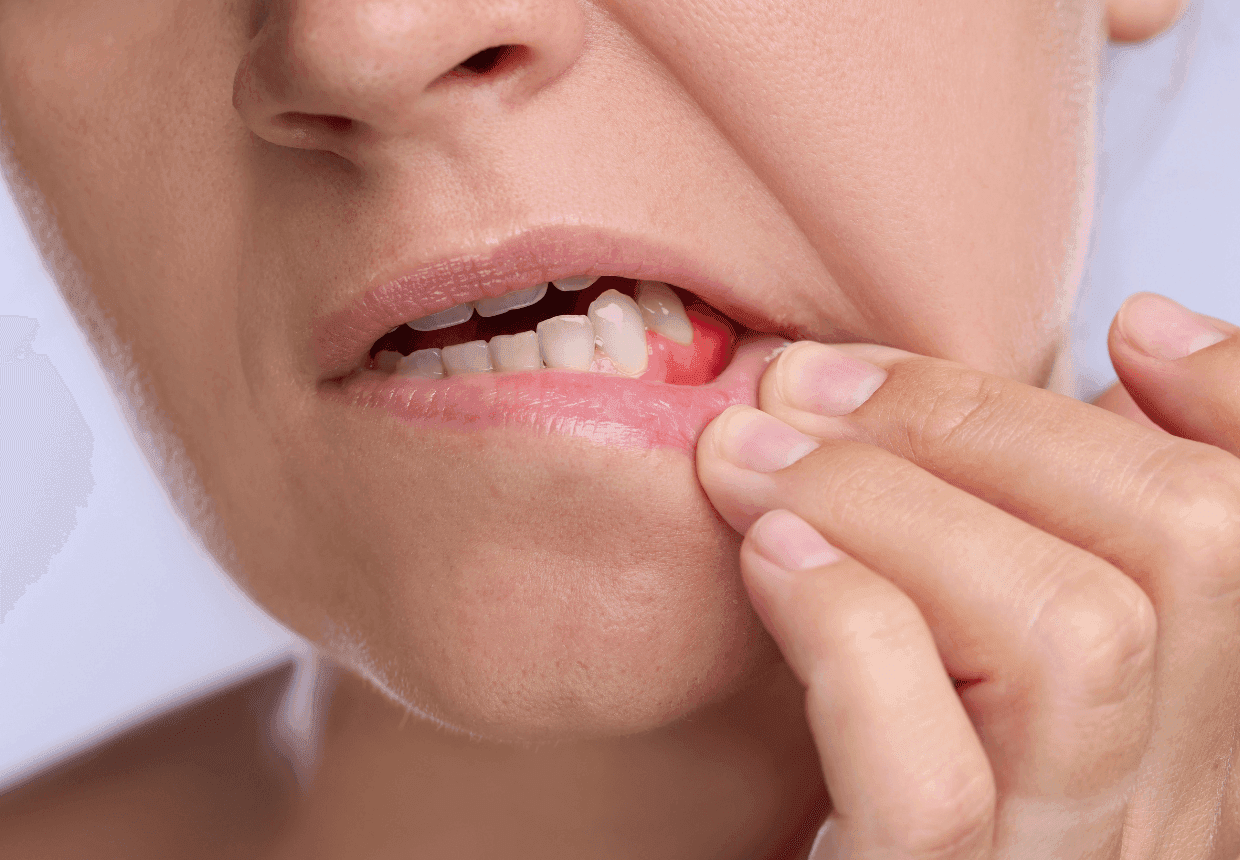
Gingival abscess: what it is, symptoms and when to see a dentist urgently
 Author: Dr. Diana Beleni
 August 25, 2026
A gingival abscess is a localised collection of purulent exudate (pus) resulting from a bacterial infection. It can cause swelling of the gums, redness, pain, tenderness and purulent discharge. Even if the discomfort subsides temporarily, the infection should not be left to clear up on its own. A dental consultation is necessary to identify the cause and determine the appropriate treatment.
What is a gingival abscess?
A gingival abscess forms superficially, within the gum tissue, when bacteria penetrate through a damaged area. It can occur, for example, around a piece of food or another foreign body trapped beneath the gum, which causes irritation and promotes local infection.
In everyday language, any ‘pus-filled sac’ observed on the gum may be referred to as a gingival abscess. However, the swelling may have different causes:
- a gingival abscess is located superficially, at the level of the gum;
- a periodontal abscess affects the tissues supporting the tooth;
- a dental abscess originates inside the tooth, but may cause a swelling on the gum.
The appearance of the swelling is not sufficient to establish a diagnosis. The source of the infection can be correctly identified through a dental consultation.
What does a gum abscess look like, and what symptoms can it cause?
An abscess may appear as a well-defined, circumscribed collection (swelling) or as a small ‘bump’ on the gum, sometimes with a yellowish-white spot. However, its appearance varies depending on the location and origin of the infection.
Local symptoms
The most common symptoms are:
- swollen, red and tender gums;
- pain when touched, brushed or chewing;
- discharge of pus and an unpleasant taste;
- bad breath;
- tooth sensitivity;
- tooth mobility, in some cases.
Can a gingival abscess occur without pain?
Yes. Sometimes, the pus drains through a small channel called a fistula, and the pressure and pain are relieved. This does not mean that the infection has cleared up. The source may remain active and require treatment.
Signs that may indicate the spread of infection
Fever, general malaise, swollen lymph nodes, facial oedema (swelling of the cheek or jaw) and difficulty opening the mouth may indicate that the infection has spread.
Difficulty breathing, speaking or swallowing, and extensive facial swelling require immediate medical attention. These are recognised as warning signs by the NHS.
“A swelling of the gums – medically known as a gingival abscess – even when it is not painful, may indicate the presence of an infection. If the pus drains and the discomfort subsides, this does not mean that the problem has been resolved. That is why it is important to identify the source of the infection as early as possible. The sooner we intervene, the greater the chance we have of limiting tissue damage and preserving the natural tooth.”
— Dr Diana Beleni, specialist in periodontology

What causes a gum abscess?
A gum abscess occurs when bacteria penetrate the gum tissue and cause a localised infection. Possible causes include:
A foreign body becoming lodged beneath the gum
Food debris, seeds or pieces of hazelnuts or walnuts left beneath the gum line can damage the tissue and encourage the build-up of bacteria.
The build-up of bacterial plaque and tartar
Poor oral hygiene allows bacteria to build up around the teeth and beneath the gum line, increasing the risk of inflammation and infection.
Periodontal disease
In patients with periodontal disease, bacteria become trapped in the periodontal pockets formed between the gums and the teeth. Blockage of the drainage from such a pocket can lead to the development of a periodontal abscess.
Deep caries and dental infections
A cavity that has reached the pulp of the tooth can cause an infection in the root. This may manifest as a fistula, which the patient may notice as a swelling on the gum.
Trauma and poorly fitted dental work
Gum lesions, food trapped between the teeth or poorly fitted dental restorations can contribute to irritation and the build-up of bacteria. However, not every swelling that appears near a dental restoration indicates that the restoration is the cause.
Factors that may increase the risk
Certain factors may make you more likely to develop an infection or make it harder to recover:
- poor oral hygiene;
- smoking;
- uncontrolled diabetes;
- conditions or treatments that weaken the immune system;
- a history of periodontal disease;
- irregular dental check-ups;
- a lack of professional dental cleanings carried out at the dentist’s surgery every 6 months.
These factors do not always directly cause an abscess, but they can create conditions conducive to the build-up of bacteria and the progression of infection.
Gingival abscesses in children: what do parents need to know?
In children, a swelling filled with pus on the gum may be caused by a deep cavity, dental trauma, a build-up of bacteria or a foreign body lodged beneath the gum. The infection can affect both milk teeth and permanent teeth.
Parents may notice:
- a whitish or reddish ‘bump’ on the gum;
- pain or tenderness when chewing;
- swollen gums;
- an unpleasant taste or smell;
- fever, loss of appetite or irritability.
Sometimes, the abscess does not cause severe pain, especially if the pus drains away. However, the absence of pain does not mean that the infection has cleared up. You should not delay seeking medical advice, as the infection can spread and affect the surrounding tissues.
Do not try to lance the swelling and do not give your child antibiotics without a doctor’s advice. Treatment is determined once the source of the infection has been identified.
Gingival abscess or dental abscess: what is the difference?
Although they may present with similar symptoms, abscesses are distinguished by the site where the infection originates:
| Type of abscess | Where it occurs | Common causes | Possible symptoms |
| Gingival abscess | Superficial, in the gum tissue | Foreign body, local injury | Localised swelling, redness and tenderness |
| Periodontal abscess | In the tissues supporting the tooth | Infection of a periodontal pocket | Pain, unpleasant taste and odour due to purulent discharge, and tooth mobility |
| Dental (periapical) abscess | At the root of the tooth | Deep caries, pulp necrosis or dental trauma | Toothache, sensitivity when chewing and the development of a gingival fistula |
The location or appearance of the swelling is not sufficient to determine the type of abscess. The dentist can identify the source of the infection through clinical examination and, where necessary, through vitality tests and imaging investigations.
Is a gum abscess a dental emergency?
Make an appointment if:
- you notice a yellowish-white discharge (pus) or a swelling on your gums;
- the pain is severe or getting worse;
- the swelling gets bigger or comes back;
- you develop a fever;
- you have swelling of the jaw or cheek (your cheek or jaw is swollen);
- the tooth becomes loose.
When is immediate medical attention required?
Go to A&E or call the emergency services if you have difficulty breathing, speaking or swallowing, if the swelling spreads to your face, mouth or throat, or if it affects the area around your eye.
How is a gum abscess diagnosed?
The diagnosis begins with an examination of the gums and the tooth near the swelling. The dentist will assess the symptoms, when they first appeared, and the patient’s medical and dental history.
Depending on the case, the assessment may include:
- measuring periodontal pockets;
- checking tooth mobility;
- testing the vitality of the dental pulp;
- taking an X-ray or other imaging tests.
These examinations help to determine the source of the infection and to distinguish between a gingival abscess and a periodontal or dental abscess. An accurate diagnosis is essential, as treatment varies depending on the cause of the abscess.
How is a gum abscess treated?
Treatment is determined by the origin of the infection. In the case of a gingival abscess itself, the dentist may drain the pus, clean the area and remove the foreign body or local factor that contributed to the infection.
If the swelling originates from the root of a tooth or is of periodontal origin, specific procedures tailored to the identified cause are required.
When are antibiotics needed?
Antibiotics may be recommended when the infection spreads, fever or other general symptoms develop, or where there are underlying medical risk factors. They do not replace the drainage and treatment of the source of the infection and should not be taken without a doctor’s prescription.
For more information on treatment options, read the article on dental abscesses: symptoms and treatment.
What happens if a gum abscess is left untreated?
If left untreated, the infection may persist, recur or spread to the surrounding tissues. The course of the condition depends on the cause of the abscess and your general state of health, which is why you should not delay seeking medical advice, even if the pain subsides.
Find out more about the possible progression and risks of an untreated dental abscess.
What can you do whilst you’re waiting to see the doctor?
Home remedies may temporarily relieve discomfort, but they do not eliminate the source of the infection.
Measures to reduce discomfort
Until your appointment:
- maintain good, gentle oral hygiene, using a soft-bristled toothbrush;
- you may use a mouthwash with antiseptic properties;
- eat soft foods and chew on the opposite side;
- avoid very hot, cold or sweet foods;
- use painkillers only in accordance with the package leaflet and applicable medical advice.
Can natural remedies treat a gum abscess?
No. Rinsing with lukewarm salt water may temporarily soothe the area, but it does not cure the abscess and is no substitute for dental treatment. Pain relief does not necessarily mean the infection has cleared up.
What should you avoid?
Do not burst or pierce the swelling, do not apply aspirin, alcohol or other irritants directly to the gums, and do not take antibiotics without a doctor’s advice. Even if the abscess drains spontaneously, book an appointment to treat the underlying cause.
How can a gum abscess be prevented?
The risk can be reduced by limiting the build-up of bacteria and treating dental or gum problems promptly:
- brush your teeth twice a day and clean between your teeth daily;
- attend regular check-ups and professional clean-ups;
- treat tooth decay and periodontal disease;
- avoid smoking;
- keep any underlying medical conditions, including diabetes, under control.
If you notice bleeding gums, sensitivity or food frequently getting stuck between your teeth, seek an assessment before an infection develops.
Frequently asked questions about gum abscesses
Can a gum abscess clear up on its own?
No. Even if the abscess drains spontaneously and the swelling and pain subside, the source of the infection may remain active. A dental examination is required to identify and treat the cause.
What does it mean if a gum abscess bursts?
Lancing the abscess allows the pus to drain and may temporarily relieve the pressure and pain. This does not mean that the infection has cleared up. Gently rinse your mouth with an antiseptic mouthwash and book an appointment.
Can I pop a blister on my gum at home?
No. Puncturing or squeezing the lump can damage the surrounding tissue and may cause the infection to spread. Drainage should be carried out under controlled conditions, when your doctor considers it necessary.
How long does it take for a gum abscess to heal?
The time taken to recover depends on the cause and extent of the infection, as well as the treatment administered. Symptoms may improve quickly following treatment, but it may take longer for the tissues to heal and for the underlying cause to be resolved.
Does the antibiotic cure a gum abscess?
Antibiotics do not always eliminate the cause of the abscess and are no substitute for drainage or dental treatment. Your doctor may recommend them if the infection spreads, if you experience systemic symptoms, or if there are certain medical risk factors.
Can salt water treat a gum abscess?
No. Rinsing with warm salt water can temporarily relieve discomfort and help maintain oral hygiene, but it does not eliminate the cause of the infection and is no substitute for a dental consultation.
How is a gum abscess treated during pregnancy?
An abscess must be assessed by a dentist, even during pregnancy. Treatment is tailored to the stage of pregnancy and the patient’s condition. Do not take antibiotics, anti-inflammatory drugs or any other medication without medical advice.
Can an abscess develop near an old dental filling or a denture?
Yes. Food debris becoming trapped, the build-up of bacteria or irritation caused by poorly fitted dental work can contribute to localised inflammation. However, the swelling may also have a dental or periodontal cause, which must be identified during a clinical examination.
Could braces contribute to the development of a gum abscess?
Braces do not directly cause an abscess, but they can make it harder to keep your teeth clean and may encourage the build-up of bacterial plaque. If you notice a swollen lump containing pus, see your doctor straight away, as there may be other causes.
Can a gum abscess come back after treatment?
Yes, if the source of the infection has not been completely eliminated or if factors such as periodontal disease, bacterial build-up or food debris remain. Regular check-ups and following your dentist’s advice reduce the risk of recurrence.
Do you have a lump or a spot of pus on your gum?
A lump on the gum (gingival swelling) can have several causes, and temporary relief from pain does not always mean that the infection has cleared up. A dental consultation allows the source of the abscess to be identified and the appropriate treatment to be chosen, before the infection spreads to the surrounding tissues.