



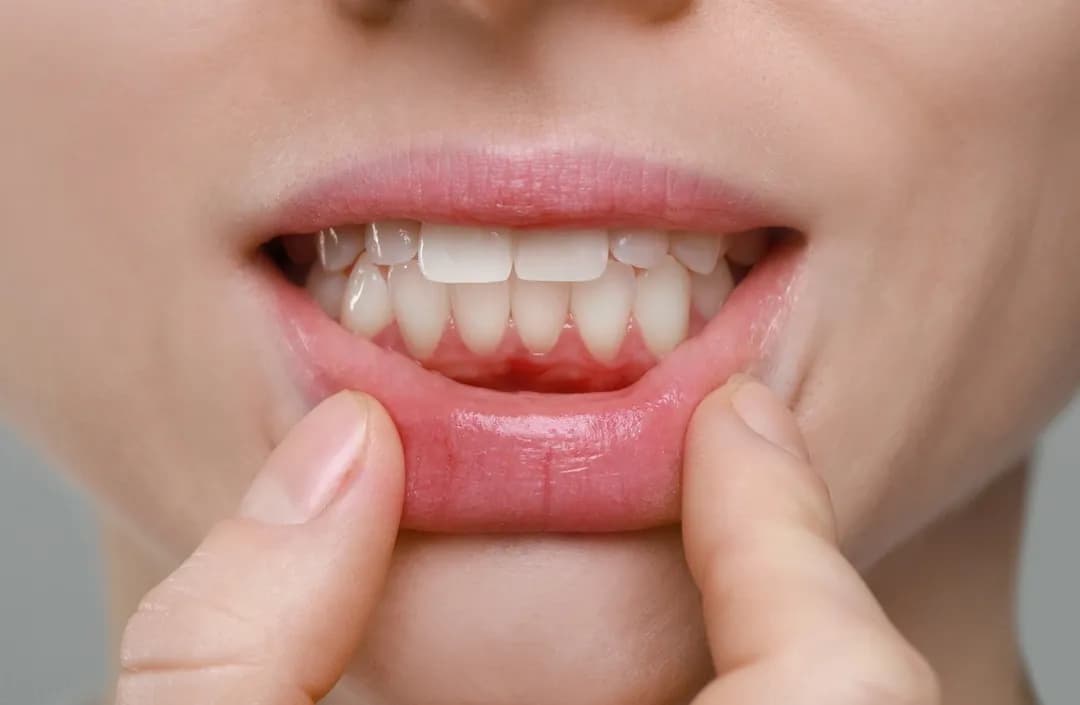
Gum recession: why do the gums recede and when is a gum grafting necessary?
 Author: Dr. Vanda Popa
 October 26, 2026
Gum recession occurs when the gum tissue pulls away from the tooth, exposing part of the tooth root. In addition to changing the appearance of your smile, it can cause tooth sensitivity and affect your oral health.
Identifying the underlying cause is essential for determining the most appropriate treatment, which, in certain cases, may include a gum graft.
What is gum recession and how does it affect dental health?
Gingival retraction refers to the apical displacement of the gums – upwards for the teeth of the upper arch and downwards for those of the lower arch – resulting in the exposure of the tooth root. Usually, only the visible surface of the teeth – the vestibular surface – is exposed, but there are also cases where the inner surfaces of the teeth are affected, namely the palatal surfaces of the upper teeth and the lingual surfaces of the lower teeth.
“Once the gum has receded, the tooth root is no longer protected from the environment inside the mouth. For this reason, the teeth become more vulnerable to physical, chemical and thermal stimuli. Consequently, teeth may be sensitive to temperature changes, to sour or sweet foods and, most commonly, extremely sensitive to contact with a toothbrush or other mechanical stimuli.” – Dr Vanda Popa, dentist specialising in periodontology and certified in laser treatments.
At the onset of recession, the discomfort caused by these stimuli is much greater, but it improves over time.
Another issue is that the affected teeth ‘appear longer’ and, consequently, the smile is affected aesthetically. If the cause of the recession is not addressed, it can even lead to tooth loss, and thus to functional impairment.
Gingival recession can also be a sign of periodontal disease, which involves damage to the tissues supporting the teeth. If bacterial plaque continues to build up on the receded area, gum bleeding and periodontal pockets may develop.
Why do gums recede? Causes and risk factors
The most common cause of gingival recession is mechanical trauma caused by brushing, although there may be several other causes:
Aggressive or incorrect brushing
The toothbrush may have bristles that are too stiff; the toothbrush may be the right one, but you are applying too much pressure, or your brushing technique is incorrect.
The build-up of bacterial plaque
Dental plaque, particularly on the lower incisors, can cause the gums to be ‘pushed’ apically, leading to gingival retraction.
Periodontal disease
The early signs of periodontal disease can be overlooked, which can lead to advanced stages characterised by gum recession or periodontal pockets.
Severe dental crowding
They lead to dental interference during mandibular movements, and the teeth involved in this interference will, over time, develop gingival recession.
Thin gingival biotype
It increases the risk of gum recession. However, even a thick gingival biotype can be damaged by vigorous brushing.
Bruxism and bad habits
Gum recession can be caused by factors such as teeth grinding (bruxism) or other bad habits.
How can you tell if your gums have receded? Signs and symptoms
One of the first signs of gum recession is a change in the appearance of the teeth. As the root becomes exposed, the teeth appear longer, and the patient notices this aesthetic change.
The root of the tooth is covered by cementum, not enamel as is the case with the crown, and this leads to hyperaesthesia and hypersensitivity, followed by poor oral hygiene.
External stimuli, both thermal and chemical, cause discomfort when the patient consumes cold, hot, sweet or sour foods.
Hyperaesthesia usually appears first and is extremely troublesome, particularly in the early stages. Because of this, the patient is no longer able to brush their teeth properly, which can lead to further complications.
How is a diagnosis of gingival recession made?
The diagnosis involves examining the gums and measuring gum recession, as well as periodontometry and an assessment of the tissues supporting the teeth.
“There are international classifications used to determine treatment and prognosis. Radiological investigations, such as digital X-rays or CBCT, show the bone level, which is very important in determining the prognosis. Based on this assessment, the cause of the recession and the treatment plan are determined.” – Dr Vanda Popa
What treatments are available for gum recession?
Depending on the clinical situation, the dentist may opt for non-surgical or surgical treatment.
Non-surgical treatment of gingival recession
In certain situations, the initial approach to gingival recession aims to eliminate contributing factors, maintain periodontal health and prevent the condition from progressing.
Non-surgical treatment may include:
- Correcting brushing technique: adopting a gentle technique and using a soft-bristled toothbrush to reduce trauma to the gums.
- Professional cleaning and periodontal treatment: removal of bacterial plaque and tartar deposits, as well as treatment of periodontal inflammation, where indicated.
- Management of tooth sensitivity: using desensitising products or undergoing professional treatments recommended by the dentist.
- Monitoring progress: regular assessment of the gum line to identify any changes and adjust the treatment plan.
Surgical treatment of gingival recession
Surgical treatment may involve covering exposed roots using mucogingival surgery techniques, repositioning gingival tissue and using gingival grafts where indicated.
Can the gums regenerate?
Lost gum tissue does not, as a rule, return spontaneously to its original position. Halting the progression of recession does not mean that the root that is already exposed will be covered.
In certain situations, surgical treatment can restore gingival coverage. Natural remedies, toothpastes and mouthwashes cannot restore lost gum tissue.
What is a gum graft?
A gum graft is a surgical procedure in which gum tissue is added to an area where the gum is too thin or has receded, exposing part of the tooth root.
The aim of the procedure is to improve the protection of the tissues surrounding the tooth, to increase the thickness of the gum or, in certain cases, to cover the exposed root.
The tissue used for the graft can usually be harvested from the palate (roof of the mouth) or may come from other suitable tissue sources, depending on the technique chosen.
When is a gum graft necessary?
A gingival graft may be recommended when gingival recession leads to exposure of the tooth root and the patient experiences functional or aesthetic problems, or is at increased risk of the condition worsening.
Situations in which a gingival graft may be indicated:
- Persistent tooth sensitivity caused by root exposure to thermal, chemical or tactile stimuli.
- Aesthetic dissatisfaction, particularly when gum recession affects the appearance of the smile or creates visible gaps between the teeth.
- Difficulties with oral hygiene, where the shape of the exposed area promotes the build-up of bacterial plaque or makes cleaning more difficult.
- Risk of further recession, in certain situations where the gingival tissue is thin or there are local factors that promote further tissue loss.
- The presence of cervical root lesions, where root exposure is associated with wear or loss of tooth structure and an individualised therapeutic approach is required.
“Not every case of gingival retraction requires surgical intervention. The indication for a gingival graft is determined following an assessment of periodontal health, tissue thickness, tooth position and the characteristics of the retraction. Based on these factors, we can assess the possibility of partial or complete root coverage.” – Dr Vanda Popa
In some cases, before starting orthodontic treatment, for patients with a thin biotype, the periodontist and orthodontist may recommend a gingival graft to prevent gingival recession.
In implantology, a gingival graft is very often recommended to ensure firm connective tissue around the implant, which reduces the risk of peri-implantitis.
Types of gum grafts
Free gingival graft
The harvesting site is the hard palate, the ‘roof of the mouth’. The graft contains both epithelial and connective tissue. It is positioned where the mucosa attaches to the tooth or implant. The result is the formation of a dense, immobile barrier capable of halting the progression of retraction.
Connective tissue graft
The harvesting site is again the hard palate. The graft consists solely of connective tissue. Post-operative comfort is greater.
Tissue replacement alternatives
Collagen matrices – xenografts – are derived from highly purified porcine collagen. They are indicated for augmenting the biotype around implants or correcting multiple recessions.
How is a gingival graft performed?
A gingival graft procedure involves the following stages:
- Assessment and preparation of the area where the procedure is to be carried out.
- Administration of local anaesthesia.
- Harvesting of tissue, usually from the palate, if the chosen technique requires this.
- Positioning and securing the graft in the area requiring treatment.
- Post-operative advice and follow-up appointments to monitor healing.
Recovery after a gum graft: how long does it take and what should you avoid?
What is it normal to feel after the procedure?
Following a gum graft, the following symptoms may occur:
- Mild discomfort or pain. A sensation of tenderness, localised throbbing or a burning sensation. This discomfort is most pronounced in the area from which the graft was taken. The pain can be relieved with anti-inflammatory drugs and painkillers as prescribed by your dentist.
- Swelling and bruising. The cheek or lip begins to swell after 36 hours and reaches its peak at 72 hours, after which the swelling begins to subside.
- Tightness or a localised numbness.
- Change in the colour of the graft. On days 3–7, the graft changes colour, ranging from white to yellowish. These are fibrin deposits which are part of the healing process.
- Minor bleeding in the first few days.
Recommendations for gum healing
Diet following the procedure
The patient should eat soft foods for a few weeks to avoid food coming into contact with the gum graft area.
Oral hygiene
On the first day after the procedure, it is important to protect the operated area and avoid any action that might dislodge the graft or damage the tissues.
Controlling bacterial plaque remains important, even if mechanical cleaning is temporarily limited in the area of the procedure. For the first 7–14 days, the graft must be protected from the pressure and friction caused by oral hygiene products.
Please note: protecting the operated area does not mean neglecting oral hygiene. Teeth not involved in the procedure must continue to be cleaned, and the resumption of hygiene in the graft area must be carried out gradually, in accordance with the attending dentist’s instructions.
Avoiding trauma to the operated area
- Avoid touching the operated area with your tongue, fingers or other objects.
- Do not pull on your lip or cheek to check the appearance of the graft.
- Do not brush the area of the procedure directly, and do not use dental floss or a mouthwash in that area until your dentist gives the go-ahead.
- Avoid hard, crunchy or sharp foods, and do not chew food near the operated area.
- Avoid excessive movements that may put strain on the tissues or sutures.
- Do not pull on the sutures and do not attempt to remove the periodontal dressing yourself, if one has been applied.
Avoiding smoking
Smoking causes severe peripheral vasoconstriction, depriving the graft of the blood it needs to integrate. It is therefore prohibited.
Attending follow-up appointments
Attending post-operative check-ups is important for monitoring healing.
| Approach | Main aim | Does it restore receded gums? |
| Correcting brushing technique | Halting recession | NO |
| Periodontal treatment | Halting periodontal disease | NO |
| Desensitising products | Tooth desensitisation | NO |
| Gum graft | Root coverage | YES |
How can you prevent gum recession?
Preventing gum recession involves both maintaining good oral hygiene and identifying the factors that may contribute to its development.
Key recommendations:
- Gently brush your teeth with a soft-bristled toothbrush. Use a soft-bristled toothbrush and avoid excessive pressure or aggressive movements, which can damage the gum tissue.
- Proper cleaning of the spaces between the teeth. Use dental floss or interdental brushes suited to the spaces between your teeth to remove bacterial plaque from hard-to-reach areas. Dental floss should be used correctly, without causing trauma.
- Regular dental check-ups. Regular appointments allow for the early identification of changes in the gums and factors that may contribute to gum recession.
- Early treatment of periodontal conditions. Gingivitis and periodontitis require assessment and appropriate treatment to limit inflammation and the loss of the tissues supporting the teeth.
- Avoid smoking. Smoking increases the risk of developing and progressing periodontal disease and affects how tissues respond to treatment.
- Monitoring areas where gum recession has already occurred. If you notice that your teeth appear longer, you experience tooth sensitivity or the gum line has changed, seek a dental consultation.
Key points: Preventing gum recession starts with good oral hygiene habits, but also involves identifying individual risk factors. Your dentist can help you choose the right brushing technique and draw up a personalised prevention and monitoring plan.
Frequently asked questions about gingival recession and gingival grafts
Why does gum recession occur?
Gingival recession is mainly caused by mechanical trauma resulting from aggressive brushing, but it can also be a sign of developing periodontitis.
Does a gum graft procedure hurt?
No, the procedure does not hurt, as it is carried out under local anaesthetic, and any post-operative pain is managed with standard painkillers and anti-inflammatories.
How long does it take to recover from a gum graft?
Recovery following a gum graft takes around 4 weeks after the procedure.
Can a gum graft be performed on a single tooth?
Yes, a gum graft can be performed on just one tooth
Can a gingival graft completely cover the exposed root?
It depends very much on the degree of retraction and on adherence to the post-operative instructions.
How much does a gum graft cost?
The total cost can only be determined following an assessment of the clinical situation.
Can gum recession recur after treatment?
If poor brushing habits are not corrected, the recession may recur.