





 Author:
  October 7, 2026
Periodontosis, medically known as periodontitis, is an inflammatory condition that can progressively damage the gums, ligaments and bone that support the teeth. The early signs may seem easy to overlook: a little bleeding when brushing, redder gums or recurring bad breath.
These symptoms do not in themselves confirm a diagnosis of periodontitis, but they do indicate that the gums need to be assessed. Identifying inflammation before tooth mobility sets in can limit damage to the supporting tissues and help preserve your natural teeth.
Periodontitis: symptoms at a glance
Signs that may indicate a gum or periodontal problem include:
- bleeding gums when brushing, using interdental cleaners or chewing;
- red, swollen or tender gums;
- persistent bad breath;
- receding gums and teeth that appear ‘longer’;
- tooth sensitivity, particularly in areas where the roots have become exposed;
- the appearance of new gaps between the teeth;
- discharge between the gums and teeth;
- a change in the way the teeth meet when biting
- tooth mobility.
According to the European Federation of Periodontology, bleeding, gum recession, bad breath and tooth mobility are among the main signs that require professional assessment. Some of these may have other causes, which is why a diagnosis should not be made solely on the basis of symptoms observed at home.
What is periodontitis?
The colloquial term ‘periodontosis’ is frequently used to describe periodontitis. This is an inflammatory condition affecting the tissues that support the teeth: the gums, the periodontal ligaments and the alveolar bone. Unlike gingivitis, the inflammation is no longer confined to the gums alone, but also affects the deeper structures that support the teeth.
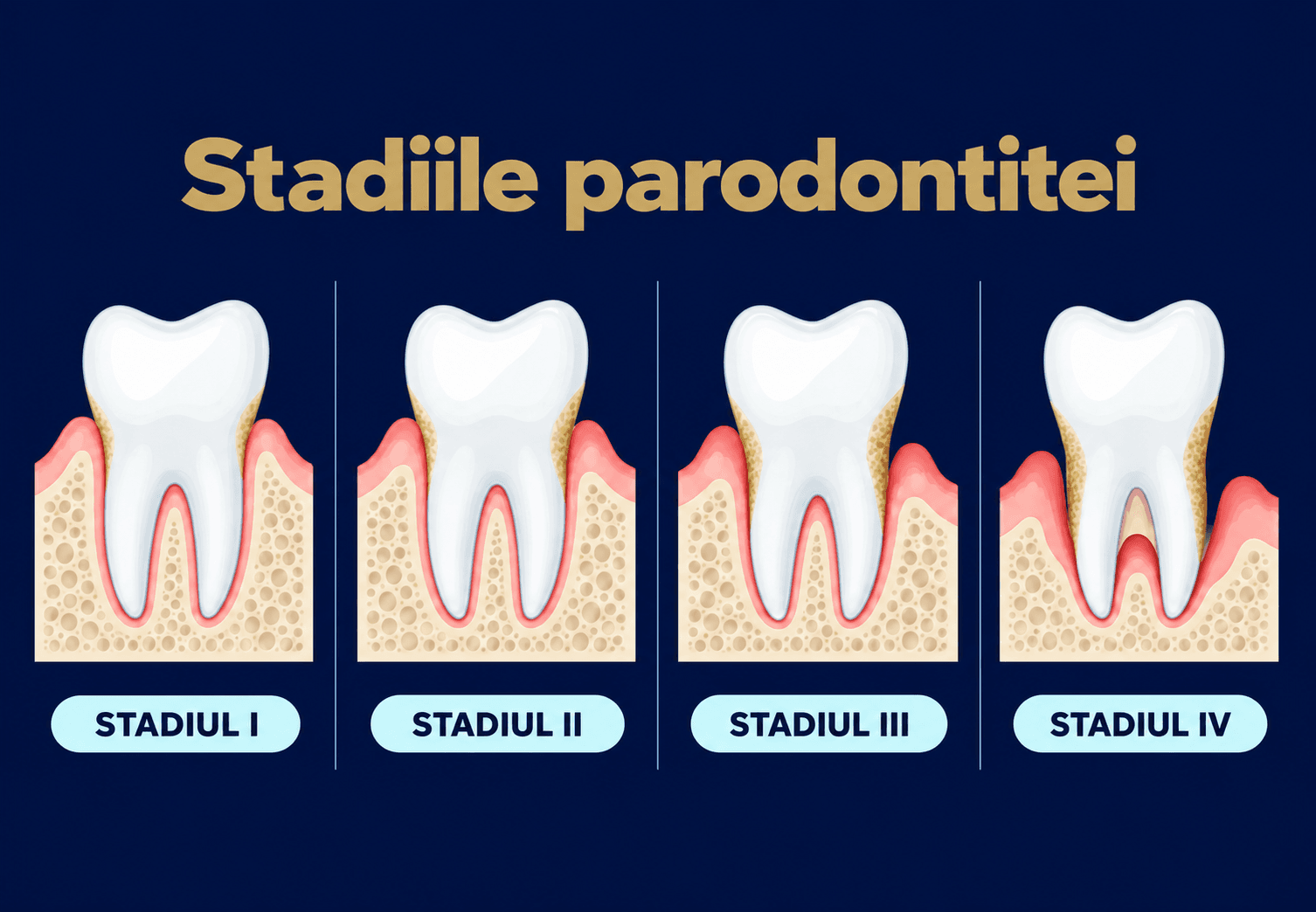
The process usually begins with the build-up of bacterial biofilm on the surface of the teeth and along the gum line. The body’s inflammatory response can gradually lead to the gums pulling away from the teeth, the formation of periodontal pockets and the slow destruction of the supporting bone.
What is the difference between gingivitis and periodontitis?
Gingivitis and periodontitis are not the same thing. Gingivitis affects the gums and is reversible when bacterial plaque is controlled through proper oral hygiene and professional treatment. Periodontitis involves the loss of supporting tissues – the alveolar bone and periodontal ligaments – and the damage that has already occurred cannot be reversed by brushing alone. Treatment can, however, control the inflammation and halt or, at worst, slow down the progression of the disease.
Why can periodontitis go unnoticed?
Periodontitis can progress without obvious pain. The American Academy of Periodontology describes periodontal disease as often being ‘silent’, as clear symptoms may only appear in more advanced stages.
Furthermore, some changes are easily dismissed as normal:
- bleeding is put down to brushing too vigorously;
- bad breath is temporarily masked by mouthwash;
- gum recession is regarded as a cosmetic issue;
- slight mobility may not be noticed straight away.
In people who smoke, bleeding may be less obvious, even if the condition is present. The absence of bleeding does not, therefore, rule out a periodontal problem.
What are the early symptoms of periodontitis?
“Bleeding gums are not normal, even if they only occur when brushing your teeth. They are often one of the first signs of inflammation and a reason to have your gums checked before the condition progresses and affects the tissues that support your teeth.” – Dr. Codruța Ciurescu
Bleeding gums
Bleeding whilst brushing, flossing or when biting into hard foods is one of the most common signs of gum inflammation.
Healthy gums should not bleed repeatedly when brushed correctly. If bleeding occurs frequently, spontaneously or is accompanied by redness and swelling, a dental consultation is recommended.
Do not stop brushing the area just because your gums are bleeding. Gentle cleaning should continue, but the cause of the bleeding must be assessed by a dentist.
Red, swollen or sensitive gums
Gingivitis is the superficial and reversible form of the condition. The gums may become red, swollen, shiny or sensitive, and may bleed easily.
Not all cases of gingivitis progress to periodontitis. However, persistent gingivitis indicates that the inflammation is not under control and that improved oral hygiene and professional removal of bacterial deposits are required.
Halitosis
Persistent bad breath, known as halitosis, can be associated with the build-up of bacteria on the tongue, between the teeth and in periodontal pockets. Bacteria are most often responsible for this unpleasant odour.
However, halitosis has several possible causes, including dry mouth, tooth decay, certain infections or general medical conditions. If the odour returns quickly after brushing and cleaning the tongue, a dental check-up is recommended.
Sensitivity to cold, heat, sweet or sour foods
Tooth sensitivity is not a specific or definitive sign of the onset of periodontitis. It can occur when the gums recede and part of the tooth root remains exposed.
Gum recession may be associated with periodontal disease, but it can also have other causes, such as aggressive brushing, the position of the teeth or thin gum tissue. Your dentist can distinguish between localised recession and changes caused by periodontitis.
How do the symptoms change as periodontitis progresses?
The symptoms observed by the patient do not always accurately indicate the stage of the disease. Staging is determined through clinical examination and radiological investigations, based on the loss of attachment, bone loss, the depth of the pockets and the complexity of the case.
| Approximate progression | What happens | Signs that may be observed |
|---|---|---|
| Gingivitis | Inflammation is confined to the gums, with no bone loss | Bleeding, redness, swollen or tender gums |
| Early-stage periodontitis | The attachment between the gums and the tooth begins to be affected | Persistent bleeding, gum recession, bad breath, periodontal pockets identified during examination |
| Moderate periodontitis | Loss of attachment and bone becomes more extensive | Visible recession, sensitivity, gaps between teeth, possible slight mobility |
| Advanced periodontitis | Teeth lose a significant portion of their periodontal support | Tooth mobility, tooth migration, difficulty chewing, discharge or risk of tooth loss |
This table is for guidance only. Seemingly minor symptoms do not automatically mean that the disease is at an early stage, and pain does not always reflect the severity of the condition.
What are the main risk factors for periodontitis?
The main risk factors involved in the development of periodontitis are bacterial plaque and poor oral hygiene, harmful habits such as smoking, or systemic conditions such as diabetes. Other factors that may influence the risk include genetic predisposition, age, certain medicines, hormonal changes, obesity, stress and certain conditions that affect the inflammatory response.
Dental plaque and poor oral hygiene
Bacterial biofilm is the factor that triggers gum inflammation. If it is not removed effectively, plaque accumulates at the gum line and in the spaces between the teeth. Some of it may mineralise and turn into tartar, which can only be removed by a professional.
Daily plaque control, through brushing and appropriate interdental cleaning, remains essential both for prevention and for the success of periodontal treatment.
Smoking
Smoking is one of the most significant modifiable risk factors involved in the onset and progression of periodontitis. It can reduce the response to treatment and may mask certain signs, including gingival bleeding.
Giving up smoking is part of the risk factor management recommended in the EFP guidelines for the treatment of periodontitis.
Diabetes
The relationship between diabetes and periodontitis is bidirectional. People with diabetes, particularly when their blood glucose levels are not well controlled, may be at greater risk of periodontitis and may experience a more severe course of the disease.
In turn, periodontal inflammation can make it more difficult to manage blood sugar levels. For this reason, the dentist should be informed of any diagnosis of diabetes, recent blood glucose or glycated haemoglobin levels, and the treatment being followed.
Stress
Chronic stress can influence the body’s response to inflammation and may encourage behaviours such as smoking, an unbalanced diet or neglecting oral hygiene.
It is not a direct or sole cause of periodontitis, but is recognised by professional organisations as a factor that may contribute to individual susceptibility and the progression of the disease.
When should you see a dentist if you have symptoms of periodontitis?
Book an appointment if you notice repeated bleeding of the gums, swollen gums, persistent bad breath, receding gums or changes in the position of your teeth.
You should not wait until you experience pain before seeking an assessment. Book an appointment as soon as possible if you notice:
- loose teeth;
- pus or other discharge between the gum and the tooth;
- severe swelling;
- a change in your bite;
- difficulty chewing;
- new gaps between the teeth.
These signs do not automatically mean that a tooth will be lost. However, they do indicate the need for a diagnosis and a treatment plan.
What happens during a periodontal consultation?
The assessment may include:
- a discussion about symptoms, medical history, smoking, diabetes and any treatments you are currently undergoing;
- an examination of the gums and any plaque and tartar build-up;
- measuring the depth of the periodontal pocket, which corresponds to bone loss around the tooth, using a periodontal probe;
- recording bleeding on probing;
- assessment of gingival recession;
- checking tooth mobility and position;
- assessing how the teeth fit together when biting;
- X-rays to assess the supporting bone, where indicated;
- determining the diagnosis, stage and risk of progression.
At DENT ESTET, the assessment can be carried out using the Florida Probe digital system, which allows for the computerised recording of periodontal measurements and their comparison throughout the course of treatment.
“In periodontitis, the aim of treatment is to control inflammation and preserve natural teeth for as long as possible. Long-term results depend on both treatment tailored to each individual case and good daily oral hygiene, together with regular follow-up.” — Dr. Codruța Ciurescu
Periodontitis treatment
Treatment for periodontitis is tailored to the stage of the disease, the depth of the periodontal pockets, individual risk factors, and how the tissues respond to the initial stages of treatment.
According to the EFP clinical practice guideline for the treatment of stage I–III periodontitis, treatment follows a stepwise approach:
- Plaque control and management of risk factors
Patients receive personalized guidance on toothbrushing and interdental cleaning. Risk factors such as smoking and diabetes are addressed, along with factors that contribute to plaque build-up.
- Subgingival instrumentation
Bacterial deposits and calculus are removed from the root surfaces and periodontal pockets using hand and/or ultrasonic instruments.
- Re-evaluation
After a period of healing, the dentist reassesses pocket depth and bleeding. If disease remains active in certain areas, further non-surgical treatment or periodontal surgery may be recommended.
- Supportive periodontal care
Once the disease has been brought under control, regular follow-up appointments are required at intervals determined by the patient’s individual risk. These visits help prevent recurrence and maintain the results of treatment.
Antibiotics are not routinely recommended for all patients with periodontitis. They may be considered in selected cases based on the diagnosis and the dentist’s clinical assessment.
Professional periodontal treatment does not replace good oral hygiene at home. Long-term stability depends on daily plaque removal, effective management of risk factors, and regular follow-up appointments.
The early signs may be subtle. It is important to recognise them.
Bleeding when brushing, swollen gums or persistent bad breath should not be ignored, even if there is no pain. These symptoms can have various causes, and a consultation is the only way to find out whether the inflammation is limited to the gums or has also affected the tissues supporting the teeth.
If you notice any changes to your gums, book a periodontal consultation. A timely diagnosis allows for the selection of a treatment tailored to the stage of the disease and ensures the long-term protection of your natural teeth.
Frequently asked questions about the symptoms of periodontitis
Does bleeding gums mean I have periodontitis?
Not necessarily. Bleeding is common in gingivitis, but it can also occur in periodontitis. Periodontal measurements and, in some cases, X-rays are required to distinguish between the two.
Does periodontitis cause pain?
In many cases, periodontitis does not cause pain in its early stages. The absence of pain does not rule out inflammation, periodontal pockets or bone loss.
Can periodontitis develop even if I brush my teeth every day?
Yes. The brushing technique, cleaning between the teeth and the presence of risk factors all play a part. Tartar and deposits beneath the gums cannot be removed by brushing at home.
Do receding gums always mean periodontitis?
No. Gingival recession can also be caused by aggressive brushing, the position of the teeth or the characteristics of the gum tissue. A link to periodontitis can only be established through a consultation.
Is bad breath a sign of periodontitis?
Persistent halitosis is extremely common in periodontal disease, but it is not the only possible cause. It may also have dental, oral or general causes that need to be investigated.
Can gingivitis be cured?
Yes. Gingivitis can be reversed by having bacterial deposits professionally removed and by maintaining good oral hygiene. However, the bone loss caused by periodontitis cannot be reversed by oral hygiene alone.
Can the progression of periodontitis be halted?
In most cases, the progression of the condition can be managed through professional treatment, good oral hygiene, the reduction of risk factors and regular monitoring. The outcome depends on the stage of the disease and adherence to maintenance therapy.
How often are follow-up checks required after treatment?
The interval is determined on a case-by-case basis. The European Federation of Periodontology (EFP) recommends maintenance periodontal therapy at intervals tailored to the patient’s risk; in clinical practice, these are frequently set at approximately three to six months.
Bibliography
- European Federation of Periodontology, Symptoms of gum disease
- European Federation of Periodontology, Gum Disease Explained
- American Academy of Periodontology, Symptoms and types of gum disease
- American Academy of Periodontology, Risk factors for gum disease
- EFP – Guidelines for the Treatment of Periodontitis in Stages I–III
- EFP – Treatment of gum disease