




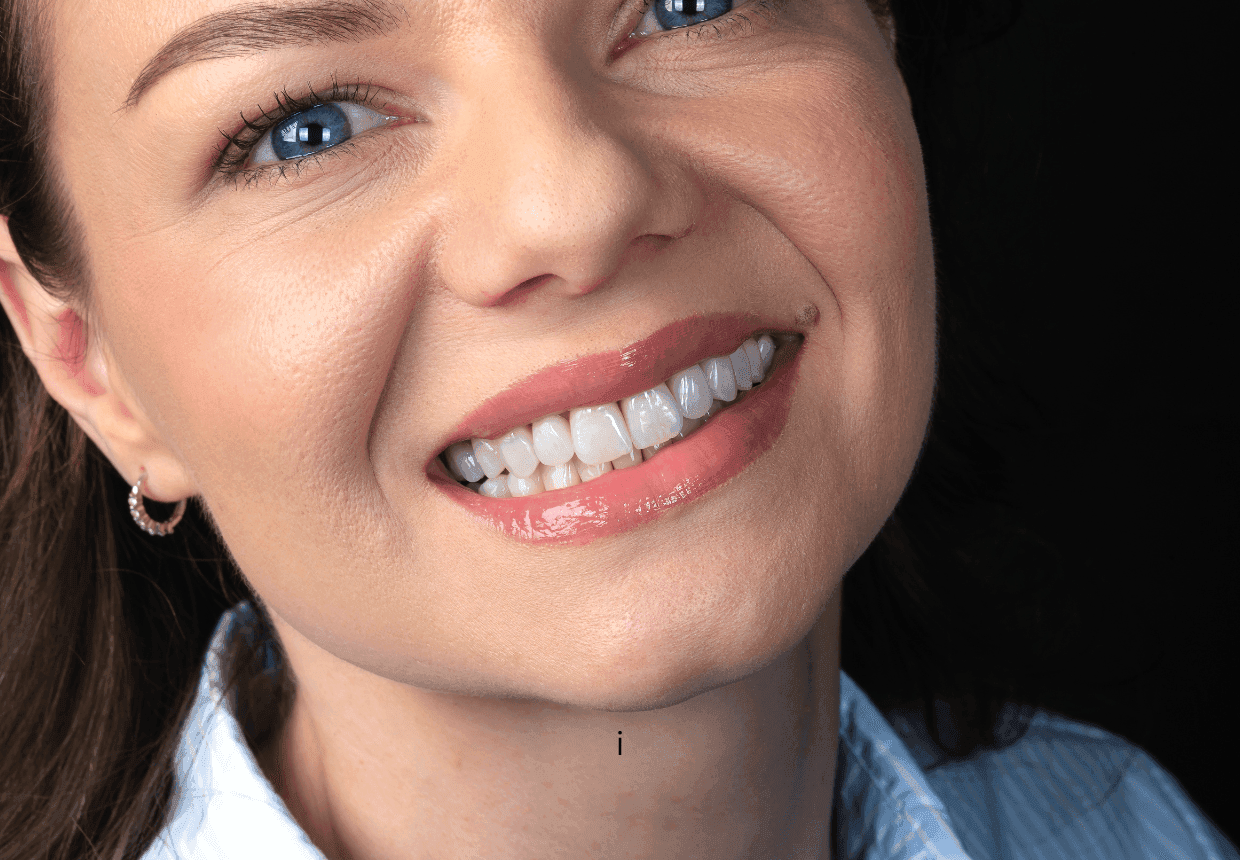
How many teeth does a person have? Everything you need to know about human teeth
 Author:
  July 13, 2026
An adult normally has 32 permanent teeth, including the four wisdom teeth. Excluding these, the total is 28 teeth. Children have 20 milk teeth, which are gradually replaced by their permanent teeth.
The number of teeth can vary from person to person, depending on the eruption of wisdom teeth, extractions or the congenital absence of certain teeth. Below, you’ll find out how many teeth a person has at each age, what types of teeth there are and what role each one plays.
In short: how many teeth does a person have? A child has 20 milk teeth, and an adult normally has 32 permanent teeth.
The number of teeth can vary from person to person. Many adults have only 28 teeth because one or more wisdom teeth do not erupt, remain impacted in the bone or have been extracted.
| Stage | Number of teeth |
| Child (deciduous dentition) | 20 |
| Adult without wisdom teeth | 28 |
| Adult with wisdom teeth | 32 |
How do human teeth develop?
Teeth begin to form long before they become visible. The first dental structures appear as early as the foetal stage, and their development continues throughout childhood and adolescence.
Humans have two distinct sets of teeth throughout their lives: the primary teeth and the permanent teeth. This mechanism allows the teeth to adapt to the growth of the jaws and to the functional needs of each stage of development.
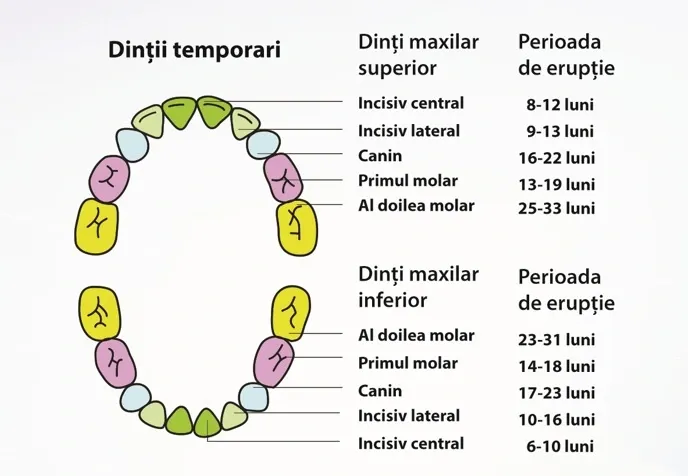
Milk teeth
Baby teeth, also known as primary teeth, usually appear between 6 months and 3 years of age.
A child develops a total of:
- 8 incisors;
- 4 canines;
- 8 primary molars.
Although they are temporary, these teeth play a vital role. They enable proper chewing, aid speech development and maintain the space required for the eruption of future permanent teeth.
The premature loss of a milk tooth can lead to problems with tooth alignment and may affect the harmonious development of the dental arches.
Permanent teeth
Around the age of 6, the gradual replacement of milk teeth with permanent teeth begins.
The process continues until around the age of 12–13, by which time most children have a full set of permanent teeth. The last teeth to appear are usually the wisdom teeth, typically between the ages of 17 and 25.
Permanent teeth are larger, stronger and designed to support chewing functions in the long term.
How many teeth does a child have?
A child has 20 milk teeth.
These are distributed as follows:
| Type of tooth | Number |
| Incisors | 8 |
| Canines | 4 |
| Deciduous molars | 8 |
| Premolars | 0 |
| Total | 20 |
Milk teeth are smaller than permanent teeth and have thinner enamel, which makes them more vulnerable to tooth decay. For this reason, oral hygiene should begin in the early years of life.
How many teeth does an adult have?
An adult normally has 32 permanent teeth.
These include:
| Type of tooth | Number |
| Incisors | 8 |
| Canines | 4 |
| Premolars | 8 |
| Molars | 12 |
| Total | 32 |
In practice, many people have only 28 teeth because their wisdom teeth are either missing or have been extracted.
| Characteristic | Milk teeth | Permanent teeth |
| Total number | 20 | 32 |
| Premolars | None | 8 |
| Size | Smaller | Larger |
| Lifespan | Temporary | Permanent |
| Primary function | Development of chewing and speech | Long-term functionality |
The structure of human teeth
On the surface, a tooth may seem simple. In reality, each tooth is made up of several specialised tissues.
Tooth enamel
Enamel is the outermost layer of the tooth and the hardest tissue in the body. Its role is to protect the internal structures from wear and tear and from attack by acids produced by bacteria.
Dentin
Beneath the enamel lies dentine, a mineralised tissue that makes up the bulk of the tooth. Dentine is more sensitive than enamel and can transmit sensations of cold, heat or sweetness.
Dental pulp
The pulp is the living centre of the tooth. It contains blood vessels and nerves that supply the tooth with nutrients and ensure its sensitivity.
Dental cementum
Cementum covers the root and helps to anchor the tooth in the jawbone.
Types of teeth and the role of each
Each type of tooth is specialised for a particular stage of chewing.
Incisors
The incisors are the eight teeth located at the front of the mouth.
They are the first to come into contact with food and serve to cut it into smaller pieces.
As well as their role in chewing, incisors have a significant impact on the aesthetics of a smile and the pronunciation of certain sounds.
Canines
Canines are positioned between the incisors and the premolars.
Their sharper shape helps them to tear and shred food. Thanks to their long, strong roots, canines are considered the strongest teeth in the human dentition.
Premolars
Premolars form the transition zone between the canines and the molars.
They help to crush food and contribute to the even distribution of chewing forces.
An adult has eight premolars, two in each dental quadrant.
Molars
Molars are the largest and strongest teeth in the mouth.
Their broad, ridged surface allows food to be ground down efficiently before swallowing. Most of the chewing force is borne by the molars.
Why do wisdom teeth come through?
Wisdom teeth are the third set of molars and are usually the last teeth to erupt, most commonly in late adolescence or early adulthood. They form part of the permanent set of teeth, but not everyone develops them or has enough space for them to erupt.
For our ancestors, wisdom teeth were more useful for chewing hard foods, and their jaws were larger.
As our diet has changed and the size of our jaws has decreased, the space available for wisdom teeth has become insufficient in many cases.
This is why:
- some people do not develop wisdom teeth at all;
- some wisdom teeth remain trapped within the bone;
- inflammation or infection may occur;
- their extraction may be necessary.
How are teeth numbered?
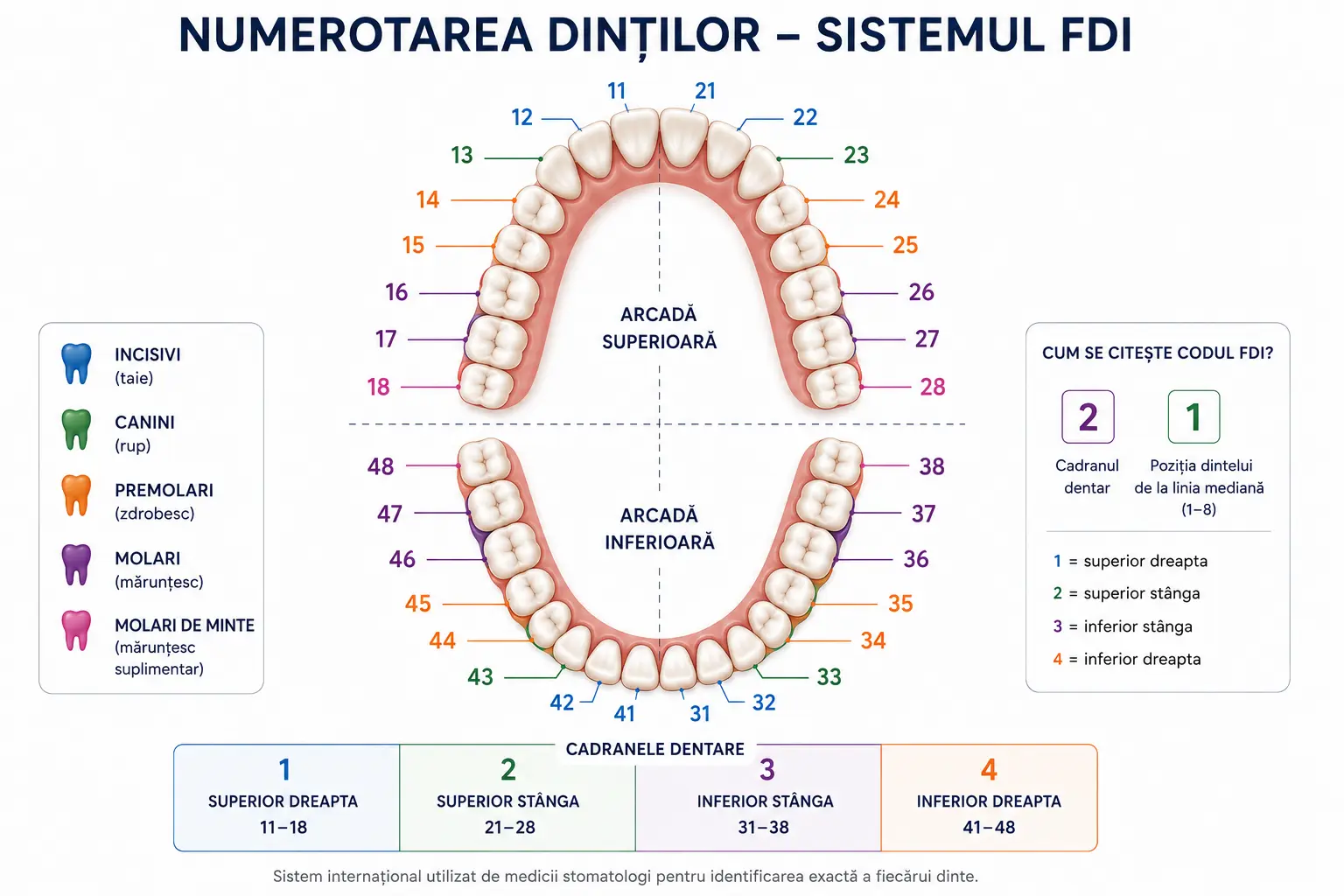
To identify each tooth quickly, dentists use the FDI international system.
In this system, each tooth is represented by a two-digit code.
Common examples
- 11 = right upper central incisor;
- 21 = left upper central incisor;
- 13 = upper right canine;
- 36 = lower left first molar;
- 48 = lower right wisdom tooth.
An illustration of the dentition using FDI numbering can help to quickly understand the position of each tooth and is a useful tool for both patients and dentists.
Tooth decay: causes and prevention
Tooth decay is one of the most common conditions worldwide.
It occurs when bacteria in dental plaque convert sugars from food into acids that attack tooth enamel.
The most significant risk factors include:
- frequent consumption of sugar;
- poor oral hygiene;
- lack of fluoride;
- infrequent dental check-ups;
- reduced saliva flow.
The good news is that most tooth decay can be prevented through simple and consistent measures.
The importance of oral hygiene
A healthy set of teeth means more than just the absence of pain or tooth decay.
Oral health contributes to chewing, speaking, appearance and everyday comfort. Furthermore, numerous studies have highlighted links between oral health and general health.
How do you brush your teeth properly?
For effective oral hygiene, dentists recommend:
Brushing twice a day.
- Use a soft-bristled toothbrush.
- Brushing for at least two minutes.
- Cleaning all tooth surfaces.
- Replacing your toothbrush every 3 months.
Why is flossing important?
A toothbrush cannot thoroughly clean the spaces between your teeth.
Dental floss helps remove bacterial plaque from hard-to-reach areas and helps prevent interdental cavities and gum inflammation.
Orthodontics and tooth alignment
Not everyone has perfectly aligned teeth.
Crowded teeth, gaps or bite problems may have genetic causes or may arise as a result of insufficient jaw development or the premature loss of milk teeth.
Modern orthodontic treatments can help with:
- aligning the teeth;
- improving chewing;
- facilitating oral hygiene;
- reducing tooth wear;
- optimising the aesthetics of your smile.
Interesting facts about human teeth
- Tooth enamel is the hardest tissue in the body.
- Teeth begin to form before birth.
- Every person has a unique dental fingerprint.
- Canines are considered the strongest teeth in the mouth.
- Permanent teeth do not naturally regrow once lost.
The number of teeth changes over the course of a lifetime, from the 20 milk teeth of childhood to the 32 permanent teeth of adulthood. Each type of tooth has a specific role, and the health of the entire set of teeth depends on oral hygiene, prevention and regular dental check-ups.
Understanding how the human dentition works is the first step towards maintaining a healthy smile for life.
Frequently Asked Questions
How many teeth does an adult have?
An adult normally has 32 permanent teeth, including the four wisdom teeth. If these are missing or have been extracted, the total number is 28.
How many teeth does a child have?
A child has 20 milk teeth: 8 incisors, 4 canines and 8 temporary molars.
Is it normal not to have wisdom teeth?
Yes. The absence of one or more wisdom teeth is considered a normal variation.
Which is the strongest tooth?
The canine is considered the strongest tooth in the human dentition because of its long, sturdy root.
At what age do wisdom teeth come through?
Usually between the ages of 17 and 25, although there are significant individual variations.