




Gingival hyperplasia: dental treatments using Waterlase and Biolase lasers
 Author: Dr. Dr Eduard Grigore
 December 3, 2025
Gingival hyperplasia is an abnormal growth of gum tissue, which can gradually cover a tooth and cause both aesthetic and functional discomfort. This condition is relatively common, particularly among young people undergoing orthodontic treatment or those who need to take certain medications.
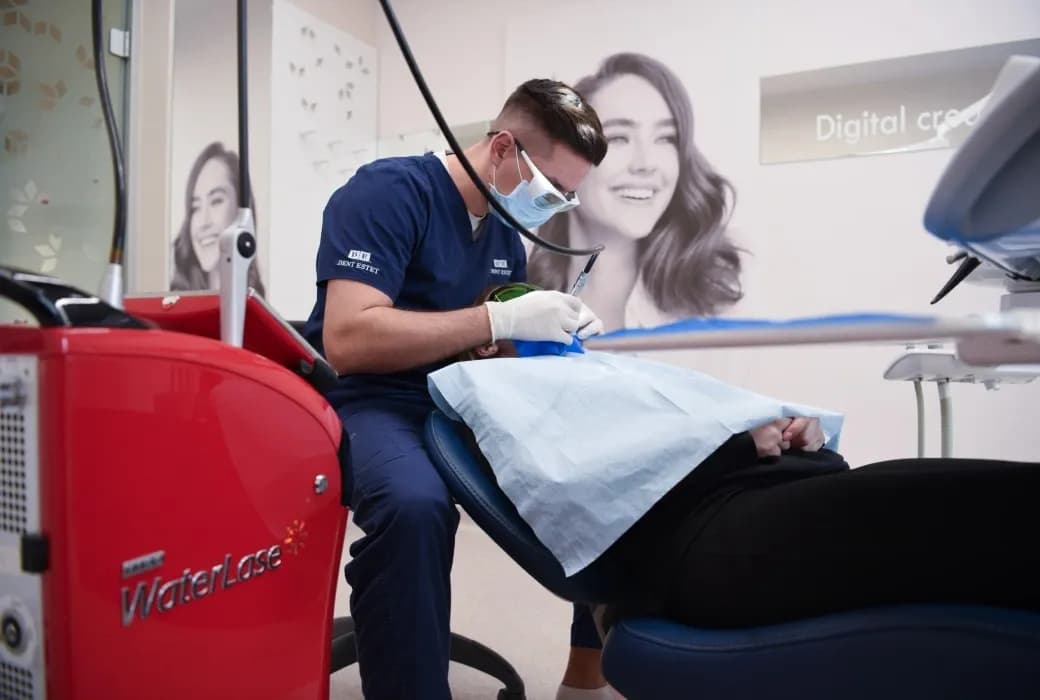
The excess tissue can be removed through a procedure called gingivectomy, which, at DENT ESTET clinics, is performed using the Waterlase or Epic Biolase dental laser.
In this article, we invite you to discover why gingivectomy performed using the innovative Waterlase or Epic Biolase technologies represents a modern solution for treating gingival hyperplasia and what impact it has on oral health.
What is gingival hyperplasia?
Gingival hyperplasia is an excessive growth of gum tissue, which can occur around one or more teeth. Symptoms include swollen, red or shiny gums, bleeding when brushing and, in advanced cases, the gums covering the crowns of the teeth.
Although patients sometimes believe it is simply a case of ‘inflamed gums’, excess gum tissue is a genuine process of tissue proliferation and requires specialist treatment.
The causes of this condition are varied:
- Genetic causes – there are rare genetic forms in which the gums react by growing excessively even under normal hygiene conditions
- Inflammation – in most cases, gingival hyperplasia is caused by inflammation, which is usually triggered by the build-up of bacterial plaque that is difficult to remove from hard-to-reach areas.
- Medication-related causes – gingival hyperplasia can also be caused by various types of medication, such as those used to treat epilepsy, high blood pressure or cardiovascular conditions.
If left untreated, hyperplasia promotes the build-up of bacterial plaque, the onset of gingivitis and the worsening of periodontal problems. Fortunately, the treatment of gingival hyperplasia can be easily carried out using Waterlase® or Epic Biolase® lasers, two high-performance technologies developed by Biolase, the most innovative brand in the manufacture and development of dental lasers. Treatment with Waterlase is an effective, minimally invasive and rapid solution that restores both gum health and the natural aesthetics of the smile.
Gingivectomy
A gingivectomy is a procedure in which the dentist removes excess gum tissue to restore the natural shape and contour of the gums. Put simply, a gingivectomy involves ‘reshaping’ the gums so that the teeth are the correct size and easy to clean.
In practice, the procedure takes relatively little time and is painless, thanks to the advantages offered by modern Waterlase® or Epic Biolase® lasers.
Indications for gingivectomy:
- medication-induced or inflammatory gingival hyperplasia
- gummy smile
- difficult access to subgingival caries
- cosmetic dentistry (gingival contouring)
- dental prosthetics – preparation of teeth for prosthetic work
Advantages of gingivectomy:
The major advantage of Waterlase/Biolase laser gingivectomy is that the procedure is highly precise and does not affect neighbouring tissues.
- It ensures rapid healing, minimal bleeding and far greater comfort than conventional techniques
- Post-operative pain is significantly reduced
- There is no bleeding, which is impossible to avoid with scalpel techniques
- The aesthetic results are predictable
Laser treatment in dentistry
In modern dentistry, laser technology has become a staple tool thanks to the precision and comfort it offers patients.
“At DENT ESTET clinics, the most widely used dental lasers globally – Waterlase and Epic Biolase – are available for laser dental treatments. These core technologies used in laser dentistry combine light energy with water or special diodes to enable the cutting of soft tissues with impressive precision,” explains Dr Eduard Grigore, a periodontist certified in laser dental treatments.
In the treatment of gingival hyperplasia, dental lasers are preferred because they reduce bleeding and accelerate healing. Laser treatment is also frequently used to reduce bacteria in periodontal pockets.
The advantages of laser procedures include:
- almost complete elimination of bleeding
- no vibration or noise
- a reduced risk of infection
Laser gingivectomy: steps
- Patient preparation
Prior to laser gingivectomy, the patient undergoes a clinical and radiological assessment to determine how much gingival tissue needs to be removed using the dental laser.
At this stage, aesthetic expectations, any sensitivities and post-operative instructions are discussed. Usually, due to the use of Waterlase or Epic Biolase lasers, deep anaesthesia is not required; topical anaesthesia or a small local injection is sufficient.
- The gingivectomy procedure itself
“Using the Epic Biolase or Waterlase dental laser, the dentist contours the gum with very precise movements during the procedure. The laser energy instantly coagulates the blood vessels, ensuring the surgical field remains clean and clearly visible. The procedure takes between 10 and 30 minutes, depending on the number of teeth requiring this type of treatment. Unlike traditional techniques, no stitches are required, and the patient can go home immediately,” explains Dr. Eduard Grigore.
Advantages of using lasers over conventional methods
In the past, gingivectomy was performed using a scalpel. Compared to this type of procedure, the use of a laser offers greater precision and a much faster recovery.
The dental laser removes excess tissue without causing mechanical trauma, and immediate coagulation significantly reduces intraoperative bleeding. Furthermore, the absence of sutures contributes to greater comfort in the first few days following the procedure.
“From my clinical experience, I can say that patients who choose laser dental treatments report less pain, less inflammation and a superior aesthetic result. Furthermore, laser dentistry is particularly favoured by anxious patients, as the procedure is gentler and does not involve noisy or invasive instruments,” explains Dr. Eduard Grigore.
Aftercare following laser treatment
Following laser dental treatment, the instructions are simple and easy to follow:
- Careful oral hygiene – a soft-bristled toothbrush should be used for the first few days, along with rinses using an antiseptic mouthwash. It is important to avoid traumatising the treated area, including through aggressive brushing.
- Diet – it is recommended to avoid very hot, spicy or crunchy foods for 48 hours. These can irritate the treated area and delay healing.
Most patients do not experience severe pain after laser treatment, but rather a slight sensitivity that quickly subsides.
Side effects are rare and minor, sometimes consisting of mild discomfort.
Frequently asked questions about gingival hyperplasia and gingivectomy
What is gingival hyperplasia and why does it occur?
Gingival hyperplasia is excessive growth of the gums, caused by genetic, medicinal or inflammatory factors.
How is gingival hyperplasia treated?
Treatment for gingival hyperplasia depends on the cause, but in most cases it is recommended to remove the excess gum tissue, preferably using modern techniques involving a dental laser.
What is gingivectomy and when is it recommended?
Gingivectomy is the surgical removal of excess gum tissue, recommended for hyperplasia or for aesthetic purposes.
What are the advantages of laser treatment in dentistry?
The advantages of laser treatment stem from the benefits of the dental laser: reduced pain, reduced bleeding, shorter healing time, and precise, comfortable results.
How long does the pain last after a laser gingivectomy?
As a rule, pain is minimal. In exceptional cases, pain may last 24–48 hours, but most patients do not require painkillers.
What types of lasers are used: Waterlase, Biolase?
The Waterlase laser and the Biolase Epic-X dental laser are most commonly used in gum treatments, recognised for their precision and comfort.
Bibliography
- Gingival Hyperplasia, published on 26 February 2025 on the website my.clevelandclinic.org.
- Gingival Hyperplasia, published on 23 December 2024 on the website www.healthline.com
- S. Meraw, P. Sheridan – Medically induced gingival hyperplasia, 1998
- Gingival Enlargement, The American Academy of Oral Medicine
- J. Beaumont, J. Chesterman, M. Kellett & K. Durey - Gingival overgrowth: Part 1: aetiology and clinical diagnosis, 2017