




 Author:
  April 10, 2026
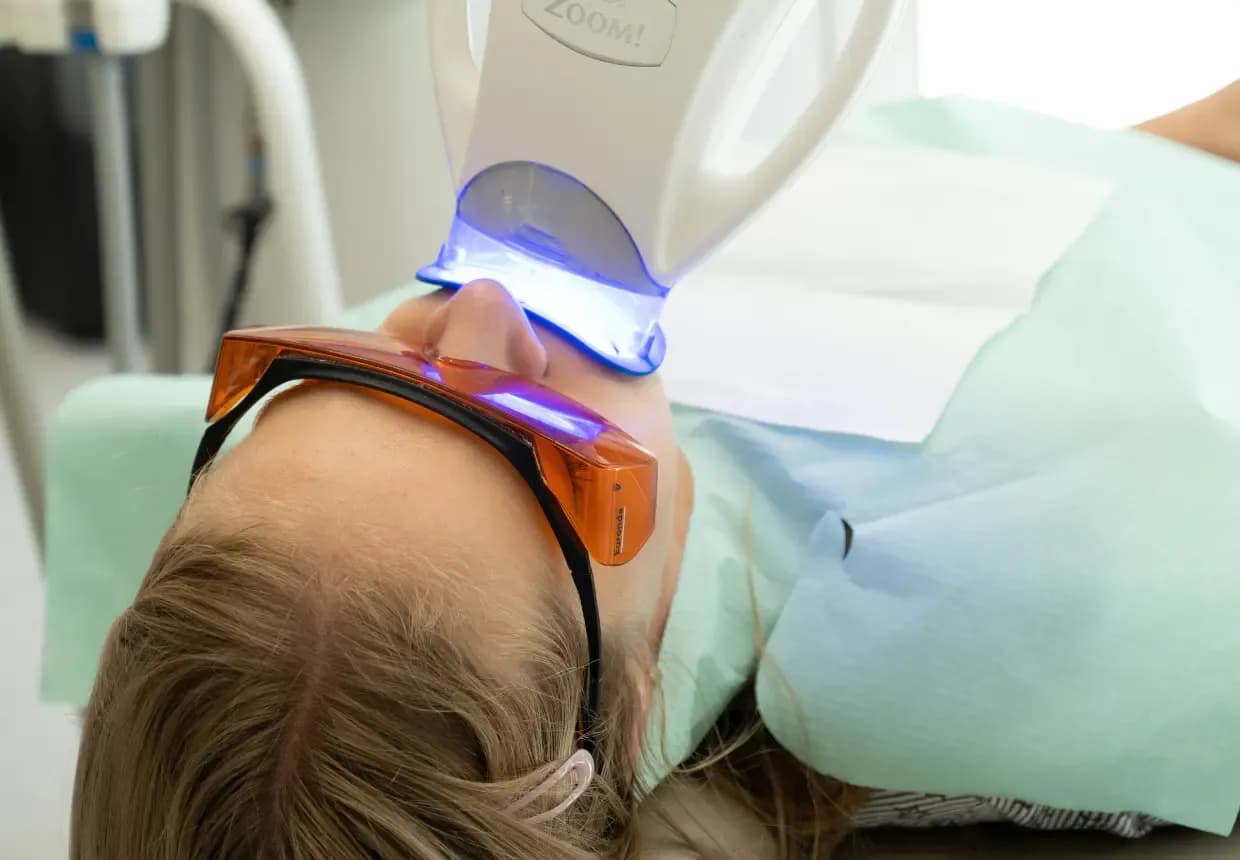
Premium teeth whitening is a cosmetic dental procedure that gives you a brighter, whiter and visibly more youthful smile. The procedure uses modern technologies, such as LED lights or lasers, to activate the whitening gel.
Professional teeth whitening carried out in the clinic is a minimally invasive and controlled process, unlike at-home teeth whitening, where results are less predictable and protection is reduced.
An important consideration is the safety of the enamel. When teeth whitening is carried out correctly, the enamel is not affected. Our premium protocol also includes the application of a gel designed to protect and remineralise the teeth.
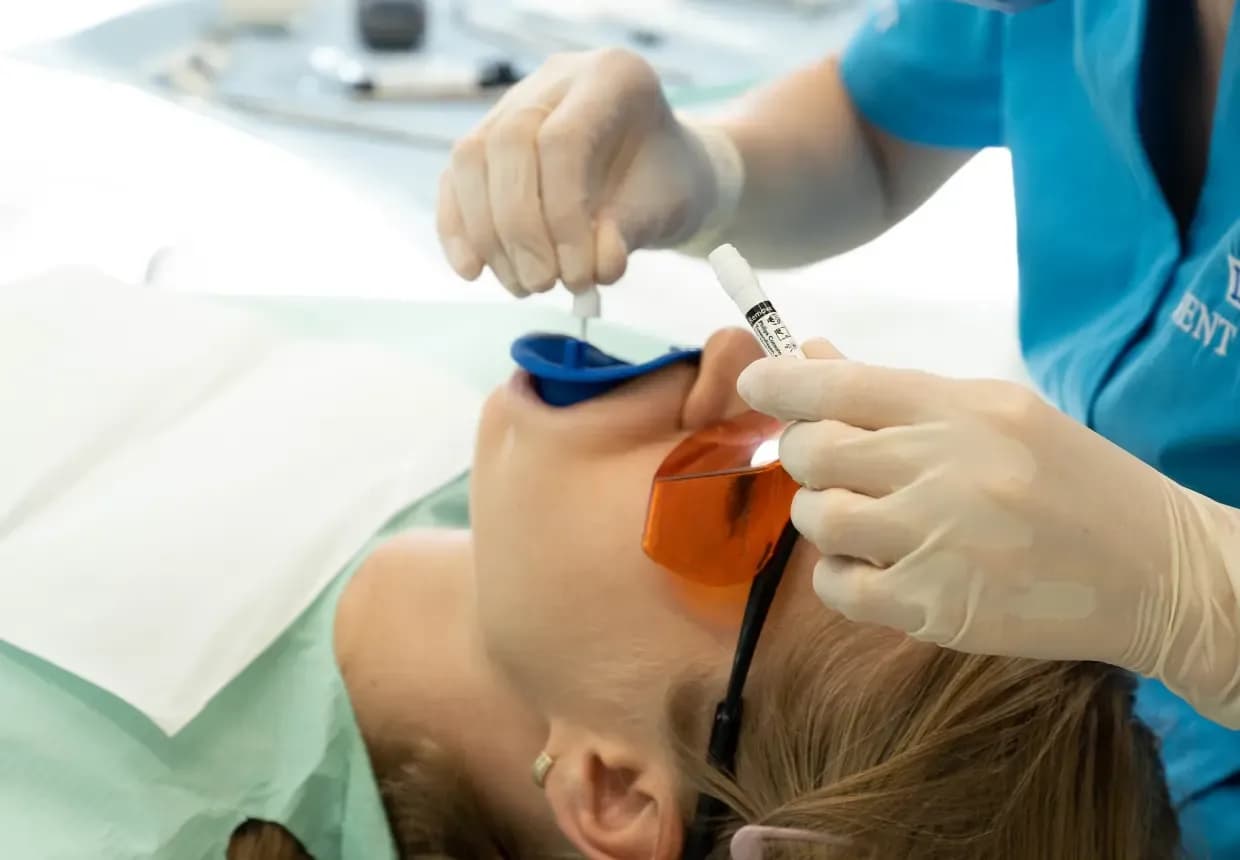
During the procedure, the gums are isolated so that the teeth-whitening gel acts exclusively on the teeth. In the clinic, this control is precise, whereas home teeth-whitening methods can lead to gum irritation.
The result is a whiter smile, achieved in safe and controlled conditions.
Benefits of premium teeth whitening
Premium teeth whitening offers visible benefits, both in terms of results and the patient experience.
Results are immediate, usually after a single in-clinic teeth whitening session, achieving a lighter and more uniform shade of the teeth.
The treatment is tailored to each patient — from the initial shade of the teeth to the patient’s sensitivity — which allows for a balanced result, integrated within the context of dental aesthetics.
At the same time, the procedure is effective and controlled, without the need for repeated applications, and the patient’s comfort is maintained throughout the treatment.
A personalised approach for every patient
“In our clinic, premium teeth whitening is not a standard protocol, but a treatment tailored to each patient.”
It all begins with a careful assessment of the smile and facial features. We analyse the initial shade of the teeth and the type of discolouration to anticipate the response to professional teeth whitening and set realistic goals, integrated within the context of dental aesthetics.
We document the case with diagnostic photographs and discuss the patient’s history — habits such as smoking or coffee consumption, which can influence the result and the longevity of the whitening effect.
The assessment also includes existing restorations. Crowns or fillings do not change colour following teeth whitening, and this aspect is essential to the treatment plan.
Through this approach, we achieve a predictable result tailored to each patient.
Aesthetic result
In premium teeth whitening, the aim is not excessive whiteness, but a natural result, tailored to each patient.
We carefully monitor the process to ensure that the shade of the teeth after whitening blends harmoniously with the patient’s facial features, without unsightly contrasts or over-whitening.
Right from the start, we discuss expectations with the patient and together we establish a realistic outcome, in line with the principles of dental aesthetics.
What does a premium teeth-whitening treatment involve?
Premium teeth whitening is a structured process that begins with a thorough assessment of the teeth and continues with the selection of a treatment plan tailored to each patient. The in-clinic teeth whitening procedure is not simply a matter of applying a gel; it involves several stages designed to ensure both the effectiveness and safety of the treatment.
Every stage – from preparing the teeth and protecting the gums to applying and activating the teeth-whitening gel – is supervised by the dentist. This ensures a consistent and predictable result, in line with the overall approach to cosmetic dentistry.
Smile assessment before treatment
The first step in in-clinic teeth whitening is the dental consultation, during which we assess the patient’s smile and facial features. We analyse the characteristics of the teeth and identify any potential contraindications to determine whether teeth whitening treatment is suitable. Book a consultation.
We take diagnostic photographs, which allow us to document the case and compare the results before and after treatment. These are useful both for planning and for giving the patient a clear picture of the progress.
A key step is professional cleaning — scaling and teeth whitening go hand in hand, as removing tartar and bacterial plaque allows the whitening gel to work evenly. For optimal results, we recommend that scaling be carried out 1–2 weeks before the procedure.
Protocol chosen according to the patient’s needs
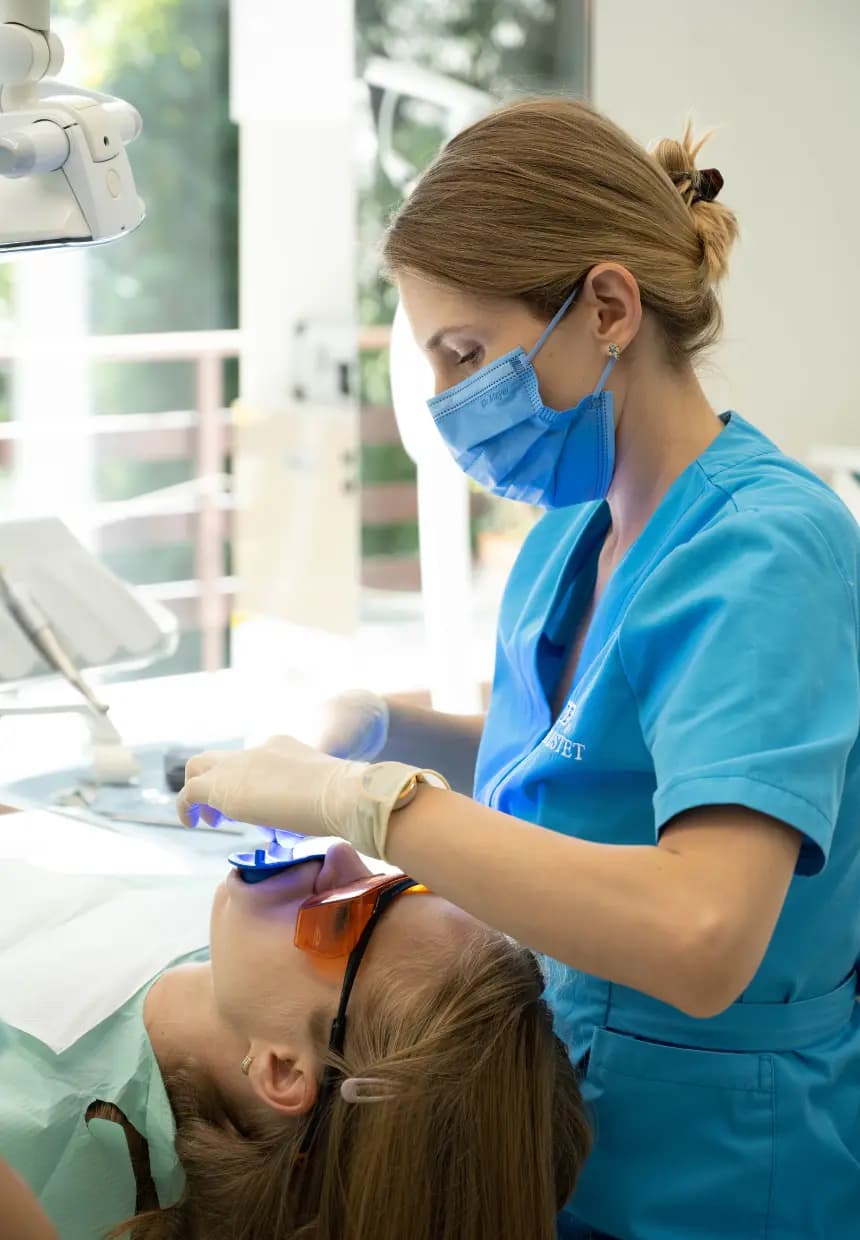
There are two main types of professional teeth whitening: in-clinic whitening only, and the combined option, which involves in-clinic treatment followed by home maintenance.
In-clinic teeth whitening is suitable for patients who want a quick, immediately visible result without any additional steps. The procedure involves applying a teeth-whitening gel, activated by an LED lamp or laser, for approximately 30–45 minutes.
The combined option is recommended for those who wish to maintain the results over the longer term or adjust the shade over time. This involves the use of custom-made trays, into which the patient applies a teeth-whitening gel at home, as instructed by the dentist.
The protocol is tailored to each patient by adjusting the gel concentration and the duration of the procedure, ensuring the result is both effective and comfortable. Find out about other types of professional teeth whitening too.
Post-whitening recommendations
Professional teeth whitening offers immediately visible results, but maintaining them depends largely on post-treatment care.
For the first 48 hours, we recommend following a ‘white diet’, i.e. avoiding strongly pigmented foods and drinks such as coffee, red wine or berries. During this period, teeth are more susceptible to staining, and following these recommendations helps to stabilise the teeth whitening result.
Smoking is another important factor affecting the maintenance of teeth whitening. Ideally, it should be avoided completely in the first few days, as it can quickly diminish the achieved effect.
For maintenance, we recommend using products designed for sensitive teeth and, in some cases, custom-made trays with teeth-whitening gel, which allow you to refresh the shade over time.
The duration of the results varies from patient to patient. Generally, the question ‘how long does teeth whitening last?’ does not have a standard answer, as the result depends on diet, oral hygiene and habits such as smoking or coffee consumption.
Why do patients choose premium teeth whitening?
Patients choose premium teeth whitening for a visible and natural result, tailored to each individual smile. In-clinic teeth whitening allows for control over the final shade, ensuring a uniform result without an artificial appearance.
At the same time, professional teeth whitening offers efficiency and comfort — often in a single session — in a controlled environment under medical supervision, ensuring a predictable and safe result.
Predictability of the result
The results of teeth whitening are not left to chance, but are the outcome of a carefully planned process. With in-clinic teeth whitening, we have control over the final shade, ensuring that the result is uniform and tailored to each patient.
The before-and-after comparison allows us to track progress and achieve clear, predictable teeth whitening results, with no colour variations.
Comfort during the procedure
One of the advantages of professional teeth whitening is the comfort it offers during the treatment. Modern gels are designed to reduce tooth sensitivity, and the procedure is suitable even for patients with heightened tooth sensitivity.
At the same time, gum protection and control of the light intensity contribute to pain-free teeth whitening, carried out quickly and safely.
Who is premium teeth whitening suitable for?
Professional teeth whitening is a safe and personalised treatment, suitable for a wide range of patients, thanks to the controlled protocols and technologies used in the clinic.
For patients who want a whiter, yet natural-looking smile
Premium teeth whitening is ideal for patients who want a white smile without an artificial result.
The treatment is tailored to provide whiter teeth whilst maintaining the natural shade and ensuring they blend harmoniously with the face. The focus is on achieving a balanced colour, in line with the principles of modern dental aesthetics.
For patients seeking a procedure carried out under medical supervision
This is a suitable choice for patients who want a safe procedure carried out in the clinic, rather than using a home teeth whitening kit.
The difference between in-clinic and at-home teeth whitening lies in the medical supervision of the treatment, which allows the protocol to be adapted according to tooth sensitivity or the specific characteristics of each case.
For patients with dental work — fillings, crowns or other restorations — careful planning is required. Natural teeth respond to teeth whitening, but restorative materials do not change colour in the same way. Therefore, after treatment, aesthetic adjustments may be necessary to achieve a uniform result.
Frequently Asked Questions
What is the difference between premium teeth whitening and standard teeth whitening?
Premium teeth whitening is carried out in the clinic under medical supervision using advanced technology, and delivers more controlled and consistent results than traditional methods or home-based treatments.
How long do the results last?
The results of teeth whitening generally last from a few months up to 1–2 years, depending on diet, oral hygiene and habits such as smoking or drinking coffee.
Is premium teeth whitening suitable for sensitive teeth?
Yes, professional teeth whitening can be tailored for patients with sensitive teeth, using gels and protocols that minimise discomfort.
How do I know if premium teeth whitening is right for me?
A dental consultation is necessary to assess whether teeth whitening is suitable and to determine the appropriate treatment plan for each patient.