




 Author:
  May 11, 2026
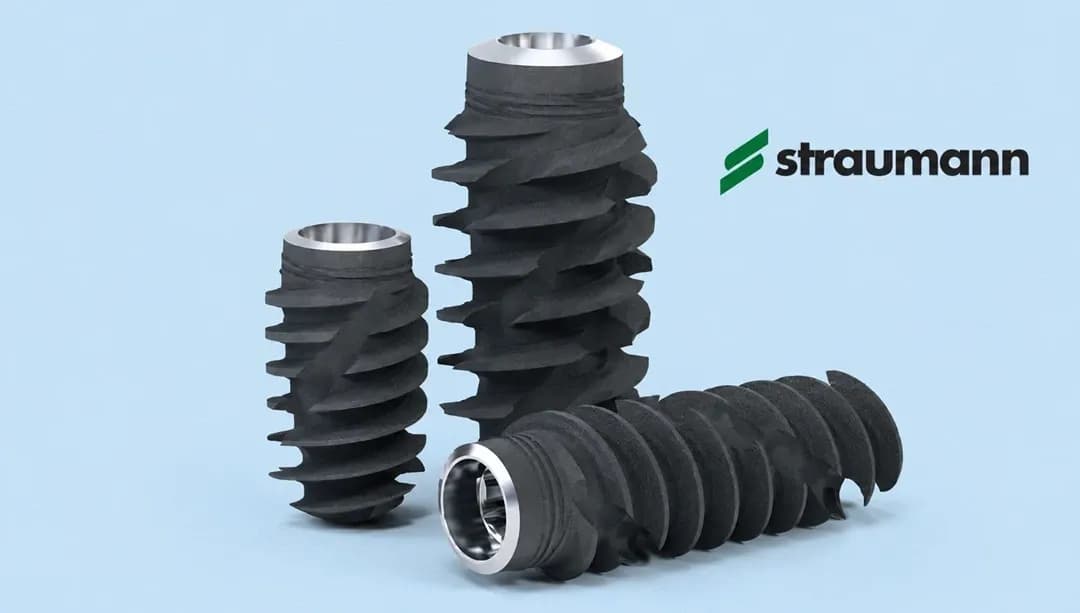
Roxolid® is an innovative material developed by the Swiss company Straumann® for state-of-the-art dental implants. Thanks to its mechanical and biological properties, it enables the use of implants with high primary stability and contributes to predictable osseointegration.
Roxolid® is also used for implants with a small diameter or short length, offering additional treatment options in cases where bone availability is limited.
In combination with the SLA® and SLActive® surfaces, also developed by Straumann®, Roxolid® contributes to minimally invasive treatments, shorter healing times and stable long-term results.
What is Roxolid®?
Roxolid® is an innovative alloy containing approximately 85 per cent titanium and 15 per cent zirconium, designed to combine the advantages of both metals: high mechanical strength and excellent biocompatibility.
Titanium has been used for decades in dental implantology due to its ability to osseointegrate, whilst zirconium helps to increase mechanical strength. Together, the two materials form an alloy that is stronger than conventional grade 4 titanium, without compromising biocompatibility or corrosion resistance.
Preclinical studies have demonstrated that the Roxolid® titanium-zirconium alloy exhibits excellent biocompatibility and supports the bone formation required for the osseointegration process.
Since its launch in 2009, Roxolid® has been used in millions of implants worldwide and is supported by extensive long-term clinical data.
The main advantages of the Roxolid® alloy
As an alloy of titanium and zirconium, Roxolid® offers numerous advantages:
Superior mechanical strength
One of the main advantages of the Roxolid® alloy is its superior mechanical strength compared with conventional titanium implants.
Studies have shown that Roxolid® exhibits mechanical strength and fatigue resistance superior to that of grade 4 titanium, which allows the use of implants with a smaller diameter without compromising mechanical performance.
“In practice, this advantage is extremely important for patients who do not have sufficient bone for conventional implants and who, in the past, required complex bone augmentation procedures prior to treatment. By using Straumann® Roxolid® implants, bone augmentation can be avoided in selected cases, which means less invasive procedures, shorter treatment times and a quicker recovery.”
High biocompatibility
Another major advantage of the Roxolid® titanium-zirconium alloy is its excellent biocompatibility.
Studies have shown that Ti-Zr alloys demonstrate excellent biocompatibility and osseointegration comparable to or superior to grade 4 titanium.
Furthermore, Roxolid® offers increased corrosion resistance and promotes cellular response and osseointegration. Its properties contribute to predictable and stable osseointegration, which is why implants made from this alloy are considered a safe and high-performance option in modern dental implantology.
SLA® and SLActive® surfaces – a key role in osseointegration
In addition to the innovative Roxolid® material, Straumann® implants also feature special surfaces that accelerate the osseointegration process.
Roxolid® implants are available with the following surfaces:
- SLA®;
- SLActive®.
What is the SLA® surface?
SLA® is one of the best-documented surfaces in dental implantology, used by Straumann® for over two decades. It is produced by sandblasting and acid etching.
The result is a microstructured surface that promotes the attachment of bone cells and the integration of the implant into the bone.
Clinical studies confirm the long-term stability and success of implants with the SLA® surface.
What is SLActive®?
SLActive® represents the evolution of the SLA® surface, being a hydrophilic surface achieved through additional chemical modification.
The main feature of SLActive® is its increased ability to attract blood and the proteins involved in healing immediately after implant placement.
This property improves the initial contact between the bone and the implant and promotes faster osseointegration.
The combination of Roxolid® and SLActive® is considered one of the most effective options in modern implantology, provided that the clinical criteria are met.
Furthermore, the existing clinical evidence supports the long-term use of Roxolid® implants, including in complex cases.
Types of Straumann® Roxolid® implants
Roxolid® is the titanium-zirconium alloy used in several Straumann implant systems, including Straumann® BLX® and Straumann® Bone Level Tapered (BLT™).
Depending on the clinical indication, these systems are also available in reduced-diameter or short-length variants, offering additional treatment options in cases of limited bone availability.
- Straumann® BLX® – an implant system designed to achieve high primary stability and for use in a wide range of treatment protocols, including immediate loading protocols, where clinical conditions permit.
- Straumann® Bone Level Tapered (BLT™) – a tapered implant system designed to achieve high primary stability, including in low-density bone and in selected post-extraction sockets, in accordance with clinical indications.
Why choose Straumann® Roxolid® SLActive® implants?
The main benefits of implants made from Roxolid® are:
- Superior mechanical strength – the titanium-zirconium alloy offers greater strength compared with conventional titanium implants, including those with a smaller diameter;
- High primary stability and long-term clinical evidence – the implant design and material properties help maintain stability over time;
- The option to use shorter or thinner implants – a useful solution in areas with reduced bone volume or narrow spaces between teeth;
- In certain cases, this may reduce the need for bone augmentation procedures – in many instances, Roxolid® implants make it possible to avoid complex bone augmentation procedures;
- Faster osseointegration thanks to the SLActive® surface – the hydrophilic SLActive® surface accelerates the osseointegration process and promotes predictable bone integration;
- Clinical evidence supports their use even in complex clinical situations – the implants can be used successfully even in low-density bone or in complex anatomical situations;
- Greater patient comfort – less invasive treatments and a shorter healing time contribute to a more comfortable post-operative experience.
In what situations are Straumann® Roxolid® implants recommended?
Thanks to their increased strength and compact size, Roxolid® implants can be a treatment option for complex or minimally invasive cases.
The main indications include:
Narrow alveolar ridges
In the anterior regions or in narrow spaces between teeth, implants with a small diameter allow the implant to be placed without extensive bone augmentation procedures.
Posterior areas with reduced bone volume
Near the maxillary sinus or the inferior alveolar nerve, short Roxolid® implants may offer a less invasive alternative to vertical bone augmentation.
Patients seeking rapid and minimally invasive treatment
Reducing surgical complexity can mean:
- shorter operating time;
- faster recovery;
- greater comfort for the patient.
Roxolid® is one of the most significant innovations developed by Straumann® in modern dental implantology. The combination of titanium and zirconium gives the implants superior mechanical strength, whilst maintaining excellent biocompatibility and predictable osseointegration.
The combination with SLA® and SLActive® surfaces broadens treatment options and can help reduce the overall duration of treatment in certain clinical situations, including in patients with limited bone availability.
For many patients, Straumann® Roxolid® implants may represent a solution which, in selected cases, allows complex bone augmentation procedures to be avoided and supports predictable, minimally invasive treatment, where the clinical indication permits.
Frequently asked questions about Straumann® Roxolid® implants
What is Roxolid®?
Roxolid® is an innovative titanium-zirconium alloy developed by Straumann, designed to provide dental implants with superior mechanical strength and predictable osseointegration.
What is the difference between Roxolid® implants and conventional titanium implants?
Roxolid® implants are stronger than conventional titanium implants, which allows for the use of shorter or thinner implants, even in cases where bone volume is limited.
What is the role of the SLActive® surface?
The SLActive® hydrophilic surface accelerates the healing process and improves contact between the bone and the implant, contributing to faster and more predictable osseointegration.
In what situations are Straumann® Roxolid® implants recommended?
These implants are particularly recommended for patients with insufficient bone, narrow spaces between their teeth, or those who wish to undergo minimally invasive treatment and have shorter recovery times.