




 Author:
  February 27, 2026
Tooth decay is one of the most common oral health problems and can progress rapidly if not treated in time. Traditional caries treatment is often associated with the discomfort caused by the dental drill, but today’s technological advances have brought modern solutions that completely transform the experience in the dental surgery.
At DENT ESTET dental clinics in Bucharest, as well as in the other seven cities across the country where we operate, patients can benefit from laser treatment for tooth decay, a modern alternative to traditional methods, which helps to ensure minimally invasive procedures and reduces the discomfort associated with treatments for decayed teeth.
What is a dental laser?
The dental laser is a modern technology used in dentistry to perform minimally invasive and extremely precise laser dental treatments. Laser systems use concentrated light energy to act in a controlled manner on soft tissues (gums, mucosa) and hard tissues, such as teeth or bone.
With the help of the dental laser, the dentist can remove only the affected tissue or treat the targeted area with a very high degree of precision. Thanks to this technology, many dental laser treatments can be carried out with reduced discomfort for the patient and faster healing compared to traditional methods.
The applications of the dental laser are very wide-ranging and include:
- Treatment of dental caries;
- Treatment of periodontal conditions;
- Minimally invasive surgical procedures on the gums;
- Treatment of mouth ulcers;
- Treatment of halitosis (bad breath);
- Teeth whitening;
- Laser frenectomy.
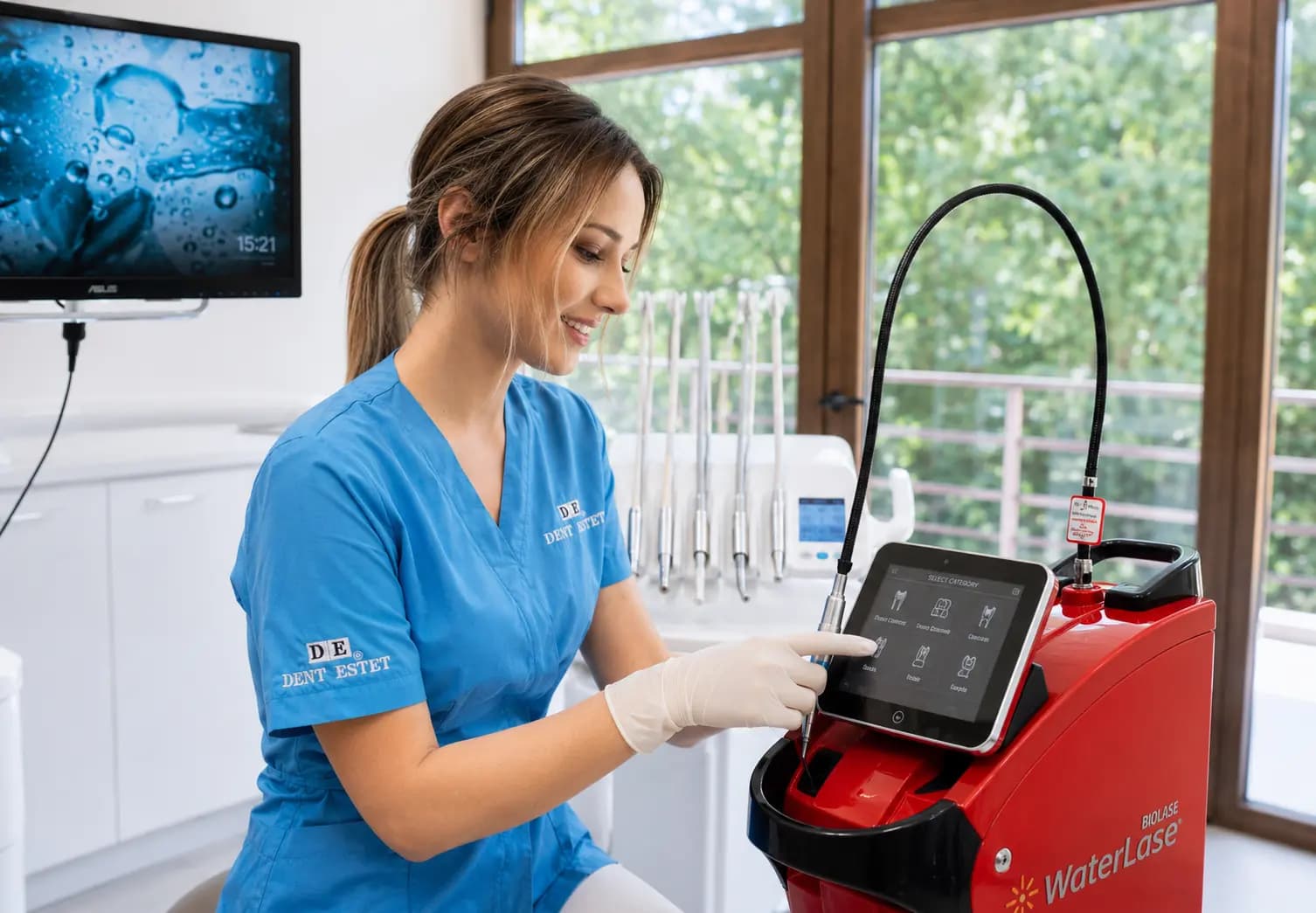
DENT ESTET clinics use the world’s most renowned lasers, such as the WaterLase® Biolase® and Epic Biolase®, high-performance equipment that enables safe and effective procedures across a wide range of dental treatments.
“The WaterLase laser is ideal for procedures on any type of tissue. It allows for the removal of carious lesions, the treatment of periodontal disease and many other conditions. With the WaterLase laser, we can perform virtually any type of surgical procedure within the oral cavity,” explains Dr. Silvia Zaharii, Specialist in Dental Prosthetics.
How does laser treatment for tooth decay work?
1. Assessment of the carious lesion
The first step is to assess the affected tooth. If necessary, the dentist will use X-rays or magnification techniques, such as a dental microscope, to accurately identify the extent of the decay and to preserve the healthy structure of the tooth.
2. Preparing the area for treatment
Once the diagnosis has been made, the affected area is prepared for treatment. Unlike traditional methods, laser treatment of tooth decay does not involve direct contact with the tooth, which reduces discomfort and, in many cases, may minimise the need for anaesthesia.
3. Laser tooth decay removal
The laser acts selectively on the affected tissue, removing the decay with precision. Laser technology operates without friction or vibration, which means less heat is generated in the tooth and greater comfort for the patient.
4. Decontamination and restoration
A major advantage of laser treatment for tooth decay is its ability to disinfect the treated area. Once the decay has been removed, the tooth is restored using a filling, restoring its shape and function.
“The current trend is to move away from the ‘drill and fill’ approach – that is, using a drill and carrying out a filling – towards a minimally invasive approach that results in minimal loss of tooth structure. And we achieve this with the dental laser, which is a non-contact technique. There is no friction, so no heat is transferred to the nerve, meaning no pain and, of course, no vibrations, which means that no cracks or microfractures occur in the enamel and dentine. Furthermore, the laser improves adhesion, as it allows us to create micro-retentions in the enamel and dentine – small cavities into which the filling material will penetrate under pressure,” explains Dr Silvia Zaharii, Specialist in Dental Prosthetics and expert in laser dentistry.
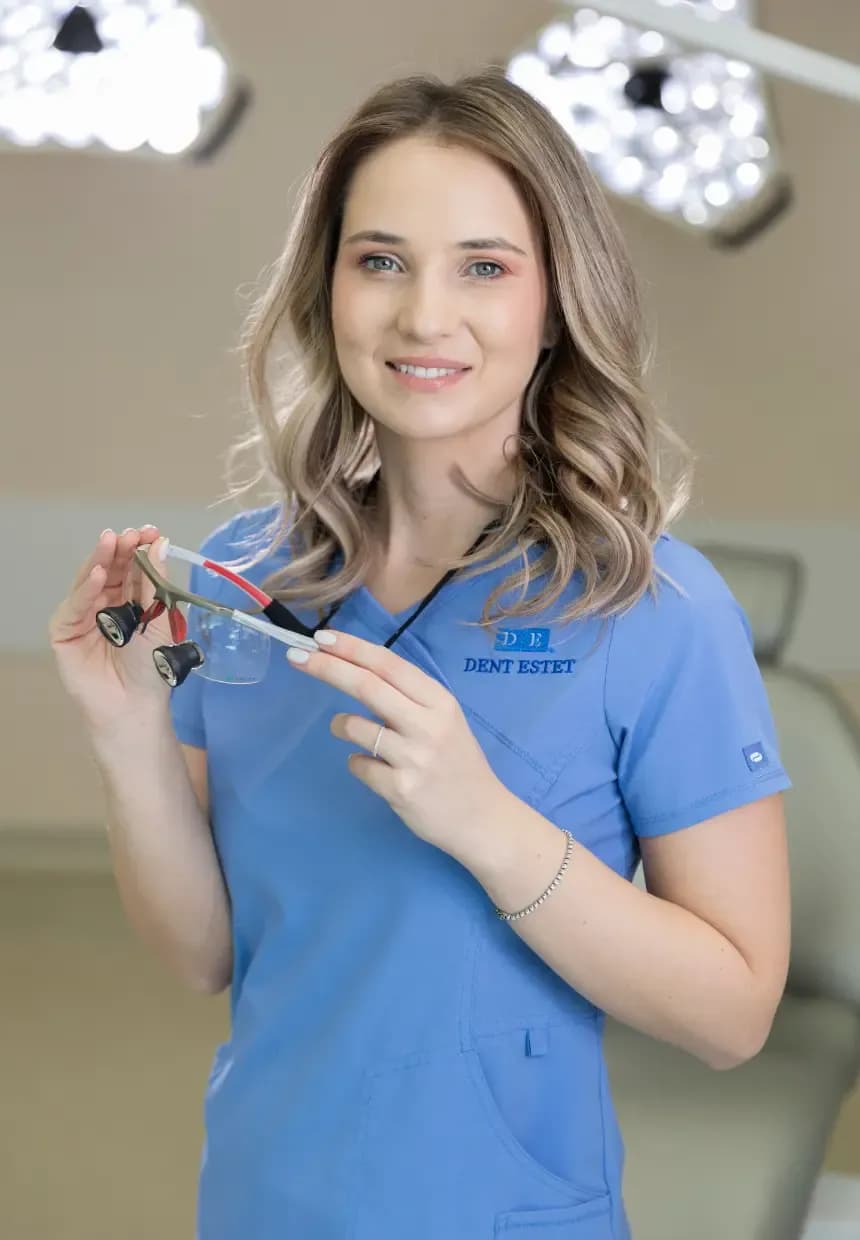
Laser technology can be used to treat several types of dental caries, such as crown caries (the most common), root caries, or secondary caries that develop around existing fillings.
The benefits of treating tooth decay with the WaterLase® dental laser
Avoiding the use of the ‘drill’ in the treatment of carious lesions
The dental drill and its undesirable effects (vibration, heat, characteristic noise) can be a reason for postponing treatment for dental caries. The Waterlase® laser is a treatment option that is much more readily accepted by patients, thanks to the advantages it offers.
The treatment is minimally invasive
This means that the removal of healthy tissue is minimal and that difficult surgical procedures can often be avoided for both the practitioner and the patient (in the treatment of periodontal disease, for example).
Decontamination of the affected area
The WaterLase® laser has a very high capacity for decontaminating the tissues it acts upon. Consequently, in most cases, it is no longer necessary to prescribe post-treatment antibiotics.
Wide range of applications
The WaterLase® laser can be used for a wide variety of procedures, as well as for patients of all ages, from newborns(frenectomies) to the elderly, or those suffering from certain systemic conditions, such as diabetes or cardiovascular disease.
The Waterlase® laser can be used for:
- cleaning carious lesions, with the cavities created after laser preparation being perfectly decontaminated;
- hard and soft tissue surgery with perfect control over bleeding;
- periodontal therapy;
- the treatment of peri-implantitis;
- as an adjunct in endodontic treatment.
Reduced healing time
Compared to traditional procedures using a drill, healing time is significantly reduced, thanks to the precise way in which the dental laser acts on the tissues. Furthermore, the discomfort experienced is substantially reduced.
Frequently asked questions about dental implant infections
Is laser treatment for tooth decay painful?
Generally speaking, laser treatment for tooth decay is not painful. Laser technology operates without vibration, which significantly reduces discomfort. In many cases, the procedure can even be carried out without anaesthetic.
How much does laser treatment for a cavity cost?
The cost of treating a cavity with a laser can vary depending on the size of the cavity, the location of the tooth and the complexity of the case. At DENT ESTET, fillings carried out using the Waterlase laser can cost over 600 RON.
How long does the procedure take?
The duration of the treatment depends on the size of the cavity and the tooth affected, but in most cases the procedure takes around 30–60 minutes.
Can laser treatment for tooth decay be carried out on children?
Yes, laser treatment for tooth decay can also be carried out on children. In fact, this technology is often better accepted by young children, as the procedure is more comfortable and does not involve the noise or vibrations of a dental drill.