




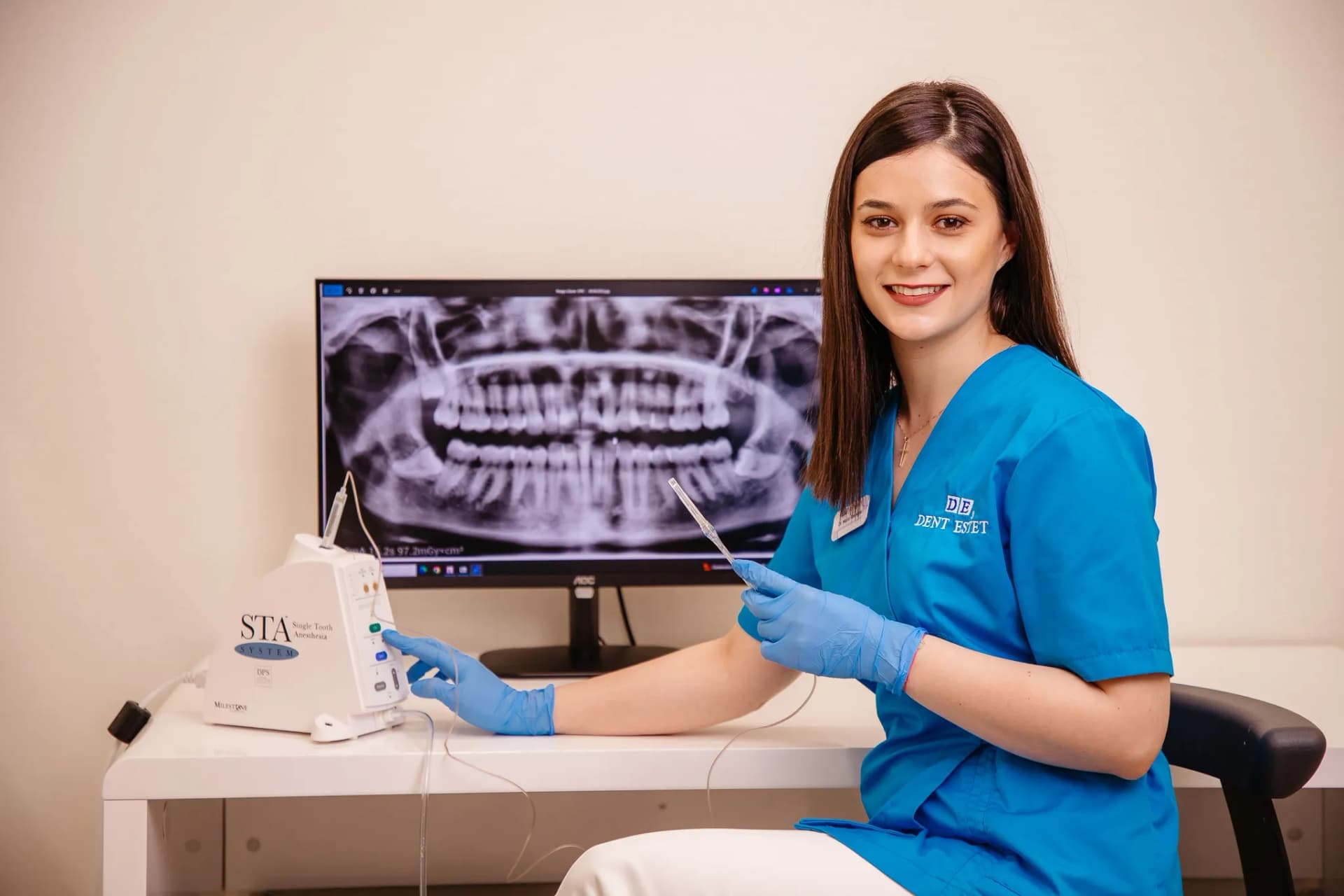
Wisdom teeth: When is extraction necessary and when can they be kept?
 Author:
  August 25, 2025
The wisdom tooth (wisdom molar) is one of the most controversial elements of the dentition. Although it forms part of the natural dentition, many people come to know it not for its functional role, but for the pain and complications it causes.
They emerge late, usually between the ages of 17 and 25, and, ideally, wisdom teeth should align correctly with the other teeth, erupt fully and aid in chewing. In reality, however, wisdom teeth often cause problems, particularly when there is insufficient space in the dental arch. The result? Discomfort, inflammation, infections and, ultimately, the need for extraction.
What is a wisdom tooth and what does impacted or partially impacted mean?
A wisdom tooth, also known as a third molar, is the last tooth to erupt in the dental arch. Normally, a person can have up to four wisdom teeth, one on each side of the upper and lower jaws.
Depending on the space available and the position of the tooth, a wisdom tooth may erupt completely, remain partially covered by gum tissue or bone, or fail to erupt altogether.
Fully erupted wisdom tooth
A fully erupted wisdom tooth has emerged completely into the dental arch. If it is correctly positioned, can be properly cleaned, and does not affect the neighbouring teeth, its presence does not automatically mean that it needs to be extracted.
Partially impacted wisdom tooth
A partially impacted wisdom tooth has erupted only partially, with part of the crown remaining covered by gum tissue or bone. Food debris and bacteria can accumulate more easily around it, increasing the risk of gum inflammation, infection, and pericoronitis.
Impacted wisdom tooth
An impacted wisdom tooth has not erupted into the dental arch and remains covered by gum tissue and/or bone. It may have different positions within the bone, including an angled or horizontal position. Depending on its position and its relationship with the surrounding structures, the dentist will determine whether extraction is necessary or whether the tooth can simply be monitored regularly.
What problems can a wisdom tooth cause?
A wisdom tooth can cause a number of problems, including tooth decay, pericoronitis, damage to the second molar, or orthodontic complications. For this reason, a dental examination is necessary to identify the cause of the problem and determine the appropriate course of action.
Gum inflammation (pericoronitis) caused by wisdom teeth
In the case of partially erupted (semi-impacted) molars, the gum covering them becomes an area vulnerable to infection. Food debris and bacteria can accumulate beneath this gum flap, leading to inflammation, swelling, localised pain and even a fever.
Gum inflammation (pericoronitis) is one of the most common causes of pain in the wisdom tooth area. Symptoms include:
- Localised pain, which is worse when chewing or opening the mouth;
- Swelling of the cheek;
- An unpleasant taste or halitosis (bad breath);
- Mild fever;
- Difficulty swallowing or speaking.
Tooth Decay Affecting the Wisdom Tooth or the Adjacent Tooth
The risk of tooth decay affecting a wisdom tooth is relatively high because wisdom teeth can be difficult to clean due to their position at the back of the mouth and limited accessibility. This can increase the risk of cavities developing both in the wisdom tooth itself and in the adjacent tooth.
Damage to the second molar
Wisdom teeth can erupt and grow at an incorrect angle, exerting constant pressure on the second molar. This pressure, combined with the narrow space created between the teeth, leads to the build-up of bacterial plaque and food debris, which are difficult or even impossible to clean by brushing.
Over time, this can increase the risk of interdental cavities and periodontal disease affecting the adjacent tooth. In addition, continuous pressure may affect the roots of the second molar, leading to chronic pain and potentially requiring root canal treatment or, in severe cases, extraction of both teeth.
Cysts or other changes associated with an impacted tooth
Sometimes, dental cysts can form around an impacted wisdom tooth. These are fluid-filled cavities that develop slowly but surely within the jawbone.
"Cysts can grow in size, putting pressure on the roots of neighbouring teeth and destroying the surrounding bone, thereby jeopardising the stability of the entire dental arch. It is important to note that, in most cases, cysts can develop without any noticeable symptoms for a long period of time." - Dr. Maria Receanu
Although less common, an impacted wisdom tooth can lead to the formation of dentigerous cysts, which can cause bone loss in the jaw and may require more complex surgical treatment.
Infection and Abscess
Partially impacted wisdom teeth can become a recurring source of infection and inflammation. Once pericoronitis develops, there is a significant risk of recurrence.
In some cases, the infection can spread to the surrounding soft tissues, leading to dental abscesses or facial cellulitis, complications that require prompt treatment with antibiotics or even surgical intervention.
Temporary management of the inflammation may include thorough cleaning of the area, rinsing with an antiseptic mouthwash or saline solution, and the use of anti-inflammatory medication or antibiotics. However, extraction of the problematic wisdom tooth may be recommended as the definitive treatment, particularly when episodes recur.
Referred pain or neuralgia
The discomfort caused by a wisdom tooth is not limited to the area around the tooth itself. This pain can radiate – that is, spread – towards the ear, neck or jaw. Patients may experience a sensation of pressure or a constant, dull ache in these areas, which is often mistaken for other conditions, such as an ear infection or facial neuralgia.
This confusion complicates an accurate diagnosis and, consequently, delays appropriate treatment, allowing the underlying problem to worsen. That is why it is essential to consult a specialist dentist when you experience such pain. Only a thorough examination, including an X-ray, can accurately determine whether the wisdom tooth is the actual source of the discomfort and guide the specialist towards the best course of treatment.
When is wisdom tooth extraction recommended?
Extraction of a wisdom tooth should be considered in the following cases:
- The molar is impacted or semi-impacted and is causing discomfort;
- There are repeated signs of pericoronitis;
- There is caries that is difficult or impossible to treat due to limited access;
- The tooth is partially destroyed, fractured or loose;
- It interferes with orthodontic treatment;
- A cyst is visible on the X-ray.
How is a wisdom tooth extracted?
Surgical extraction of the wisdom tooth is carried out under local anaesthesia, so that the patient feels no discomfort during the procedure.
Extraction of a Fully Erupted Wisdom Tooth
After local anaesthesia is administered, the dentist loosens the wisdom tooth using specialised instruments and removes it from the socket. The area is then examined and cleaned if necessary. In an uncomplicated extraction, there is usually no need to make an incision in the gum, and sutures are not always required.
The procedure may take approximately 10–20 minutes, although the duration varies depending on the shape and position of the roots, accessibility, and the specific characteristics of each case. If difficulties arise during the extraction, a surgical approach may be necessary.
Surgical extraction of an impacted or partially impacted wisdom tooth
The extraction of an impacted or partially impacted wisdom tooth involves making an incision in the gum to expose the tooth. When the tooth is covered by bone, the dentist carefully removes a portion of the bone tissue to gain access to it.
Depending on the position of the wisdom tooth and the anatomy of its roots, the tooth may be removed in one piece or divided into several sections. Once it has been removed, the socket is examined and cleaned, and the gum is repositioned and sutured.
The duration of the procedure depends on the complexity of the case:
- partially impacted wisdom tooth in a favourable position: approximately 20–40 minutes;
- fully impacted or difficult-to-access wisdom tooth: approximately 40–90 minutes;
- complex case involving atypical roots or a tooth located close to the inferior alveolar nerve: the procedure may take longer.
These timeframes are not standard. The position of the tooth and its relationship with the surrounding anatomical structures are assessed before the procedure through a clinical examination and diagnostic imaging. When a wisdom tooth is located very close to the nerve, coronectomy may also be considered in selected cases, based on the dentist’s assessment.
Post-operatively, the following may occur:
- Pain and discomfort, manageable with painkillers;
- Local inflammation and swelling, particularly in the first 48–72 hours;
- Minor bleeding in the first few hours;
- Limited ability to open the mouth (temporary trismus);
- Possible bruising around the cheek area.
It is essential that the patient strictly follows the doctor’s instructions:
- Apply ice during the first few hours;
- A semi-solid, semi-liquid diet at room temperature
- Avoid smoking and hard or hot foods;
- Thorough oral hygiene, avoiding brushing the treated area for the first 24 hours;
- Use of an antiseptic mouthwash (as recommended by the doctor);
- Follow-up appointment after 7 days to have the sutures removed (if they are not absorbable).
Wisdom tooth extraction – Questions and Answers
How long does it take to have a wisdom tooth removed?
The duration varies depending on the complexity of the case, but a simple extraction usually takes between 20 and 30 minutes. For impacted wisdom teeth (those that have not erupted), the procedure can take up to several hours.
Is anaesthesia used for wisdom tooth extraction?
Yes, the extraction is carried out under local anaesthetic, so you won’t feel any pain during the procedure.
Is the medication necessary?
The dentist will most likely prescribe anti-inflammatory medication or painkillers to manage pain and swelling after the procedure. You may also need an antibiotic to prevent any potential infection.
What can you eat after a wisdom tooth extraction?
In the first few days, it is recommended that you eat soft, liquid or semi-liquid foods (yoghurt, soups, purées, smoothies) and avoid hard, crunchy or hot foods, which could irritate the area.
In conclusion, regular dental check-ups and dental X-rays are essential for the early detection of wisdom teeth that are likely to cause complications. In most cases, prophylactic extraction is a safe and effective measure to prevent discomfort and protect long-term dental health.