




Temporomandibular disorders (TMJ): Causes, diagnosis and modern treatments
 Author: Dr. Adelin Radu
 May 8, 2025
The temporomandibular joint (TMJ) is one of the most complex joints in the human body, enabling the movements essential for chewing, speaking and facial expressions. When this joint is affected, symptoms such as jaw pain, difficulty opening the mouth, clenching of the jaw or joint noises may occur. TMJ disorders can have a significant impact on quality of life, requiring an accurate diagnosis and appropriate treatment.
Causes and risk factors of temporomandibular disorders
TMJ disorders can have multiple causes, and identifying them is essential for determining an effective treatment. The most common causes include:
- Bruxism and teeth clenching – bruxism (teeth grinding) and jaw clenching, particularly at night (nocturnal bruxism), are major factors contributing to TMJ disorders. These habits place excessive pressure on the joint, which can lead to inflammation, tooth wear and pain.
- Stress and muscle tension – emotional stress frequently causes the jaw muscles to clench, which can lead to tension and joint dysfunction. Many patients with TMJ disorders report episodes of intense stress prior to the onset of symptoms.
Dental malocclusion – incorrect occlusion (most commonly due to the incorrect position in which the teeth have settled on the dental arches) can create an uneven distribution of pressure during mastication, affecting the functioning of the temporomandibular joint.
The specialist literature emphasises the importance of dental occlusion in the health of the temporomandibular joint. Proprioceptive receptors in the periodontium, muscles and ligaments of the temporomandibular joint are extremely sensitive to minor stimuli, suggesting that any occlusal imbalance may influence the normal functioning of the joint.
- Trauma to the jaw – blows, accidents or complex dental rehabilitation procedures that do not take into account the functionality of the dentofacial system can affect the structure and function of the temporomandibular joint.
- Arthritis and other inflammatory conditions – osteoarthritis, rheumatoid arthritis or other inflammatory diseases can damage the cartilage of the temporomandibular joint, limiting mobility and causing chronic pain.
Risk factors associated with temporomandibular disorders
Equally, however, it is very important to discuss the existence of risk factors that can influence the onset of temporomandibular joint problems:
- Genetics – Studies suggest that people with a family history of chronic pain or joint diseases are at greater risk of developing temporomandibular joint disorders.
- Age and gender – Temporomandibular joint disorders are more common in women aged between 20 and 40, possibly due to hormonal influences on connective tissues.
- Postural problems – Incorrect head and neck posture can negatively affect the maxillofacial muscles and the functioning of the temporomandibular joint.
- Bad habits – Excessive chewing of gum, nail-biting or resting the chin on the hand can put additional pressure on the joint.
Symptoms of temporomandibular disorders
Patients suffering from temporomandibular joint disorders may experience a variety of symptoms, including:
- Jaw pain, which may radiate to the ears, temples and neck;
- Difficulty opening or closing the mouth (lockjaw);
- Joint noises, such as pops or clicks when moving the jaw;
- Temporary locking of the jaw, which may make chewing or speaking difficult;
- Muscle tension in the face and neck;
- Frequent, migraine-like headaches.
According to the ‘International Classification of Headache Disorders’, there is an association between temporomandibular joint dysfunction and the onset of headaches. Temporomandibular disorders can be a common cause of headaches, which is why assessment of the temporomandibular joint is essential in the differential diagnosis of headaches.
Diagnosis of temporomandibular disorders
To diagnose temporomandibular joint disorders, specialists use a combination of clinical examination, imaging tests and modern digital analysis techniques.
- Clinical examination – The doctor will review the patient’s medical history and perform a series of tests to assess jaw mobility, muscle sensitivity and any joint noises.
- Panoramic X-ray and computed tomography (CT) – These images provide a detailed view of the bony structures of the temporomandibular joint, allowing the detection of degenerative changes or structural abnormalities.
- Magnetic resonance imaging (MRI) – This is essential for visualising the soft tissues of the temporomandibular joint, including the position of the articular disc and the presence of any inflammation.
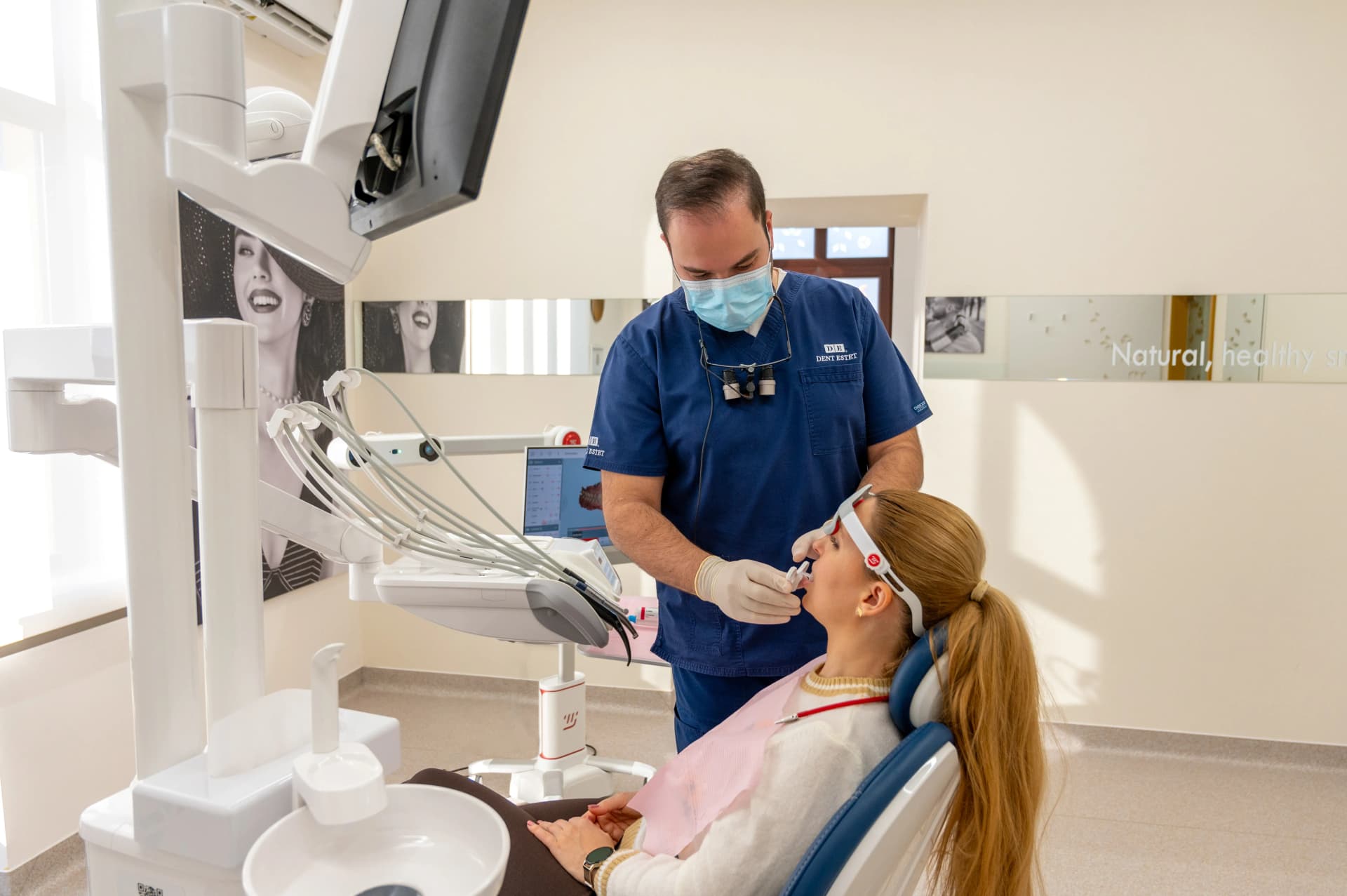
- Modjaw technology – a modern method for analysing temporomandibular joint function. One of the most advanced tools for diagnosing temporomandibular joint disorders is Modjaw technology, which allows for real-time analysis of mandibular movements.
This 4D system captures the functional dynamics of the joint, providing precise data on:
- Pressure distribution during chewing;
- Any muscular imbalances;
- The interaction of the teeth and the joint in various positions of the mandible.
The use of Modjaw in the diagnosis of temporomandibular disorders allows for the personalisation of treatment and the monitoring of the patient’s progress in a much more detailed manner than traditional methods.
Treatment of temporomandibular disorders
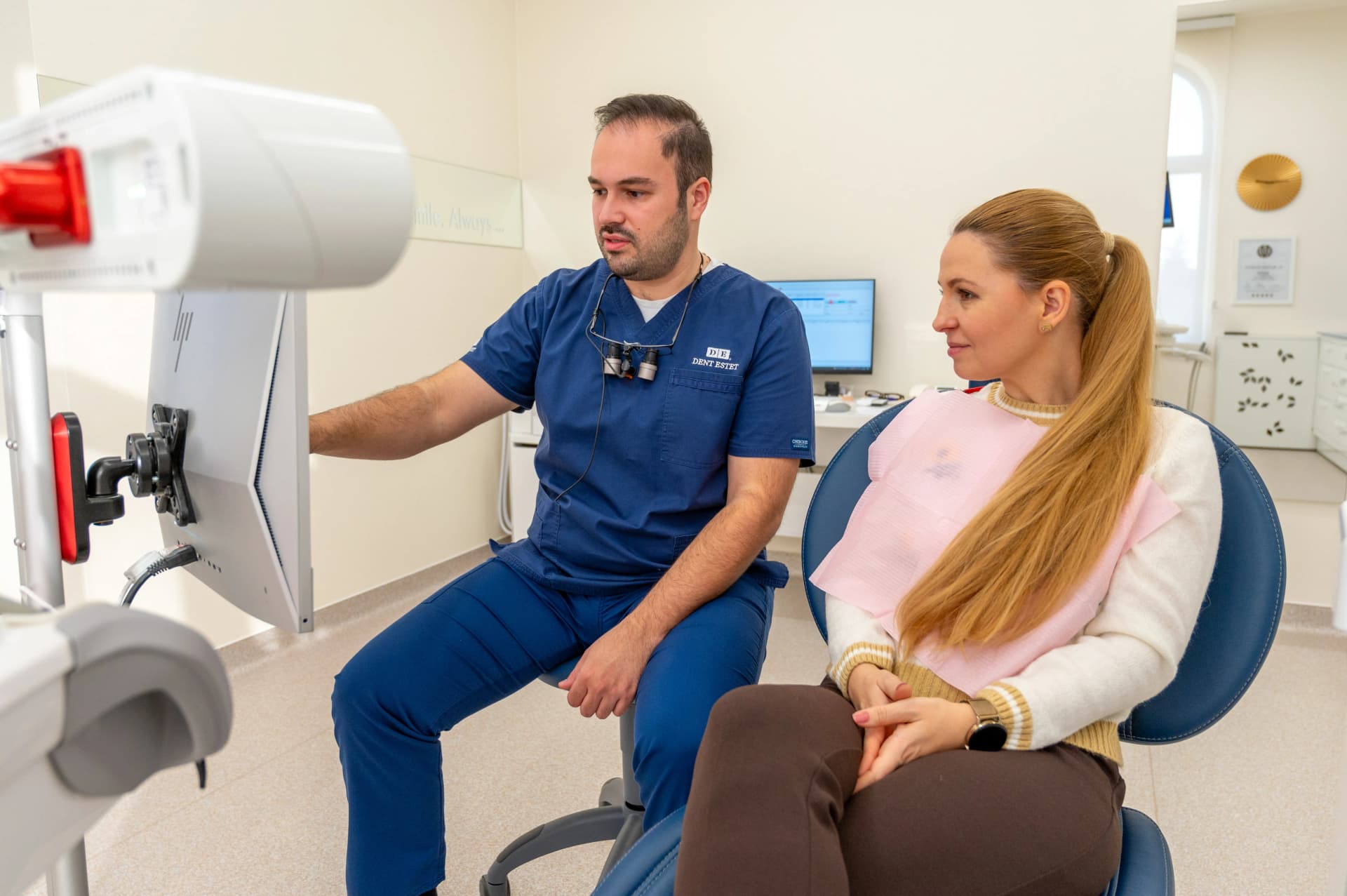
Treatment for temporomandibular joint disorders varies depending on the severity of the symptoms and the underlying cause of the condition. Treatment options include:
1. Exercises for the temporomandibular joint
Therapeutic exercises can help improve mobility and reduce muscle tension. Examples of useful exercises include:
- Controlled mouth opening: Place your fingers under your chin and open your mouth slowly, applying gentle resistance. Hold for 5 seconds and repeat 10 times.
- Side-to-side jaw movements: Place a flat object between your teeth (e.g. an ice-cream stick) and move your jaw to the left and right 10 times.
- Massage of the masticatory muscles: Applying gentle pressure to the lateral muscles of the face can help to relax them.
Although these exercises can also be performed by the patient at home under the guidance of the doctor supervising the case, it is always preferable for the physiotherapy component to be carried out under the guidance of an experienced physiotherapist, who is part of the multidisciplinary team involved in the treatment.
2. Use of occlusal splints
Custom-made mouthguards are dental devices that help reduce the pressure exerted on the temporomandibular joint and are effective in cases of bruxism.
3. Drug therapy
Analgesics, muscle relaxants and non-steroidal anti-inflammatory drugs (NSAIDs) may be prescribed to relieve pain and inflammation.
4. Stress management techniques
Relaxation techniques, meditation and cognitive behavioural therapy may be beneficial for patients in whom stress contributes to TMJ disorders.
5. Minimally invasive treatments
Injecting botulinum toxin into the jaw muscles can reduce tension and pain in patients with severe bruxism.
6. Temporomandibular joint surgery
This is the solution for severe cases, where conservative methods have failed. Depending on the case, surgical interventions such as temporomandibular joint arthroscopy or surgical reconstruction of the joint may be necessary.
“Temporomandibular joint disorders can have a significant impact on quality of life. Proper treatment involves a multidisciplinary approach.” – Dr Adelin Radu, Specialist in Dental Prosthetics
Advanced treatment techniques for temporomandibular joint disorders
Advances in dentistry and medicine have led to the development of advanced treatment techniques for temporomandibular joint disorders. These methods enable a more precise, less invasive and more effective approach to managing symptoms and restoring joint function.
Modjaw technology: 4D imaging for diagnosis and personalised treatment
One of the most modern technologies used in the assessment and treatment of TMJ is Modjaw, a 4D digital system that analyses mandibular movements in real time.
How does Modjaw work?
- It uses high-precision sensors to capture the dynamics of the mandible in real time.
- It allows for three-dimensional visualisation of the temporomandibular joint and occlusal movements.
- It provides accurate data for creating custom mouthguards or adjusting prosthetic work.
The benefits of Modjaw in TMJ treatment:
- More accurate diagnosis of functional imbalances.
- Adjustment of occlusion and dental prostheses based on the patient’s actual movements.
- Creation of optimised bite splints to reduce joint stress.
According to a study published in the Journal of Dentistry, the use of Modjaw technology in dental prosthetics and in the functional assessment of the TMJ has led to a significant improvement in the prognosis for patients with joint dysfunction.
Botulinum toxin therapy for relaxation of the maxillary muscles
A minimally invasive yet effective technique for treating TMJ-related jaw pain is the injection of botulinum toxin (Botox) into the muscles involved in chewing (masseter and temporalis).
How does botulinum toxin work?
- It temporarily blocks nerve impulses to the jaw muscles.
- It reduces excessive muscle activity, thereby reducing tension and pain.
- It reduces nocturnal bruxism and involuntary jaw clenching.
Advantages:
- A quick and minimally invasive procedure.
- Visible results within 5–7 days, lasting 3–6 months.
- Pain relief and improved jaw mobility.
PRP (Platelet-Rich Plasma) therapy for joint regeneration
Platelet-rich plasma (PRP) is an innovative method used in regenerative medicine, including for the treatment of TMJ disorders. This technique involves taking a small amount of blood from the patient, centrifuging it to separate the platelets, and reinjecting the plasma into the affected area.
How does PRP help in TMJ treatment?
- It stimulates the regeneration of cartilage tissue in the joint.
- It reduces inflammation and chronic pain.
- It improves jaw mobility.
Advantages:
- Non-surgical method with rapid recovery.
- Uses the body’s own resources, reducing the risk of side effects.
- May prevent the need for surgery.
A study in the International Journal of Oral and Maxillofacial Surgery demonstrated that patients with TMJ osteoarthritis who underwent PRP therapy experienced a significant reduction in pain and an improvement in joint function.
Minimally invasive surgery: Arthrocentesis and arthroscopy of the temporomandibular joint
For patients with severe forms of TMJ dysfunction who do not respond to conservative treatments, there are minimally invasive surgical options.
TMJ arthrocentesis
- This is a simple procedure in which a saline solution is injected into the joint to flush out inflammation and tissue debris.
- It helps to reduce pain and improve jaw movement.
TMJ arthroscopy
- This is a minimally invasive procedure in which a thin endoscope is inserted into the joint to examine and treat internal lesions.
- It allows the removal of adhesions and the repositioning of the articular disc.
Benefits:
- Rapid recovery compared to conventional surgery.
- Pain relief and improved TMJ mobility.
- Minimal risk of complications.
Recent studies confirm that TMJ arthroscopy is one of the most effective minimally invasive methods for treating patients with advanced structural lesions.
Biofeedback and cognitive-behavioural therapy
For patients in whom stress and anxiety are triggers for TMJ disorders, biofeedback techniques and cognitive behavioural therapy can help reduce symptoms.
How does it work?
- Biofeedback uses sensors to monitor muscle tension and teaches the patient to relax their jaw muscles.
- Cognitive behavioural therapy helps to change harmful habits, such as teeth grinding or involuntary jaw clenching.
Benefits:
- A non-invasive technique with no side effects.
- Improves control over muscle tension.
- Can be combined with other treatments for optimal results.
It is now widely accepted in the academic world that patients who have undergone cognitive behavioural therapy report a significant reduction in pain and better management of TMJ symptoms.
“In conclusion, I believe it is worth emphasising once again the complexity of the temporomandibular joint (TMJ) and the fact that the aetiology of TMJ disorders is diverse and presents with a wide range of clinical manifestations. That is why early diagnosis and an interdisciplinary approach are essential for preventing complications and improving patients’ quality of life. Treatment may include, as we have seen, conservative therapies, or, in severe cases, surgical options.
Patient education and long-term monitoring are thus fundamental to therapeutic success and the prevention of recurrence.” – Dr. Adelin Radu, Specialist in Dental Prosthetics.

Bibliography
- Okeson, Jeffrey P. (2020). Management of temporomandibular disorders and occlusion. Elsevier.
- Türp, Jens Christoph, C. (Claudia) Sommer, and Alfons W Hugger. The Puzzle of Orofacial Pain: Integrating Research into Clinical Management. Basel; Karger, 2007. Print.
- Alessandro Nota, Ljubicca Paniura, Francesco Manfredi Monticciolo, Simona Tecco, 3D Printed Occlusal Splints for TMDs Treatment: A Case Report, Journal of Dentistry, Volume 147, 2024.
- Hegab AF, Ali HE, Elmasry M, Khallaf MG. Platelet-Rich Plasma Injection as an Effective Treatment for Temporomandibular Joint Osteoarthritis. J Oral Maxillofac Surg. 2015 Sep;73(9):1706-13
- Badri O, Davis CM, Warburton G. Arthroscopic management and recent advancements in the treatment of temporomandibular joint disorders. Br J Oral Maxillofac Surg. 2024 Nov;62(9):820-825.
- Christidis N, Al-Moraissi EA, Al-Ak'hali MS, Minarji N, Zerfu B, Grigoriadis A, Schibbye R, Christidis M. Psychological treatments for temporomandibular disorder pain—A systematic review. J Oral Rehabil. 2024 Jul;51(7):1320-1336.