




 Author:
  January 5, 2026
When you are missing one or more teeth, it is not just your appearance that is affected, but the health of your entire mouth. In recent years, thanks to the benefits it offers, dental implant treatment has become the safest and most durable solution for replacing missing teeth.
What is a dental implant?
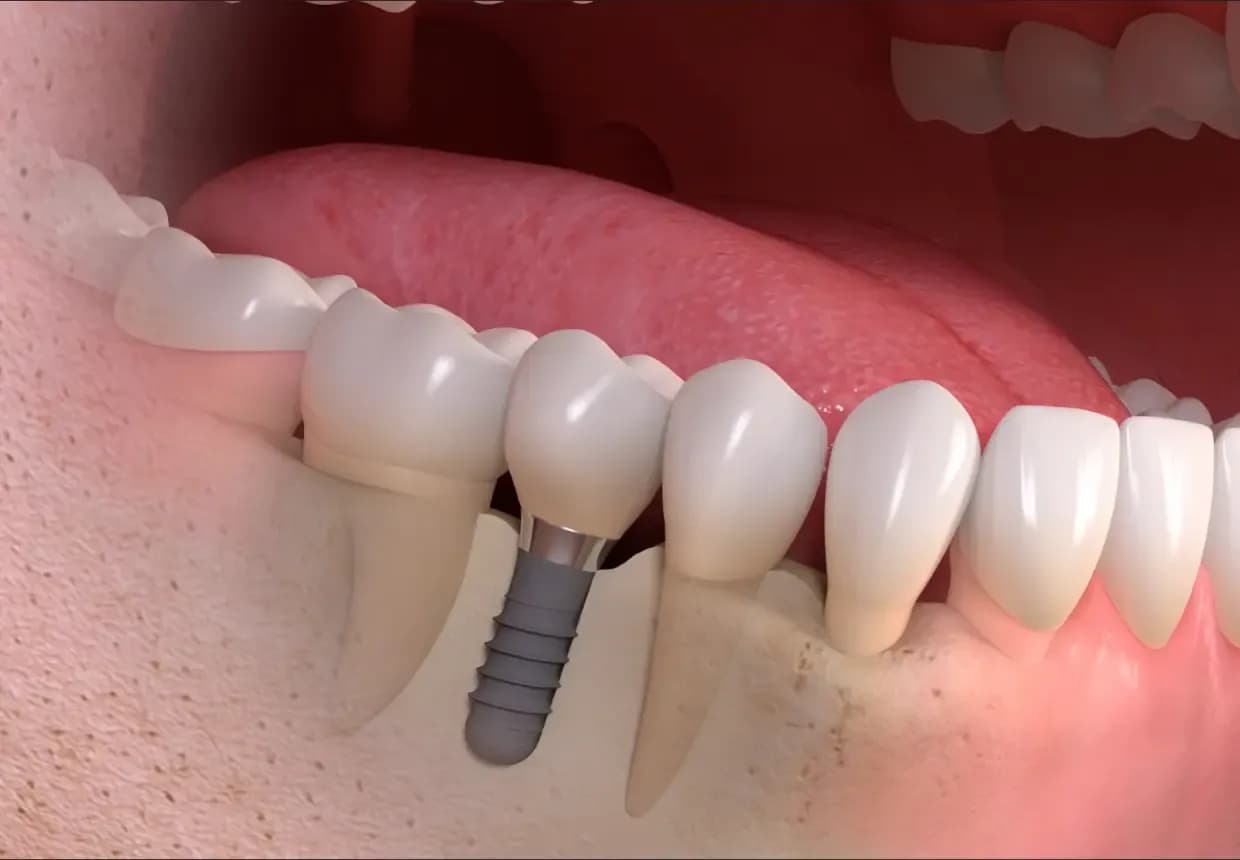
A dental implant is a medical device made of titanium or zirconium, which is inserted into the bone to prepare for the future prosthetic restoration or dental crown. In other words, it serves to replace the tooth root and provides support for the entire restoration.
A dental implant consists of three components:
- The implant itself (a screw made of titanium or alloys)
- The abutment (connects the implant to the dental crown)
- The dental crown or fixed prosthetic restoration
When is a dental implant necessary?
A dental implant is recommended for anyone in good health who wishes to have a full set of teeth.
When teeth are severely damaged (e.g. cracks, fissures, fractures, facial trauma, deep cavities) and other dental treatments are not possible, a dental implant can be a solution. One of the greatest advantages is that it is a long-lasting solution if properly maintained.
Benefits of dental implants
- They do not affect neighbouring teeth. There is no need to grind them down, as is the case with dental bridges;
- They offer stability and comfort. You can chew and speak without worrying about the denture shifting;
- Prevents bone resorption. When a tooth is missing, the bone recedes over time; the implant maintains bone volume.
- It looks 100% natural. The dental crown is custom-made to fit perfectly with the rest of your teeth;
- Long-lasting. With proper care, a dental implant can last a long time.
The stages of dental implant surgery
Dental implant treatment takes place in several stages, but the entire process is safe, carefully monitored and causes minimal discomfort.
Initial consultation and treatment plan: a panoramic X-ray or dental CT scan is taken to assess the bone; the dentist determines the appropriate type of dental implant.
Dental implant placement: this is performed under local anaesthetic. The implant (titanium screw) is inserted and the gum is sutured. The procedure generally takes 30–60 minutes.
Osseointegration period: for a conventional dental implant, this takes 3–6 months, but an immediate-load implant allows integration in just 3–4 weeks; during this period, the patient can wear a temporary prosthesis.
Prosthetic stage: once the implant has integrated, an abutment is attached, followed by the fitting of the final crown: made of ceramic, zirconia or composite.
Aftercare following treatment: regular check-ups (1–2 times a year) and rigorous oral hygiene: correct brushing, flossing, mouthwash and professional scaling.
Dental implant tests
As dental implantology is a branch of dental surgery, the dentist usually requests a set of tests including:
- coagulation tests;
- complete blood count;
- uric acid;
- blood glucose;
- X-ray;
- computed tomography (CT).
Types of dental implants
Dental implant treatment is carried out in several stages and involves bespoke solutions for each patient. The costs and treatment plan vary depending on the complexity of the case, the type of implant chosen and the materials used, with the aim of achieving a long-lasting, functional and aesthetically pleasing result.
Because every patient has different anatomical characteristics and needs, choosing the right dental implant is a crucial step in the success of the treatment. At DENT ESTET, the treatment plan is tailored to the individual, with the selection of the dental implant based on bone quality and volume, the condition of the gum tissue, the type of restoration desired and the patient’s aesthetic preferences.
Types of dental implants available at DENT ESTET clinics.
How much does a dental implant cost?
The price of a dental implant varies depending on:
- the brand and material of the implant (titanium, zirconium, premium system);
- the complexity of the case and the need for additional procedures (bone grafting, sinus lift);
- the type of dental crown fitted;
- the implantologist’s experience.
Dental implant price list
Price should not be the main factor when choosing a dental implant. The quality of the materials and the implantologist’s experience are essential for long-term success. Tips for choosing the type of dental implant.
Frequently asked questions about dental implants
How safe is a dental implant?
A dental implant is a safe procedure, performed under local anaesthetic and in sterile conditions. Serious complications are extremely rare and can be prevented through a proper medical assessment and by choosing an experienced implantologist.
What are the symptoms of dental implant rejection?
An implant rejected by the body may show the following signs: persistent pain or discomfort after the normal healing period, inflammation or bleeding of the gums, implant mobility, an unpleasant taste, or discharge from the gums. Read also the article “Signs of dental implant rejection”.
Why can my dental implant be seen?
If the metal of the implant is visible through the gum, there may be gum recession or thinning, or the implant may be incorrectly positioned. The problem can be corrected through gum treatment or a minor procedure.
What reactions are normal after a dental implant is inserted?
After the operation, normal temporary reactions may occur: slight local swelling, sensitivity or moderate pain (1–3 days), minor bruising, and slight bleeding in the first few hours.
These symptoms usually disappear within a few days and can be managed with medication recommended by your dentist.
In what situations is a dental implant rejected by the body?
Rejection is rare, but can occur when the implant does not fully integrate into the bone (failure of osseointegration). Causes may include: local infection, poor oral hygiene, excessive smoking, uncontrolled systemic diseases (diabetes, osteoporosis).
Are dental implants dangerous?
No, dental implants are not dangerous when performed correctly, using high-quality materials and in accordance with medical protocols. They are, in fact, one of the safest and most predictable procedures in modern dentistry, with a success rate of over 95%.
Is numbness normal after a dental implant?
A slight numbness or ‘tingling’ sensation may occur temporarily after the procedure, especially if the operated area is close to a nerve. Usually, the sensation disappears within a few days or weeks.
What should I do if gum recession occurs after an implant?
Gum recession can occur for several reasons: poor oral hygiene, smoking, excessive pressure when chewing, or thin gum tissue. In these cases, the dentist may recommend periodontal treatments or gum grafts to protect the implant and restore the aesthetics of the area.
What should I do if my dental implant has come loose?
If the implant has come loose or fallen out, it means it has not integrated properly into the bone. Do not try to reinsert it yourself. See your implantologist immediately to assess the causes of the failure and determine the right time to insert a new implant.
What does it mean if the dental implant is moving?
A dental implant should not move. Mobility may indicate a lack of osseointegration, inflammation or problems with the crown. Ignoring this symptom can lead to its permanent loss.
Do you have any further questions about dental implants, or would you like to book a consultation? At DENT ESTET, you’ll find a team of dentists specialising in dental implantology, with recognised expertise and extensive experience in treating complex cases.
Discover DENT ESTET clinics in your city:
DENT ESTET Aviatorilor 98 (Bucharest)
DENT ESTET Aviatorilor 15 (Bucharest)
DENT ESTET Unirii (Bucharest)
Green Dental (Bucharest)
DENT ESTET GENESYS (Arad)
DENT ESTET Brașov
DENT ESTET Craiova
DENT ESTET Oradea
DENT ESTET Ploiești
DENT ESTET Sibiu