





Dental veneers or braces: The right choice for your perfect smile
 Author:
  June 4, 2025
A beautiful, healthy smile plays a vital role in self-confidence and general well-being. Many patients focus on improving the appearance of their smile, but it is equally important to consider dental function. This guide compares two popular treatments for improving your smile – dental veneers and braces – by analysing the indications, procedures, advantages and disadvantages of each. We will explore how both options can transform a patient’s smile by correcting issues such as the position and alignment of the teeth. We will also discuss the importance of occlusion (the way the teeth fit together) and how this influences long-term oral health. The aim of this article is to provide readers with the information they need to make an informed decision regarding the dental treatment best suited to their specific needs.
Advanced cosmetic dentistry with dental veneers
Dental veneers are minimally invasive prosthetic restorations applied to the front surface of the teeth to improve the aesthetic appearance of the smile. They are an effective solution for correcting dental imperfections, offering rapid results. Dental veneers can be made from composite or ceramic, and the price of veneers varies depending on the material used, the cost of the dental laboratory, and the dentist’s experience.
Dental veneers improve the aesthetics of your smile
Dental veneers can completely transform the appearance of a smile, addressing various aesthetic issues:
- Shape: Veneers can alter the shape of the teeth, correcting the appearance of worn, chipped or irregularly shaped teeth.
- Colour: Patients can achieve a whiter, brighter smile, as veneers can cover stubborn dental stains that do not respond to professional whitening.
- Alignment: In certain cases, veneers can create the illusion of straighter, more aligned teeth, correcting slight asymmetries or small gaps between teeth. They can only fulfil this role in mild cases of misalignment. For moderate or complex cases, proper alignment can only be achieved through orthodontic treatment with braces.
The impact of dental veneers on dental function. Advantages and limitations
Although veneers are primarily an aesthetic solution, they also serve to correct dental occlusion (bite) issues. The technology that assists us in this regard is Modjaw, which the prosthodontist uses to conduct an occlusal assessment to optimise treatment with dental veneers.
Veneers can improve occlusion in minor cases, such as slightly adjusting the length and alignment of the front teeth to create a more precise and even bite.
However, veneers are not designed to correct significant occlusal problems. In cases of severe malocclusion, orthodontic treatment is required to correctly reposition the teeth and jaws.
Dental veneers have limitations when it comes to correcting occlusal problems and severe dental malpositions. They are not recommended for:
- Patients with severe bruxism (teeth grinding), as this can damage the veneers. It is necessary to address bruxism before proceeding with dental veneer treatment.
- Patients with severe malocclusion requiring major repositioning of the jaws or teeth through orthodontic treatment
- Patients with active periodontal disease or untreated cavities, as these must be resolved before veneers are applied
Are dental veneers right for me? The ideal candidate
Dental veneers are the advanced aesthetic solution for a variety of dental problems. They are ideal if you are experiencing:
- Discoloured or stained teeth that do not respond to conventional whitening treatments.
- Chipped, fractured or worn teeth, restoring a uniform and healthy appearance.
- Small gaps between teeth (diastema), creating a more even smile.
- Slightly asymmetrical or irregularly shaped teeth, creating visual harmony.
One aspect that often concerns patients is the grinding of teeth. In modern dentistry, tooth preparation is minimally invasive. Think of this minimal sacrifice as a small investment for significant benefits: visibly improved dental aesthetics, optimal chewing function and a balanced bite.
Every smile is unique, which is why your dentist will carefully assess your individual case. We will weigh up the clear benefits of veneers against any potential limitations. In certain situations, such as significant dental misalignment, more extensive grinding may be necessary to ensure the success of the veneers. To avoid this, the coordinating dentist may recommend orthodontic treatment beforehand. This preparatory stage ensures that the grinding required for applying the veneers will be kept to a minimum.
We understand your enthusiasm for a new smile. Although speed is important to many patients, the dentist will carefully consider your age and medical history to determine the most suitable treatment plan. We want long-lasting and safe results for you.
Important to note: To be eligible for dental veneer treatment, you must be over 18 years of age and have fully developed teeth. Before this age, dental alignment is corrected through orthodontic treatment.
Braces: Correcting tooth alignment for long-lasting results
Braces are an orthodontic device used to correct the position of the teeth and jaws, having a significant impact on both bite alignment and dental aesthetics. Unlike veneers, which offer a quick cosmetic solution, braces tackle the root cause of the problem, ensuring long-lasting results.
We currently have a wide range of braces available, from traditional bracket-based braces (metal, ceramic or sapphire) to discreet aligner systems such as Invisalign, ClearCorrect, FAS or Spark.
The role of braces in optimising occlusion and masticatory function
Braces play a crucial role in restoring correct occlusion, which leads to improved masticatory function and the prevention of long-term dental problems. Correct occlusion ensures:
- Even distribution of masticatory forces, reducing the risk of premature tooth wear, fractures or temporomandibular joint (TMJ) problems.
- Improved chewing efficiency and digestion.
- Reduced risk of tooth decay and periodontal disease, as aligned teeth are easier to clean.
The aesthetic benefits of braces through tooth alignment
In addition to the functional benefits, braces also offer significant aesthetic improvements, although results are achieved gradually.
Braces straighten crooked teeth, correct unsightly gaps and improve the overall appearance of the smile. Symmetrical teeth result in a beautiful smile and improved aesthetics.
They also correct malocclusion issues, such as deep bite, open bite or crossbite, which affect both appearance and dental function. Correct repositioning often has visible effects on facial harmony.
Furthermore, the benefits achieved through orthodontic treatment are long-lasting. Unlike veneers, which may need replacing after a certain period, the results achieved with braces are usually permanent, provided the retainer is worn as instructed by the orthodontist.
Although braces are very effective in correcting dental problems, there are certain limitations and considerations to bear in mind:
Duration of treatment: Sometimes, patients may feel daunted by the length of treatment with braces, which can last from a few months to a year and a half or even two years, depending on the complexity of the case. However, the restrictions associated with wearing braces are temporary, whilst the long-term benefits are considerable.
Appearance of braces: Traditional braces can be visible, which may be a significant factor for some patients, although there are also more discreet options, such as ceramic braces or clear aligners.
Discomfort: While wearing braces, a certain degree of discomfort is normal, especially at the start of treatment and following regular adjustments. Furthermore, patients with traditional braces must avoid certain sticky or hard foods and pay particular attention to oral hygiene to prevent dental problems. However, this drawback is avoided with orthodontic aligners, which can be removed whilst wearing them.
Are braces right for me? The right candidate for orthodontic treatment
For people who are unhappy with crooked teeth, unsightly gaps or bite problems, braces are an excellent solution.
Braces are not just a way to achieve a more beautiful smile, but an essential investment in your oral health. They are recommended if you are experiencing:
- Moderate or severe malocclusion causing bite problems.
- Crooked or crowded teeth, which look unsightly and make dental hygiene difficult.
- Large gaps between teeth, which can be unsightly and may affect function or gum health.
- Problems with jaw alignment, which can cause discomfort and difficulties with chewing.
Orthodontic treatment is essential to restore the harmony of your smile, correcting both the visual appearance and the normal function of your teeth. A correct bite facilitates chewing, reduces the risk of abnormal tooth wear and can even alleviate headaches or pain in the temporomandibular joint. Furthermore, a straight and healthy smile contributes significantly to a positive self-image and long-term dental health.
For children and teenagers: Early intervention with braces is crucial to guiding the correct development of the teeth and the whole body. By aligning the teeth during growth, a solid foundation is laid for optimal long-term oral health.
For adult patients: It’s never too late to invest in your smile! Orthodontic treatment offers considerable benefits for adults too. Correcting crooked teeth or gaps not only improves the aesthetics of your smile, boosting your self-confidence, but also prevents oral health problems. Straight teeth are easier to clean, reducing the risk of tooth decay, gum disease, fractures and premature wear.
What is the right treatment for me?
Both dental veneers and braces can improve the appearance of your smile, but they address dental issues in different ways. Whilst veneers offer a quick transformation in appearance, braces correct tooth alignment and bite through a slower process. Choosing the ideal treatment depends on the patient’s specific needs and the desired outcomes.
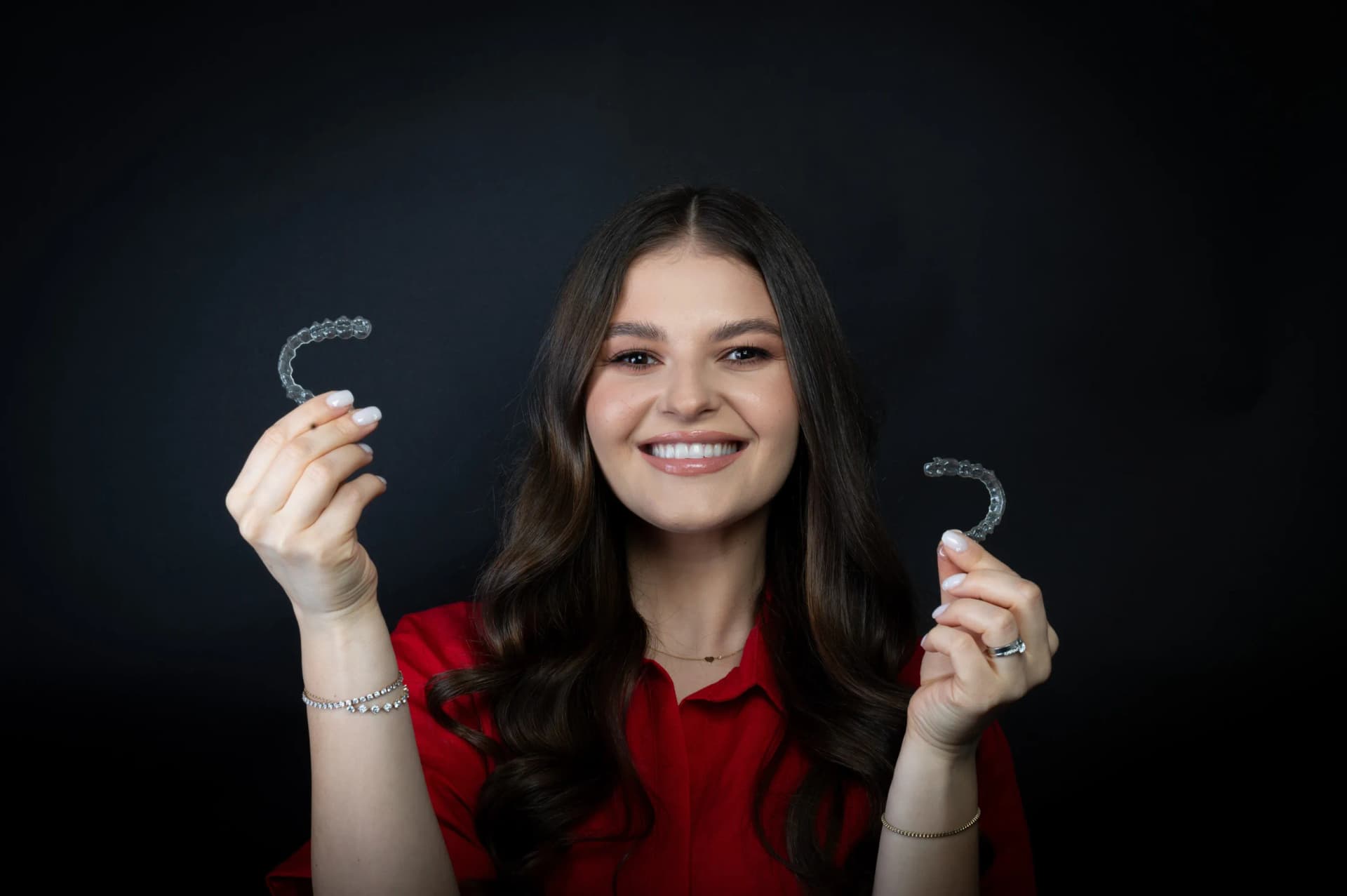
Aesthetics vs. functionality: Prioritising the desired outcomes
Dentists must consider the balance between aesthetics and functionality when choosing a treatment, providing patients with full explanations and discussing personal considerations.
If the patient is primarily concerned with improving the appearance of their smile (shape, colour, size), veneers can offer quick and effective results. If dental malocclusions are not a limiting factor, treatment with dental veneers can be started without reservation.
If the patient has occlusal problems, pain or difficulty chewing, an orthodontic consultation is at least recommended before starting a treatment plan. Although prosthodontists are also competent in addressing occlusal issues, it is necessary for the orthodontist to address tooth misalignment, malocclusion or other orthopaedic dysfunctions.
Occlusion, or the way the upper and lower teeth meet, is a crucial factor in determining the most appropriate treatment. If the patient has a healthy occlusion or minor occlusal problems, veneers may be a suitable option for improving aesthetics. In cases of malocclusion, braces are usually required to correct the alignment of the teeth and jaws, ensuring a correct occlusion in the long term.
Treatment Planning: Braces followed by dental veneers
In some cases, a combination of dental veneers and braces may be the best approach to achieve both aesthetic and functional goals.
A comprehensive treatment plan may include an orthodontic phase, followed by a prosthetic phase. Braces can be used to correct the overall alignment of the teeth, and veneers can then be applied to improve the shape and colour of the teeth, completing the smile transformation.
By combining both treatments, patients can benefit from a beautiful smile and a healthy bite, ensuring optimal results from both an aesthetic and functional perspective.
Frequently asked questions about dental veneers and braces
What is the difference between dental veneers and braces?
Dental veneers are prosthetic restorations applied to the surface of the teeth to improve the appearance of the smile. They correct the colour, shape or minor imperfections of the teeth. Braces correct the position of the teeth and the bite, serving both an aesthetic and a functional purpose.
Which treatment is quicker: dental veneers or braces?
Dental veneers deliver quick results, usually within a few appointments. Treatment with braces takes longer, ranging from a few months to two years, depending on the complexity of the case.
Can dental veneers replace braces?
Dental veneers can only correct minor cosmetic issues or small gaps between teeth. For crooked or crowded teeth, or problems with the bite, braces are the recommended treatment.
Are the braces visible?
Traditional braces are visible, but there are more discreet options, such as ceramic braces or clear aligners, such as Invisalign or Spark.
How long do dental veneers and the results of orthodontic treatment last?
Dental veneers can last between 10 and 15 years, or even longer, with proper care. The results of orthodontic treatment are usually permanent if the patient wears the retainer recommended by the orthodontist.
What is the difference in cost between dental veneers and braces?
The cost of dental veneers depends on the material used and the number of teeth being treated. The cost of braces varies depending on the type of braces and the complexity of the orthodontic treatment.
What is the right treatment for me?
Dental veneers are recommended for the rapid correction of minor cosmetic issues. Braces are recommended for correcting the position of the teeth and the bite. The right treatment is chosen following a full dental consultation.
Conclusion: Making an informed choice between veneers and braces
Both dental veneers and braces offer effective solutions for improving your smile, but they address dental issues in different ways. Dental veneers are ideal for correcting cosmetic issues and deliver quick results, whilst braces are better suited to correcting alignment and bite problems, offering long-lasting results. Choosing the right treatment depends on each patient’s specific needs, aesthetic and functional goals, as well as the specialist’s recommendations.
We hope this guide has provided you with the information you need to understand the differences between dental veneers and braces. If you have any further questions or would like to find out more about the available treatment options, we encourage you to book an appointment with a DENT ESTET dentist for a personalised consultation. They can assess your smile, discuss your goals and help you make the best decision for the health and beauty of your smile.
Bibliography
- Meer Rownaq Ali AB. Conventional Versus Minimally Invasive Veneers: A Systematic Review. Cureus. 4 September 2023;15(9):e44638. doi: 10.7759/cureus.44638. PMID: 37799216; PMCID: PMC10548404.
- Veneers vs. Braces: Choosing the Right Path to Your Perfect Smile by Boutique Dental Care Dental Team | 28 March 2024 | Dental Veneers
- Veneers vs. Braces: Can Veneers Fix My Crooked Teeth?, Dental Designs Clinic Singapore, 7 February 2024
- Alothman Y, Bamasoud MS. The Success of Dental Veneers According to Preparation Design and Material Type. Open Access Maced J Med Sci. 14 Dec 2018;6(12):2402-2408. doi: 10.3889/oamjms.2018.353. PMID: 30607201; PMCID: PMC6311473.
- Faus-Matoses V, Faus-Matoses I, Jorques-Zafrilla A, Faus-Llácer VJ. Orthodontics and veneers to restore the anterior guidance. A minimally invasive approach. J Clin Exp Dent. 1 November 2017;9(11):e1375-e1378. doi: 10.4317/jced.54358. PMID: 29302293; PMCID: PMC5741854.