





Dental veneers – types, advantages, price
Premium dental veneers are the perfect choice for those seeking a natural, flawless and long-lasting smile. Thanks to their remarkable combination of strength, aesthetics and functionality, dental veneers made at DENT ESTET clinics are the ideal investment in the health and beauty of your smile.
We invite you to discover what dental veneers are, what the benefits of dental restoration with premium veneers are, and why it is important to choose quality services and the expertise of a specialised laboratory when opting for this type of oral rehabilitation.
What are dental veneers?
Dental veneers are extremely thin prosthetic devices made of porcelain or composite material, which are applied to the surface of the teeth by a dental aesthetic specialist to improve the appearance of the smile, as well as its functionality.
If you want a uniform and aesthetic smile, this type of dental restoration is the perfect solution for you. Due to their advantages, dental veneers are recommended to correct aesthetic imperfections such as large interdental spaces, improper tooth shape, unsightly unevenness, discolouration, but also dental problems such as enamel damage (worn teeth), broken or chipped teeth.
With a thickness ranging from 0.3 mm to 0.7 mm, reaching up to 1 mm in some cases, dental veneers are characterised by strength, durability and versatility, making them the ideal solution for quickly achieving a new, bright and attractive smile.
Aspen Digital Smile premium dental veneers - available at DENT ESTET clinics - are the ideal choice for achieving a stunning smile. The dental veneering procedure is minimally invasive and can be performed in a single session at the dental office. Thanks to the expertise of the technicians at the ASPEN Digital Dental Laboratory and existing digital technologies, you will enjoy a completely transformed smile in a very short time.
Indications for dental veneers
Smile restoration treatment with dental veneers is recommended in the following situations:
- Discoloured or stained teeth. Dental veneers can mask discolouration caused by factors such as coffee, red wine, smoking, antibiotic treatments or natural ageing, giving teeth a uniform and bright shade.
- Unsightly gaps between teeth. For patients with large gaps between teeth or diastema (gaps), veneers are the ideal solution, as they allow these gaps to be covered naturally.
- Minor dental crowding. In cases of mild dental crowding, veneers can correct these problems, quickly providing a perfectly aligned smile.
- Teeth with unsightly shapes or sizes. Veneers can adjust the shape and size of teeth that are either too small or asymmetrical, giving them a well-proportioned and pleasing appearance.
- Abrasions or dental trauma. Teeth affected by abrasion, trauma or decay can regain their shape and uniform appearance thanks to dental veneer treatment.
- Occlusal dysfunctions. Using the revolutionary MODJAW 4D™ technology, the doctors at DENT ESTET can perform a digital occlusal consultation to customise and optimise dental veneers so that they balance the forces exerted during chewing. This ensures not only an aesthetic appearance but also optimal functionality.
- Uneven texture or uneven surfaces. Dental veneers are also an effective option for evening out the surface of the teeth.
We invite you to visit DENT ESTET clinics to discuss with our experts in prosthetics and dental aesthetics the need for dental veneer treatment in your case, the type of veneers that suit you and the steps of your personalised treatment plan.
When dental veneers are NOT recommended
There are situations in which this type of cosmetic restoration is not recommended, most of which are related to other dental conditions that must be treated before applying veneers.
Therefore, dental veneer treatment should not be used if you have the following oral health problems:
- Teeth affected by caries or periodontal disease (must be treated beforehand);
- Insufficient tooth enamel – there is not enough enamel on which to successfully apply veneers;
- Loose teeth – when the tooth is largely destroyed, a dental crown is a more suitable solution;
- Bruxism – in this case, the veneers may be affected by the forces applied to them, so this condition needs to be corrected beforehand;
- Incorrect occlusion – if orthodontic treatment is necessary, dental veneers will not be applied.
Benefits
Dental veneers are a quick and effective solution for achieving an aesthetic and healthy smile in a short period of time, as they are a treatment that is tailored to the needs of each individual patient.
The main benefits of dental veneers are:
Quick results
Approximately 2-3 visits are required to complete the treatment. After digital impression and finishing of the veneers, the cementing procedure follows, which is performed in a single session, even if the number of veneered teeth is higher.
They are easy to maintain.
Dental veneers should be cared for in the same way as natural teeth. Due to the materials they are made of, bacterial plaque does not adhere to veneers, but regular brushing, flossing and regular visits to the dentist are recommended to maintain oral health.
Minimally invasive procedure
Depending on the type of veneer, whether it is polished or no-prep, the veneering procedure involves minimal grinding of the tooth surface (equivalent to hundreds of microns), preserving its integrity. Such a delicate approach does not cause discomfort or sensitivity, nor does it compromise the structure of the tooth.
Long service life
Thanks to high-quality materials, veneers are resistant to wear and tear, maintaining their appearance and functionality for up to 10 years. With proper hygiene and regular check-ups, they can even last 15-20 years. However, the lifespan of veneers can vary depending on lifestyle and the quality of dental care.
Resistance to stains and wear
The materials used to make veneers offer superior resistance to stains and wear. This resistance translates not only into a more beautiful smile, but also into a lasting investment, providing the assurance that the veneers will look flawless for a long time.
They are biocompatible
Dental veneers are made of biocompatible materials, which means they do not cause allergic reactions and are well tolerated by the body. These characteristics provide comfort, safety and allow you to lead a normal lifestyle without any special dietary restrictions.
Natural appearance
DENT ESTET cosmetic dentists recommend natural-looking dental veneers that reproduce the transparency and surface of natural teeth as faithfully as possible. In the case of Aspen Digital Smile premium dental veneers, the translucent appearance of the ceramic makes these prosthetic works impossible to distinguish from natural teeth.
Teeth in the desired shade of white
Another advantage of veneers is that they can be customised in terms of both shape and shade. This allows you to achieve the shade of white that best suits the aesthetics of your smile and facial features. Whether you want a bright white for a star-like smile or a more natural shade, our specialists will find the ideal solution.
Types of dental veneers
There are numerous types of dental veneers, each with specific characteristics (materials used, thickness, durability, and aesthetic appearance) that differentiate them.
For example, porcelain veneers are valued for their transparency and shine, while composite veneers offer a more affordable option that is quick to apply but has some limitations in terms of stain resistance.
Currently, there are the following types of veneers:
- Ceramic/porcelain dental veneers
- Zirconia dental veneers
- Composite dental veneers.
1. Ceramic/porcelain dental veneers
The introduction of ceramics in dentistry in 1950 revolutionised dental aesthetics, thanks to its unrivalled advantages in terms of appearance and durability.
Depending on their composition, there are numerous types of ceramics/ceramic materials used in prosthetic work, such as dental implants, crowns and veneers. Current dental ceramics can be classified as follows:
- high glass/feldspar content (feldspar porcelain)
- with reinforced glass (lithium disilicate)
- crystalline/polycrystalline, also known as metal ceramics (zirconia and alumina)
Initially, ceramics were used in combination with metal alloys for prosthetic work, but in the last 20 years things have changed completely. Today, the quality of prosthetic work, such as crowns or dental veneers, is determined by the combination of ceramic materials used to make them. The new types of ceramic materials are of high quality and allow for full ceramic restorations, with an impact on the aesthetics and functionality of the smile.
Ceramic/porcelain dental veneers are the ideal solution for improving your smile by changing the colour, shape and size of your teeth. Naturally, many of us want a bright smile. And in recent years, the trend has been towards a Hollywood smile, with immaculate white teeth. However, this may not be the right option for you.
Ceramic or porcelain veneers have become increasingly popular because they have the advantage of perfectly imitating the transparency of natural teeth.
As they are handmade, the key is to choose a prosthodontist and a specialist laboratory that have the necessary expertise to customise the veneers to suit your physiognomy and desires.
Premium ASPEN Digital Smile Design Dental Veneers
The quality of the materials used to make veneers is important for the final results, but we believe that it is not the material that will create the smile you want, but the craftsmanship of the technicians at the ASPEN Advanced Dental Laboratory.
Made from the highest quality ceramic, ASPEN premium dental veneers are based on the expertise of smile artisans and advanced CAD-CAM technology.
The main benefits of ASPEN Digital Smile dental veneers:
- Natural appearance. Thanks to the transparency of the ceramic and the technology used, ASPEN Digital Smile veneers have a natural appearance. Each veneer is meticulously crafted and recreates the natural structure of the teeth in detail.
- Increased resistance. ASPEN Digital Smile dental veneers are designed to provide long-lasting results. The ceramic used is extremely resistant, making them ideal even for patients with bruxism. These are prosthetic works that guarantee a lasting smile.
- Safety and comfort. At DENT ESTET clinics, ASPEN dental veneers made by our technicians come with a Certificate of Quality, which attests to our confidence in their durability and quality.
E.MAX Ivoclar Dental Veneers
E.MAX Ivoclar dental veneers are a premium solution in restorative dentistry, as they combine aesthetics with performance at the highest level. These veneers are made of feldspar or crystalline ceramic materials, which ensure superior aesthetics (transparency, translucency) and exceptional durability over time.
The versatile ceramic materials allow the veneers to be processed by both pressing and CAD/CAM milling. Due to the material's ability to mimic the aesthetic characteristics of natural teeth, E.MAX Ivoclar veneers are perfect for front tooth restorations.
2. Zirconium dental veneers
Due to its properties, zirconium is a material widely used in dentistry, especially in implantology and dental aesthetics. Zirconium oxide, also known as "ceramic steel", has properties such as hardness, superior strength and high biocompatibility.
Since crystalline ceramics, such as zirconium, are not characterised by high transparency, being in fact opaque, this type of material is mainly used in the manufacture of dental crowns, and less for veneers. In addition, zirconium veneers are not recommended for front teeth. When used only as a support structure, zirconium offers increased strength.
3. Composite dental veneers
Made of composite resins, these veneers are more affordable because the material is applied directly to the teeth, unlike ceramic or porcelain veneers, which are extremely thin prosthetic works made in specialised laboratories.
This type of veneer has the advantage of not requiring major reshaping of the natural teeth, but its durability is much lower, between 6 and 8 years, and it is recommended that they be polished every two years. In addition, composite resins are less resistant than ceramic or porcelain, as is their stain resistance.
ASPEN Advanced Dental Technology Laboratory
Modern laboratories are often at the forefront of innovation in dentistry, developing and implementing new techniques and materials that improve treatment outcomes.
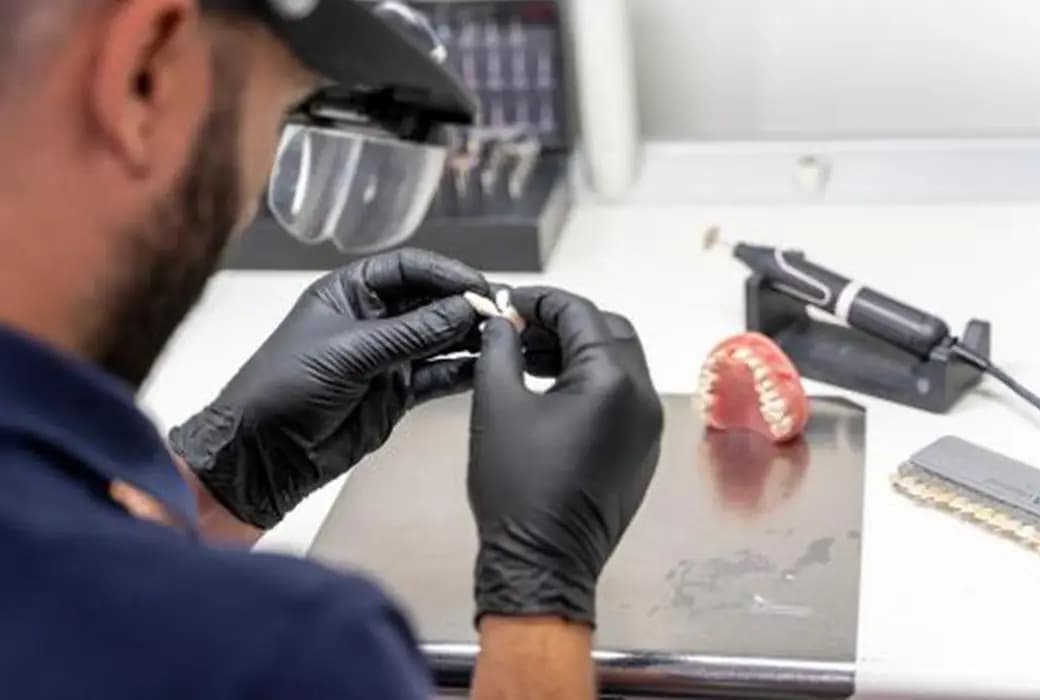
The ASPEN advanced dental technology laboratory, part of the DENT ESTET group, represents the cutting edge of modern dental technology, where art and science come together to create works of dental art. At DENT ESTET, close collaboration between dental technicians and the team of cosmetic dentists and prosthodontists ensures an integrated approach to treatment, with a real and immediate impact on results.
The technologies used in the laboratory integrate the patient's digital file and superimpose the information obtained by clinicians through panoramic X-rays, CBCT computed tomography, 3D intraoral scans, Modjaw™ 4D occlusal scanning or RayFace® facial scanning. In this way, our technicians provide technical solutions for the specific needs of each patient.
In addition, advanced technologies such as 3D printing and CAD/CAM enable the creation of precise and customised dental work, contribute to the development of new materials and techniques, and thus continuously improve the quality of dental products and the effectiveness of treatments.
How are dental veneers applied?
At DENT ESTET clinics, dental veneer treatment begins with meticulous planning that takes into account both your physiognomy and your wishes, while balancing aesthetic and functional needs.
Based on a "digital portrait" created using X-rays, digital dental impressions and images recorded using MODJAW 4D® technology, the prosthodontist can build a complete picture of the clinical situation.
The digital approach offers a significant advantage: complete personalisation of the treatment. The prosthodontist will adjust the veneers according to the desired shape and colour, chewing and movements of the temporomandibular joint.
The process of applying dental veneers usually involves 2-3 visits to the prosthodontist's office. The first stage begins with a detailed assessment of your health and additional investigations, such as intraoral scanning with the Trios 3Shape® Real Color digital scanner, to obtain accurate images of your teeth and gums. Subsequently, using the Digital Smile Design® system, the dentist can design the final smile during the planning phase, so you can visualise the result before starting treatment.
Here are the steps involved in the dental veneer application procedure:
1. Specialist consultation
This consultation is essential for establishing a solid basis for treatment and creating a personalised digital file. In addition to a detailed clinical examination, this stage involves a series of essential imaging investigations, such as panoramic radiography, diagnostic photographs and digital impressions, which are carried out in our clinics using the latest technology available.
If a bite assessment is necessary, an occlusal analysis will be performed using the MODJAW 4D® scanner, which monitors jaw movements in real time. For a comprehensive approach, the doctor may also recommend a facial scan with RAYFace® to create a harmonious smile tailored to the patient's physiognomy.
In addition, you will have the opportunity to convey your expectations regarding the treatment and request any other information regarding the veneering procedure. It is important to be fully informed about the stages of treatment, benefits and potential risks so that you can make a well-informed decision.
2. Treatment of existing conditions
If, based on the results obtained, the dentist detects any dental conditions, they will recommend treating them before the dental veneering procedure.
Thus, dental caries must be treated with fillings or root canal treatments, as appropriate. Gum disease must also be treated before starting prosthetic treatment. If the patient has moderate or severe orthodontic problems, it is important that these be resolved before applying dental veneers.
Before applying the veneers, a teeth whitening procedure is also recommended to optimise the shade of the natural teeth. This way, the new veneers will lead to the best smile transformation.
3. Planning the final smile
This is the stage where you will be able to see the final result even before starting treatment.
Using cutting-edge Digital Smile Design technology, the prosthodontist will simulate the final smile with exceptional precision, so that you have a clear picture of your future transformation.
Digital Smile Design offers predictability and personalisation. Using advanced technology, DSD allows the creation of a 3D preview of the smile, integrating aesthetic and functional aspects. This way, you can ensure that every detail meets your expectations. In addition, DSD allows for effective communication with your dentist, which improves your level of satisfaction and confidence that you will achieve the result you desire.
4. Preparing teeth for veneers
Advances in dental aesthetics technology have significantly reduced the need for aggressive tooth grinding in preparation for dental veneers.
In most cases, this preparation involves minimal, microscopic grinding, which preserves as much of the natural tooth structure as possible. This minimally invasive approach ensures patient comfort and protects the integrity of the enamel.
Whether you opt for veneers with minimal grinding or no grinding (NO PREP), the procedure is safe and offers exceptional aesthetic results, ensuring a natural and harmonious smile.
Application of veneers with grinding
PREP veneers are recommended in cases where slight tooth reshaping is necessary to achieve optimal results. The procedure involves minimal grinding of the tooth surface, removing a small amount of tooth enamel to allow for perfect veneer attachment. This preparation helps to create a solid bond and achieve a harmonious and lasting aesthetic result.
PREP veneers are the right choice for patients who have teeth with more pronounced aesthetic problems, such as crowding, discolouration or uneven shapes. Thanks to this grinding process, veneers can effectively adjust the overall appearance of the smile, correcting imperfections and providing a perfectly aligned smile.
Although it involves minimally invasive preparation, the PREP method preserves as much of the natural tooth structure as possible, while ensuring the durability and functionality of the veneers.
NO PREP veneers (no grinding)
For those who want an even more conservative procedure, there is the option of No-prep dental veneers, which do not require tooth grinding before application or involve minimally invasive grinding. These veneers are ideal for cases where the teeth are of adequate size and positioning, thus providing a quick and non-invasive aesthetic solution. No-prep
dental veneers can be fixed directly to the tooth without prior preparation.
A major advantage of No-prep veneers is that they prevent tooth sensitivity that could be caused by the removal of tooth enamel.
5. Cementing dental veneers
After preparing the tooth and trying on the future veneers, the essential stage of cementing the dental veneers follows. A special, high-quality cement is applied to the inside of the veneer, which is then carefully positioned on the tooth. To
ensure quick and durable bonding, the prosthodontist uses a special light that activates the chemicals in the cement, accelerating the hardening process.
The final part of this stage involves the precise removal of excess cement, careful checking of the bite to ensure comfort and optimal functionality, and making any necessary adjustments to achieve a perfect result. This process guarantees a secure bond and a natural, aesthetic and durable smile.
Risks of dental veneers
Although dental veneers are an effective solution for improving the aesthetics of your smile and correcting certain imperfections, it is important to be aware of the possible risks associated with this treatment.
Here are some things to consider:
1. Enamel grinding – Applying dental veneers involves removing a small amount of enamel to allow for precise fitting. The more irregularities or crowding the patient's teeth have, the more the dentist will need to grind to achieve a symmetrical smile.
To minimise the associated risks, the dentist may recommend a preliminary stage of straightening the teeth with braces (orthodontic treatment).
2. Risk of fracture or detachment – Although dental veneers are very resistant, they are not indestructible. Excessive pressure or habits such as teeth grinding (bruxism) can lead to fracture or detachment of the veneers.
To reduce this risk, the cosmetic dentist can perform a MODJAW occlusal consultation to ensure that the prosthetic work is functionally adapted.
3. The need for proper maintenance – Although ceramic veneers are resistant to stains and wear, it is essential to maintain rigorous oral hygiene and attend regular check-ups. Improper care can affect the lifespan of veneers.
Always consult your dental specialist before opting for dental veneers to fully understand the risks and benefits of this treatment so that you can make an informed decision.
How much do dental veneers cost?
The cost of dental veneers can vary depending on several factors, including the material used, the complexity of the case, and the technology employed. In general, ceramic veneers are more expensive than composite veneers due to their superior durability and aesthetics.
In addition, the initial consultation, imaging investigations, and other pre-treatment procedures (such as cleaning or correction of pre-existing dental problems) can influence the total price.
To obtain an accurate estimate tailored to your needs and aesthetic goals, it is recommended that you schedule a consultation with a specialist in prosthetics/cosmetic dentistry, who will assess your dental condition and propose the most appropriate treatment plan tailored to your emotional and financial needs.
Frequently asked questions about dental veneers
At what age can I start treatment with dental veneers?
Dentists recommend dental veneer treatment no earlier than the age of 18, after the development of teeth and jaws is complete. The dentist will assess the suitability of veneers so that the treatment is successful and provides long-term results.
How many sessions are required to apply dental veneers to both arches?
Treatment with dental veneers requires approximately 2-3 visits to the prosthodontist's office. With the help of CAD-CAM technology and ASPEN's own laboratory, dental veneers can be made quickly, thus reducing the number of patient visits.
Also, to ensure the success of dental veneer treatment, the dentist will take a digital impression, thus minimising human error and ensuring patient comfort (especially if the patient has a pronounced gag reflex).
Is dental veneer treatment painful? Do dental veneers affect tooth health?
Treatment with dental veneers is not painful and does not affect the health of the tooth. After the process of preparing the teeth for the application of veneers, the patient may experience sensitivity to cold or heat, but only for a short period of time, and this discomfort disappears completely in a short time.
How do we care for dental veneers?
The dental care routine after completing dental veneer treatment is no different from the usual one, namely brushing your teeth twice a day for at least 2 minutes per brushing and using dental floss, mouthwash and a mouth shower. Also, to ensure that your new smile remains bright in the long term, it is important to have regular check-ups and prophylaxis sessions, as recommended by your coordinating dentist.
DENT ESTET Reviews

Petre Oprescu
October 7, 2026

Foarte multumit de serviciile clinicii, personalul foarte specializat cu medici de exceptie, iar personalul auxiliar se poarta deosebit de bine cu pacientii.Recomand cu toata increderea Dent Estet.
Eduard
October 7, 2026
Recomand. Cei mai buni medici!
Andreea Crucila
October 7, 2026
Am avut o experiență foarte plăcută la această clinică stomatologică. Întregul personal este amabil, atent și profesionist, iar atmosfera este una foarte plăcută și liniștită. Medicii explică fiecare etapă cu răbdare și îți oferă încredere pe tot parcursul tratamentului. Totul este foarte bine organizat, iar clinica este curată și modernă. Recomand cu drag această clinică tuturor celor care își doresc servicii de calitate și oameni cu adevărat implicați!
J V
October 6, 2026
Servicii excelente, nivel foarte ridicat de profesionalism!
Andreea Lorentz
October 5, 2026
Cea mai tare echipa de profesionisti! Recomand cu drag dr Vasile Branici, dr Adelin Radu & dr Cristina Erciulescu. Multumesc ♥️🌟💪
Gabriela Ion
October 2, 2026
Am fost foarte mulțumită de serviciile oferite de Dent Estet și, în mod special, de profesionalismul și atenția acordată de doamna doctor Andreea Rădeanu. Am apreciat foarte mult răbdarea, explicațiile clare și modul atent în care a decurs fiecare etapă. M-am simțit în siguranță și pe mâini bune pe tot parcursul experienței. Recomand cu drag Dent Estet și pe doamna doctor Andreea Rădeanu cat și restul echipei, tuturor celor care își doresc servicii stomatologice de calitate și o experiență plăcută!
Schedule a consultation
Fill out the form and one of our assistants will contact you to schedule a visit to the clinic.