





Orthodontics: benefits, types of braces and the importance of treatment
 Author:
  October 23, 2024
Orthodontics is a branch of dentistry that deals with the diagnosis, prevention and treatment of dental and facial abnormalities, focusing on the alignment of the teeth and jaws to improve the functionality and aesthetics of the smile. Orthodontic treatment plays a vital role in a person’s oral health and general well-being.
The benefits of orthodontic treatment:
• Correcting the alignment of the teeth
One of the main aims of orthodontic treatment is to correct the position of the teeth, whether they are too crowded, too spaced out, or misaligned. Correct alignment contributes to an attractive smile and better functioning of the dento-maxillary system.
• Improving chewing function
Teeth that are not properly aligned can affect the way we bite and chew. Proper orthodontic treatment can improve chewing efficiency, thereby preventing digestive problems that might arise from inefficient chewing.
• Prevention of premature tooth wear
Misaligned teeth can lead to uneven and premature wear of the tooth enamel, increasing the risk of cavities and other dental problems.
• Improving gum health
Crowded or misaligned teeth can make it difficult to clean the mouth properly, which can lead to the build-up of plaque and the development of gum disease. By correcting the position of the teeth, oral hygiene becomes easier and more effective.
• Correcting malocclusions
Malocclusions (incorrect bites) can cause pain in the temporomandibular joint, speech difficulties and even headaches. Orthodontic treatment helps to correct these problems, improving comfort and quality of life.
• Boosting self-confidence
A beautiful, well-aligned smile can significantly boost self-confidence, having a positive impact on social relationships and career prospects.
• Preventing future complications
Treating orthodontic problems can prevent more serious issues that might arise later, saving time, money and discomfort.
There are numerous studies that highlight the negative impact of dento-maxillary abnormalities on quality of life and the benefits of orthodontic treatment. One such study showed that patients experienced greater self-esteem, increased confidence in social situations and reduced anxiety regarding their appearance following orthodontic treatment. The improvement in facial aesthetics contributed to a better overall quality of life. Patients with severe malocclusion or dentofacial anomalies reported a significantly greater impact on oral health than the general population, and it appears that severe malocclusion affects patients’ quality of life more than many other oral conditions.
Types of braces
There are several types of dental braces, each with its own specific features depending on the treatment requirements and the patient’s preferences. Here are the main types of braces:
Fixed orthodontic appliances (braces)
o Metal braces: Made from stainless steel, these metal braces are the most common type and offer precise control over tooth movement. They are durable and can be personalised with different coloured elastics.
o Ceramic braces: With brackets that match the shade of the teeth or are transparent, these braces are almost invisible.
o Sapphire braces: Combining the durability of metal braces with the aesthetics of ceramic ones, sapphire braces offer an attractive appearance and high treatment efficiency.
o Damon braces: Using self-ligating technology, Damon braces reduce treatment time and discomfort, facilitating smoother tooth movement.
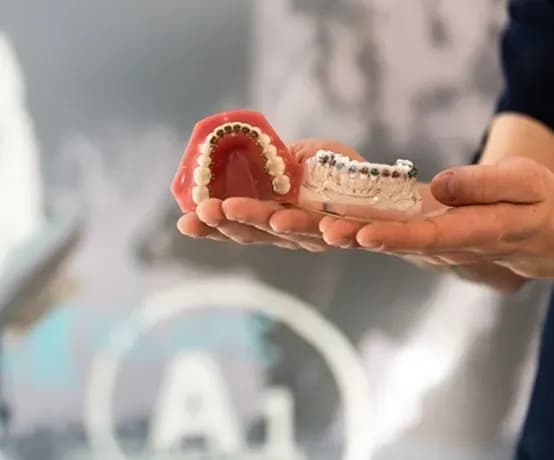
o Lingual braces (Incognito): These are an aesthetic and invisible alternative as they are fitted to the lingual (inner) side of the teeth. Incognito braces are customised for each individual patient.
Orthodontic aligners (clear aligners) Invisalign, ClearCorrect, FAS
These are customised, invisible aligners that fit perfectly around the teeth, ensuring enhanced comfort and aesthetics. Unlike fixed braces, aligners can be removed, ensuring proper oral hygiene during treatment and a diet without food restrictions. They must be worn for 20–22 hours a day to achieve the desired results. They also offer patients flexibility through a reduced number of visits to the dental clinic and a shorter treatment time, thanks to their ability to move teeth precisely and efficiently.
The advantages of aligners over fixed braces are demonstrated by studies showing that, in terms of treatment efficiency, aligner treatment has yielded more favourable results regarding treatment duration, the number of emergency visits and the number of general appointments.
Functional appliances
These are used to correct jaw growth problems and are frequently used in children and adolescents. They influence the position of the jaws and teeth during growth and can be fixed or removable.
Palatal expanders
These are used to correct problems related to crowding or insufficient space for the teeth. They can help widen the palate and create the space needed for the teeth to align correctly.
Retainers
After orthodontic treatment is complete, retainers are used to keep the teeth in their new position. They can be fixed (positioned behind the teeth) or removable (retainer trays), and are essential for preventing relapse.
How do you choose braces?
Each type of orthodontic appliance has its own advantages and disadvantages, and the choice of the most suitable one depends on the patient’s individual needs and the recommendations of the orthodontist. An orthodontist is a dentist who has specialised in the diagnosis, prevention and treatment of dental and facial abnormalities, particularly with regard to the alignment of teeth and jaws. Specialising in orthodontics requires further education after completing dental school and advanced specialist training to become an expert in diagnosing and treating abnormalities of the dento-maxillary system.
Bibliography
- Albino, J. E., Lawrence, S. D., & Tedesco, L. A. (1994). Psychological and social effects of orthodontic treatment. Journal of Behavioural Medicine, 17(1), 81–98.
- Rusanen, J., Lahti, S., Tolvanen, M., & Pirttiniemi, P. (2010). Quality of life in patients with severe malocclusion before treatment. European Journal of Orthodontics, 32(1), 43–48.
- Borda, A. F., Garfinkle, J. S., Covell, D. A., Wang, M., & Doyle, L. (2020). Outcome assessment of orthodontic clear aligner versus fixed appliance treatment in a teenage population with mild malocclusions. The Angle Orthodontist, 90(4), 485–490.