





Periodontal disease (periodontitis)
 Author:
  November 8, 2022
What is it, what causes it and how is it treated?
Periodontal disease is one of the most serious conditions that can affect the mouth; if left untreated, it can eventually lead to tooth loss.
To understand periodontal disease and its implications, we will now examine in detail the main causes, symptoms, treatment and methods of prevention.
- General information: what is periodontitis;
- Causes of periodontitis;
- Symptoms of periodontal disease;
- Diagnosis and treatment of periodontal disease;
- Methods of preventing periodontal disease.
General information: what is periodontitis
Periodontal disease is a chronic condition characterised by the deterioration of the structures that support and anchor the teeth to the bone. It is caused by an imbalance in the bacterial flora of the oral cavity and can lead to serious problems. It is one of the major causes of tooth loss, which can compromise chewing function, aesthetics, self-confidence and quality of life.
It is present in various forms in approximately 50% of adults over the age of 30 and in over 70% of those over 65. Although it is predominantly found in adults, periodontitis can also occur in children and young people. In adults, approximately 70% of tooth loss is caused by periodontal disease.
Causes of periodontitis
There are many factors that contribute to the development of periodontal disease, but the main cause remains bacterial plaque. This builds up on the surface of the teeth or dental restorations and is kept under control through proper oral hygiene carried out at home by the patient (brushing twice a day, using auxiliary hygiene aids) and regular dental check-ups every 6 months.
If it is not removed daily or brushing is not effective, the bacterial plaque hardens and accumulates above or below the gum line, turning into tartar. It is important to note that tartar cannot be removed by simple brushing. In this case, a visit to the dentist is necessary, who removes the deposits through a procedure called scaling.
In addition to poor oral hygiene, other contributing factors include: general health conditions (diabetes, hormonal imbalances, psychological disorders), stress, smoking, diet, certain medications, and genetic factors.
Unfortunately, untreated periodontal disease can have serious consequences for general health. Patients with periodontitis have an increased risk of developing diabetes, cardiovascular disease and complications during pregnancy (pre-eclampsia, preterm birth and low birth weight).
Furthermore, periodontitis has been linked to more than fifty diseases and conditions, including lung disease, osteoporosis, chronic kidney disease, Alzheimer’s disease and rheumatoid arthritis.
Symptoms of periodontal disease
Periodontal disease always begins with gum disease, known as gingivitis, a stage which is completely reversible. As it is not accompanied by pain or acute discomfort, the onset of periodontitis is not easily noticeable. The first signs (bleeding when brushing, swollen and red gums) are often ignored, rather than being a warning sign that should prompt the patient to visit the dentist.
In smokers, gum bleeding is significantly reduced due to the effect of nicotine on the blood vessels. Smoking gives a false impression of the severity of existing problems, and for this reason patients present at dental practices at more advanced stages of the disease.
The subsequent stages are irreversible and involve bone loss; treatment is complex and helps to halt the progression of the disease. The periodontium is severely affected and there is even a risk of tooth loss.
The symptoms experienced by patients are:
- Halitosis (bad breath);
- Gum recession and exposure of tooth roots;
- Pain when chewing food;
- Discomfort when eating very cold or very hot food;
- Loose teeth;
- Tooth movement.
Treatment should be initiated as soon as possible to limit bone loss or gum recession and to ensure that the teeth remain in the mouth for as long as possible.
Diagnosis of periodontal disease
Whether or not you have periodontitis, the first recommendation is to see your dentist at the very first sign that something is wrong (bleeding gums when brushing or chewing, or swollen gums). Conditions detected early are always much easier to treat than those in advanced stages.
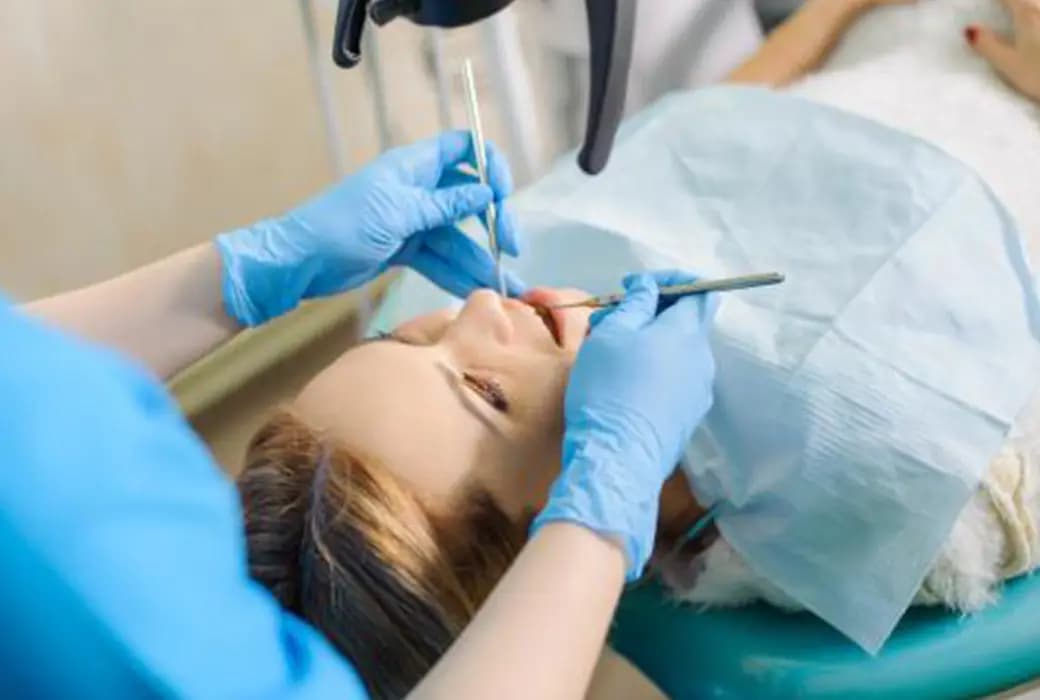
In the case of this condition, the diagnosis is made by the dentist following a dental examination, during which they assess the appearance of the gums (colour, volume, texture), the level of hygiene and the amount of tartar build-up, as well as the dental occlusion or dental status. To assess the condition of the gum tissue, the dentist will also use a periodontal probe, an instrument that measures the space between the gum and the tooth. This measurement, together with dental X-rays, provides the dentist with the necessary data to establish the diagnosis.
Treatment of periodontal disease
Treatment is chosen according to the stage of the condition. Cases of gingivitis are simpler and require, first and foremost, the removal of the factors that led to the onset of the condition: bacterial plaque and tartar. A professional scaling and polishing are carried out at the dentist’s surgery, but these must be complemented by proper oral hygiene at home. If necessary, the dentist may also recommend the use of products containing antibacterial substances, which aid and speed up healing.
If periodontitis is at a more advanced stage, treatment may involve several stages, but the first step is to remove the causative factor, namely the bacterial plaque above and below the gumline. In periodontal disease, an imbalance occurs at the subgingival level between beneficial and harmful bacterial species. To restore this balance, traditional treatment—involving root planing—is combined with modern laser therapy. All of this constitutes the first, most important, and often the only stage of treatment.
Laser therapy involves a minimally invasive procedure that enables effective periodontal treatment. In modern dentistry, the use of lasers minimises the need for scalpels or sutures, offering greater comfort to the patient thanks to rapid post-operative recovery. A recent study recognised by the American Academy of Periodontology compared conventional treatment, which includes a surgical stage, with non-surgical laser treatment, and the results were similar for both.
The laser is a relatively new but very useful tool in the treatment of periodontal disease. It has a bactericidal effect, decontaminating the subgingival area and eliminating bacteria present in periodontal pockets. Furthermore, beneath the gums, in addition to bacteria, there are also viruses and fungi, which exacerbate the inflammatory response. The laser also acts on these, something we cannot achieve with conventional treatment. The laser removes subgingival tartar deposits and acts selectively on diseased gingival tissue. It also stimulates these tissues to improve the healing and regeneration of periodontal structures.
The discomfort experienced by the patient is greatly reduced, recovery is easy and gingival retraction following treatment is minimal. The use of lasers in the treatment of periodontal disease leads to a significant reduction in the amount of systemic antibiotics administered during treatment.
There are two types of lasers used in periodontal treatment: the diode laser and the Erbium Cr: YSGG laser, and their combined effects lead to the best results and halt the progression of periodontal disease.
In more severe cases, which have not been resolved in the first stage, it is possible to proceed to the surgical stage, in which strictly localised intervention is carried out to perform bone grafting. Studies indicate that approximately 80% of teeth respond very well to non-surgical treatment and require no further intervention, leaving around 20% that also require a surgical approach. In advanced stages of periodontitis, the disease can destroy significant parts of the gum tissue and bone, and the dentist may then recommend complex surgical treatment, such as tissue or bone grafts.
In the event of tooth loss, once the tissues have regenerated and the periodontal disease has been stabilised, dental implants may also be considered.
It is important to note that dental implants should not be placed in patients who have not first undergone periodontal treatment on their remaining teeth, as there is a high likelihood that they will not be successful in the long term, because bacteria can migrate from the teeth to the dental implants, causing them to fail over time.
Methods for preventing periodontal disease
Preventing a disease is always a top priority and, fortunately, periodontitis is one of the conditions that can be avoided. All the patient needs to do is follow a few guidelines for maintaining and caring for their teeth:
- Regular visits to the dentist’s surgery. Even if no problems arise, these should be carried out at least twice a year for a general check-up and scaling;
- Proper tooth brushing: twice a day, especially in the evening, for at least two minutes, using circular motions from the gum line towards the tooth, covering all surfaces of both dental arches;
- Daily use of dental floss, a water flosser and mouthwash to remove bacterial plaque from between the teeth and from areas the toothbrush cannot reach;
- Ensure a diet rich in fruit and vegetables and reduce your intake of refined foods, starchy foods and sugars, which encourage the growth of bacteria in the mouth.
Although it is one of the main causes of tooth loss, periodontitis is a condition that can be very easily prevented through proper oral hygiene, a balanced diet and regular visits to the dentist. And if it is present, it is very important to ensure an accurate diagnosis, establish an appropriate and minimally invasive treatment plan, and use modern methods and techniques to treat this condition, all for the benefit of the patient.