



 Author:
 November 19, 2026
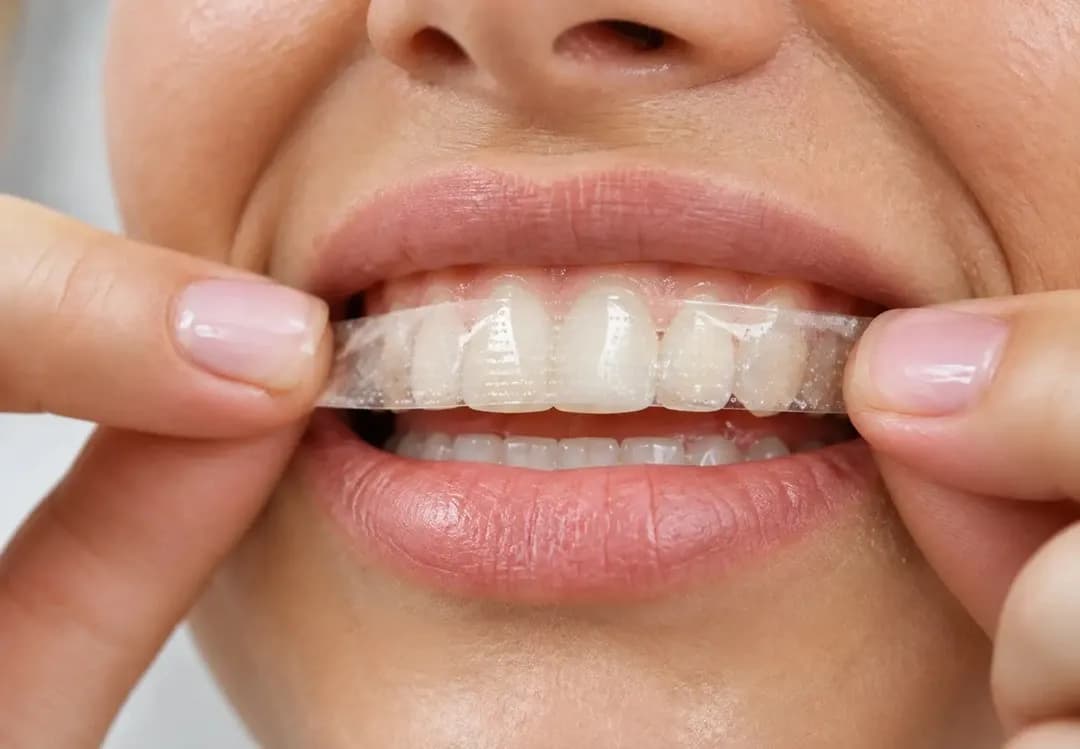
Teeth-whitening strips can lighten the shade of your natural teeth, but their effectiveness and safety depend on the active ingredients, their concentration and how they are used. The most common side effects are tooth sensitivity and gum irritation, particularly when used incorrectly.
The strips are marketed as an affordable solution for at-home teeth whitening, but they are not suitable for every patient. Unlike products used without a dental assessment, professional whitening allows the cause of discolouration to be identified, the treatment to be tailored and any adverse reactions to be monitored.
How do whitening strips work?
The strips are thin strips coated with a peroxide-based gel, such as hydrogen peroxide or carbamide peroxide. They are applied to the teeth for a specific period each day, in accordance with the manufacturer’s instructions.
The peroxide penetrates the enamel and acts on the molecules responsible for discolouration, and the tooth may gradually become lighter in colour.
The concentration of the active ingredient is generally lower than in professional treatments. This makes them more affordable, but also limits their effectiveness.
Are whitening strips effective?
They can be effective in certain situations. For natural teeth with mild or moderate discolouration, some people may notice a lighter shade after a full course of treatment.
However, the result depends on several factors:
- the type and cause of the discolouration;
- the initial colour of the teeth;
- following the instructions;
- the condition of the enamel and gums.
It is also important to be aware of their limitations.
What can’t the strips whiten?
The strips do not alter the shade of:
- crowns;
- veneers;
- fillings.
These restorations retain their original colour.
Furthermore, the strips do not resolve all types of discolouration, particularly those caused by internal factors.
Why might the result be uneven?
The strips are mainly applied to the visible surfaces of the front teeth.
The spaces between the teeth and the side teeth may be less exposed to the whitening agent, which can lead to differences in shade.
Are whitening strips safe?
For a person with healthy teeth and gums, when used as directed, the risks are generally limited.
However, adverse reactions may occur, and the risk is higher when the strips are used without a prior dental assessment.
Tooth sensitivity
Tooth sensitivity is one of the most common side effects and is usually temporary.
It is particularly likely to occur in people who already have tooth sensitivity or areas of exposed dentine.
Gum irritation
The gel may come into contact with soft tissues and cause irritation.
Incorrect application or repeated contact with the gums may increase discomfort.
Overuse
Some people continue treatment for longer than recommended in an attempt to achieve an even lighter shade.
This overuse can increase the risk of sensitivity and irritation.
What happens if there are undiagnosed dental problems?
If there are untreated cavities, inflamed gums, cracks in the enamel or exposed dentine, the whitening gel may increase sensitivity and discomfort.
“Some of these problems may initially develop without symptoms, which is why an assessment before whitening is important.” – Dr Felicia Velicu, dentist specialising in cosmetic dentistry at the DENT ESTET clinic in Sibiu
Why does professional teeth whitening offer greater control?
In-clinic teeth whitening differs in the way it is planned and monitored. The treatment is preceded by an assessment of the teeth and gums and can be tailored to each patient’s individual situation.
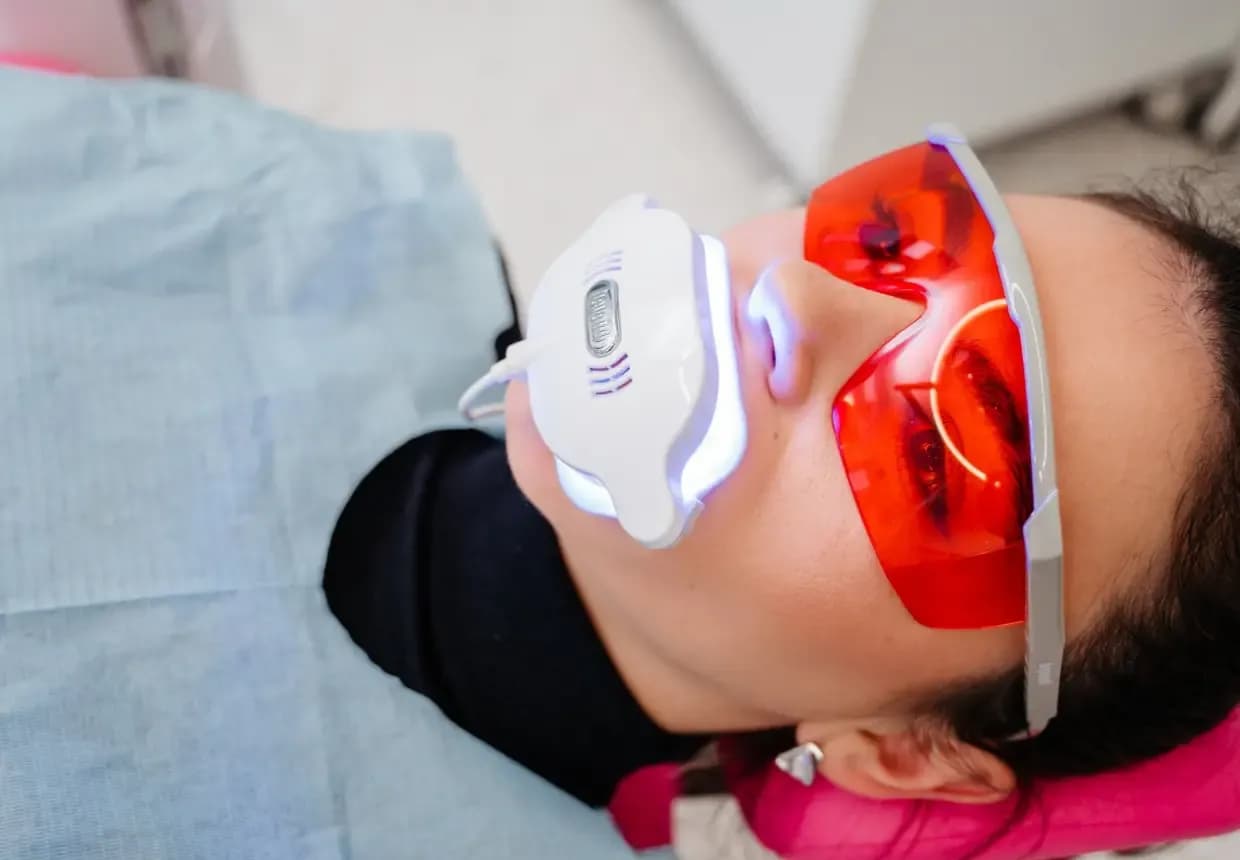
At the dentist’s:
- the health of the teeth and gums is assessed;
- the type of staining is identified;
- the soft tissues are protected;
- the concentration and duration of action can be adjusted;
- the distribution of the whitening agent is controlled;
- the dentist can intervene if sensitivity or discomfort occurs.
"The final result of a professional teeth-whitening procedure varies from patient to patient, but the advantage is the ability to control and tailor the treatment. Unlike at-home whitening strips, in the clinic we can adjust the concentration of the whitening gel and the application time depending on the initial shade of the teeth, tooth sensitivity and the desired result. Furthermore, the procedure is carried out under medical supervision, with protection for the gums and monitoring of the patient’s response to the treatment.” – Dr Felicia Velicu
| Criterion | Whitening strips | Professional in-clinic whitening |
| Preliminary assessment | Usually missing | Yes |
| Identification of the cause of discolouration | No | Yes |
| Gum protection | Limited | Monitored by the dentist |
| Consistency of results | May be uneven | More controlled |
| Adaptation to the patient | Standard | Individualised |
| Monitoring | None | Yes |
Why is professional cleaning important before whitening?
Bacterial plaque, tartar and surface stains can affect the appearance of your teeth before whitening.
A professional clean removes extrinsic deposits and stains, allowing for a more accurate assessment of the tooth’s natural shade.
Sometimes, after a dental cleaning, the teeth may already appear brighter, and the patient may find that whitening is no longer necessary.
It is important to distinguish between the two procedures:
- a dental clean-up cleans and removes deposits and superficial stains;
- whitening reveals the natural shade of the teeth.
When is it not advisable to use whitening strips?
Patches are not suitable in every situation. In some cases, it is safer to see a doctor first for an assessment.
It is advisable to avoid using them before a consultation if:
- you have untreated tooth decay or damaged fillings;
- you have inflamed or bleeding gums;
- you have severe tooth sensitivity;
- you notice cracks or areas of wear on your enamel;
- you have crowns, veneers or multiple restorations in the visible area;
- a single tooth has changed colour;
- you are pregnant or breastfeeding;
- the patient is a child or teenager.
A single tooth that has darkened may indicate an internal problem and should not be treated with whitening without first being assessed.
Whitening strips and professional teeth whitening: what’s the difference?
Whitening strips and professional whitening share the same overall aesthetic goal, but differ in terms of the level of control, customisation and monitoring.
| Appearance | Whitening strips | Professional whitening |
| Application | At home | In the clinic |
| Concentration | Standardised product | Tailored to the procedure |
| Pre-treatment assessment | Not included | Yes |
| Gum protection | Limited | Performed by the dentist |
| Checking the result | Lower | Higher |
| Sensitivity management | The patient stops using the product | The dentist can adjust the treatment |
| Existing restorations | Not automatically assessed | They are analysed beforehand |
Find out what the stages of the teeth whitening procedure are
Frequently asked questions about whitening strips
How long do the results last?
It depends on habits such as drinking coffee, tea and red wine, smoking, and oral hygiene. There is no single timeframe that applies to all patients.
Do whitening strips damage tooth enamel?
When used correctly on healthy teeth, they are not usually associated with damage to the enamel, but they can cause sensitivity.
Can I use the strips straight after cleaning?
The right time should be determined based on the condition of your teeth and gums. Your dentist can advise you on whether and when teeth whitening is recommended.
What should I do if my skin becomes sensitive after using the strips?
Stop using the product and make an appointment if the sensitivity persists or worsens.
Whiter teeth, but with a plan
Whitening strips may be an option for some people, but they have their limitations and can cause sensitivity or irritation, particularly when used without a professional assessment.
Professional whitening offers a greater degree of control and the ability to tailor the treatment, whilst a professional clean prior to whitening allows for a more accurate assessment of your teeth’s natural shade.
If you’re thinking about a brighter smile, book a consultation and a whitening assessment at DENT ESTET. Your dentist can determine whether whitening is suitable for you and which method is best for your situation.