




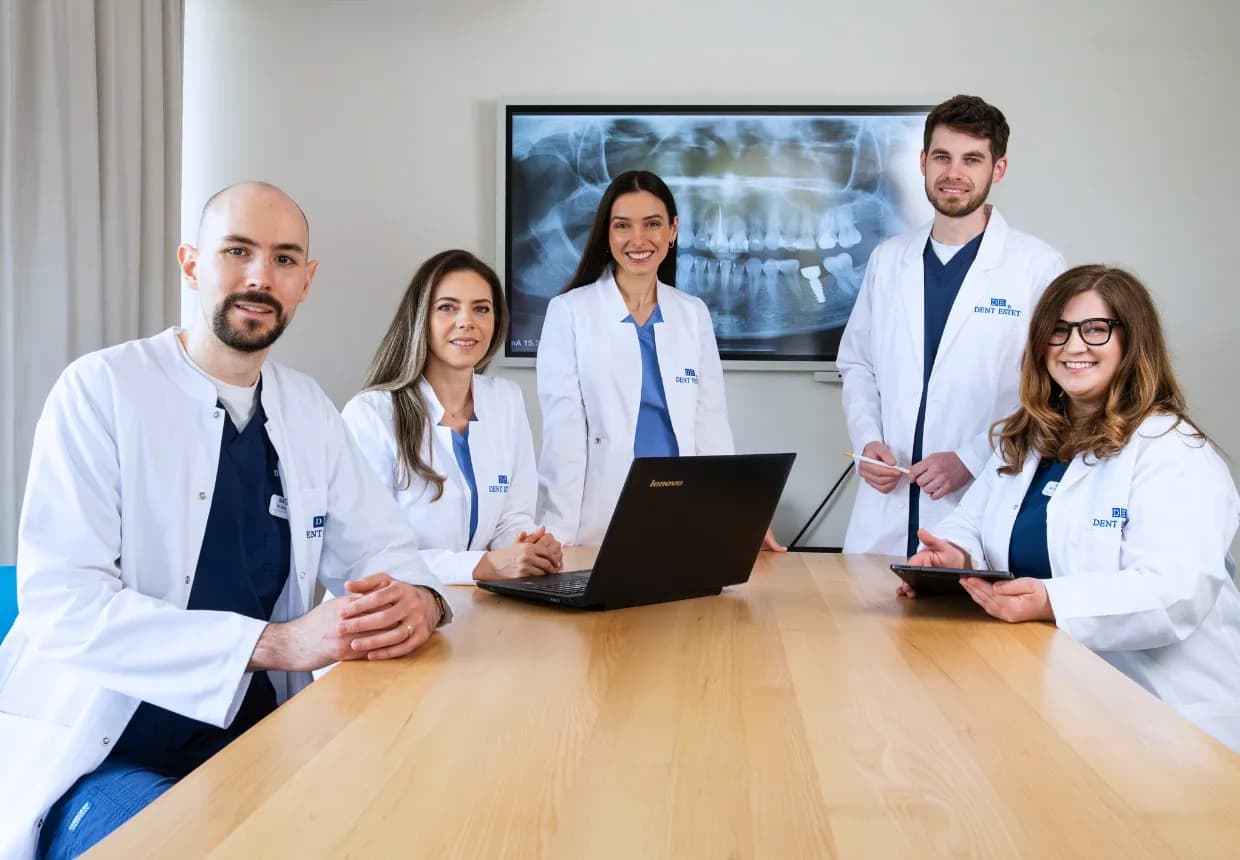
Dental implant - The DENT ESTET Implantology Masterplan
At DENT ESTET, our mission is to restore the functionality and aesthetics of your smile, offering dental implant treatments that restore your confidence and sense of well-being. Our team of implantology experts and dedicated support staff ensure patient comfort and satisfaction throughout the treatment process.
Out of respect for our patients, we have developed the DENT ESTET Masterplan, a unique protocol that demystifies dental implant treatment through clear, step-by-step stages that you can follow.
The DENT ESTET Digital Implantology Masterplan is designed to facilitate dental implant treatments and ensure patients receive the same standard of excellence across all DENT ESTET clinics.
Find out what a dental implant is, how it works and when you need one on our dedicated dental implant page.
Stages of the DENT ESTET Implantology Masterplan
3D Digital Assessment
Every patient undergoes a comprehensive three-dimensional assessment prior to the dental implant procedure. CBCT (cone beam computed tomography) technology enables precise analysis of bone structure, identification of bone density and volume, as well as identification of critical anatomical structures. This 3D digital assessment is essential for planning the implant with maximum precision and to prevent complications. The coordinating dentist will carry out a thorough clinical assessment, including X-rays and CBCT scans, to determine the quality of the bone supporting the future implant. If deemed necessary, the dentist may recommend bone reconstruction procedures (bone grafting).
Personalised planning with CBCT and dedicated software
Following the 3D assessment carried out using CBCT (cone beam computed tomography), the treatment plan is fully personalised for each patient. Dedicated digital implantology software allows for the precise simulation of the implant’s position, the integration of CBCT data into the surgical plan, and the adaptation of the prosthetic restoration prior to surgery. Thus, each dental implant is placed with maximum precision, and the final result – both functional and aesthetic – is predictable and reliable.
Interdisciplinary collaboration: surgeon, prosthodontist, orthodontist
Dental implant treatments are coordinated by a case manager and involve a multidisciplinary team: surgeon, prosthodontist and orthodontist. This close collaboration ensures that every stage of treatment – from extraction or bone regeneration to the final restoration – is carried out in accordance with the highest international standards.
Digital workflow (DIGA / CAD-CAM)
DENT ESTET uses a fully digital workflow for implantology, including DIGA (Digital Guided Approach) and CAD-CAM technology. This allows prosthetic work to be carried out directly from the digital data obtained in the clinic, reducing treatment time and increasing precision. The digital workflow also ensures greater patient comfort, as well as superior aesthetic and functional results.
Technology and equipment
Advanced dental implant technologies
At DENT ESTET, dental implant treatments are based on state-of-the-art technologies for precision, comfort and rapid healing. These include:
- Osstell Beacon – quickly determines the stability of an implant, providing an accurate ISQ stability index based on RFA technology supported by over 1,400 studies. Osstell Beacon also enables predictable results and reduces treatment time by indicating the optimal moment for implant loading.
- Digital surgical guide – for implant placement with maximum precision.
- Endoret PRGF® - accelerates healing and regenerates tissues.
The medical team’s expertise
Our experience is reflected in the international certifications we have obtained and in our long-standing partnerships with institutions around the world. These achievements confirm our ongoing commitment to excellence and safety in every procedure. From close collaboration with international doctors and trainers to the global recognition of our standards, every step we take brings us closer to our goal: to provide high-quality treatments and maximum patient satisfaction.
The immediate implant protocol
Specialist consultation
The implantologist will assess your case and medical history, discuss your expectations and explain the available treatment options. For the immediate treatment procedure to be successful, it is vital that the dentist clinically assesses whether the conditions are met to ensure implant stability immediately after placement.
Clinical assessment and planning for immediate restoration
The coordinating dentist will carry out a thorough clinical assessment, including X-rays and CBCT scans, to determine whether you are a suitable candidate for the immediate treatment procedure. Dental imaging provides the dentist with information about the quality of the supporting bone, on which the stability of the implant depends immediately after placement.
Using 3D intraoral scanning, the dentist can plan the position of the future implant and the laboratory will plan the prosthetic restoration.
If certain conditions are not met, the standard treatment procedure is the recommended solution.
Dental implant and immediate placement of a temporary crown
On the day of the procedure, the implantologist will carry out several steps in a single session:
- If necessary, they will remove the irreparable tooth that is to be replaced.
- They will place the dental implant either in the healed site or at the extraction site.
- The temporary dental crown produced by the Aspen dental laboratory will be immediately attached to the implant, provided the clinical situation allows it. This step is important for aesthetic restoration and for maintaining the gum line during the healing process following implantation.
From the day of the procedure, you can enjoy a functional restoration of your teeth, which will look and feel just like a natural tooth.
Your dentist will provide you with a set of instructions to follow at home during the healing period, and the medical team and Patient Care Coordinator will monitor your progress closely.
Post-operative check-up
10–14 days after the procedure, you will return to the implantologist for a check-up.
Taking dental impressions and consultation for the final prosthetic restoration
After a few months, the implant and gum tissue are ready for the final prosthetic restoration to be fitted.
During the prosthetic consultation, the dentist will use the Trios 3Shape intraoral digital scanner, the Modjaw 4D scanner or the RayFace facial scanner to plan the future prosthetic restoration.
The patient’s digital data is sent to the Aspen laboratory, which will produce a final prosthetic restoration with a natural aesthetic appearance.
Fitting and cementing the final prosthetic restoration
The prosthodontist will replace the temporary prosthesis with the permanent prosthesis, made from durable materials. A fitting appointment may be required before the permanent prosthesis is cemented in place, so that the dentist can ensure that the new prosthesis is comfortable, functional and meets all aesthetic requirements.
Maintenance
To maintain the excellent results achieved, it is essential to maintain good oral hygiene at home. During the healing period, and also after you have received your permanent prosthetic restoration, it is important to follow your dentist’s instructions regarding oral care.
In addition to brushing your teeth and using auxiliary aids (oral irrigator, dental floss, mouthwash), you must return for a regular check-up and a prophylaxis session once every six months, or as recommended by your dentist.
In this way, you can enjoy the benefits of the Quality Assurance Certificate for all treatments carried out at DENT ESTET clinics.
Standard implant protocol
Consultation and examination
The dentist will review your dental and medical history, help you clarify your expectations, and explain the treatment options available to you.
Clinical assessment and planning
The coordinating dentist will carry out a thorough clinical assessment, including X-rays and CBCT scans, to determine the quality of the bone that will support the future implant. If deemed necessary, the dentist may recommend bone reconstruction procedures.
Tooth extraction
If an implant is recommended to replace a tooth that cannot be saved, it will be extracted under anaesthetic. The area will require a healing period of several months, depending on the individual case. Your dentist will advise you on how to care for the area during the healing period.
Dental implant procedure
To place the implant, the dentist will make an incision in the gum and create a socket for the implant. This can be done under local or general anaesthetic. The dentist will then place a healing cap over the implant screw, which will help shape the gum line during the healing period.
During the osseointegration period, you will have a gap in your dentition. If you or your coordinating dentist opt for a temporary prosthetic solution, you can have a temporary crown fitted.
Depending on the treatment plan, the osseointegration process can take between 2 and 9 months, during which time you must follow the dentist’s instructions regarding diet and oral hygiene.
Post-operative check-up and removal of stitches
Around 10–14 days after the procedure, you will return to the clinic for a check-up and to have the stitches removed.
Taking impressions and fabricating the final prosthesis
Once the implant site has fully healed, we can proceed to the final prosthetic stage.
The prosthodontist will take an impression, which will be sent to the Aspen dental laboratory. At this stage, the dentist may use the Trios 3Shape intraoral digital scanner, the Modjaw 4D scanner or the RayFace facial scanner to plan the future prosthetic restoration.
The patient’s digital data is sent to the Aspen laboratory, which will produce a final prosthetic restoration with a natural aesthetic appearance.
Fitting and cementing the final prosthetic restoration
To finalise the treatment plan, you will return for an appointment with the prosthodontist. You will be able to try on the final prosthesis so that the dentist can make the final adjustments. Once the final details have been sorted out, the dentist will be able to cement the final dental crown onto the implant.
The prosthetic restoration is now complete, and you can enjoy a functional and aesthetically pleasing result.
Maintenance
To maintain the excellent results achieved, it is essential to maintain good oral hygiene at home. During the healing period, and also after you have received your permanent prosthetic restoration, it is important to follow your dentist’s instructions regarding oral care.
In addition to brushing your teeth and using auxiliary aids (oral irrigator, dental floss, mouthwash), you must return for a regular check-up and a prophylaxis session once every six months, or as recommended by your dentist.
In this way, you can enjoy the benefits of the Quality Assurance Certificate for all treatments carried out at DENT ESTET clinics.
Complex cases and outstanding results
Treatment of complete edentulism
Total edentulism refers to the absence of all teeth in one or both dental arches, affecting both masticatory function and facial aesthetics and harmony. The All-on-4® dental implant system, for example, allows patients to regain the functionality and natural appearance of their teeth, offering a durable and safe solution with predictable results. This method enables the complete reconstruction of the dentition in a short time, offering predictable functional and aesthetic results, with a comfortable and durable restoration for every patient.
Would you like to find out what types of dental implants are available and what options are right for you? Discover more types of dental implants and the benefits of each on the dedicated DENT ESTET page.
Retreatment of difficult implant cases
Some dental implants may require adjustments or retreatment to achieve the desired results in terms of functionality and aesthetics. We successfully manage the retreatment of implants with unsatisfactory results, applying digital and multidisciplinary protocols to ensure safety, functionality and optimal aesthetics, without referring patients directly to other clinics. Using modern technologies, such as 3D scanning, surgical guides and digital planning, our team can optimise implant positioning and prosthetic integration, providing patients with a durable and comfortable restoration.
“Choosing high-performance dental implants, such as Straumann® or Nobel®, is a crucial step towards successful treatment, whether for replacing a single tooth or for complex oral rehabilitation. All-on-4® dental implant systems, for example, offer more than just a smile; they are, in effect, a chance at a normal life for the patient. The dental implants used at DENT ESTET clinics offer safety and international validation through scientific studies published in accredited journals.”
Senior Consultant – GENERAL DENTISTRY
Specialist – PERIODONTOLOGY
Certified in IMPLANTOLOGY
DOCTOR OF MEDICAL SCIENCES
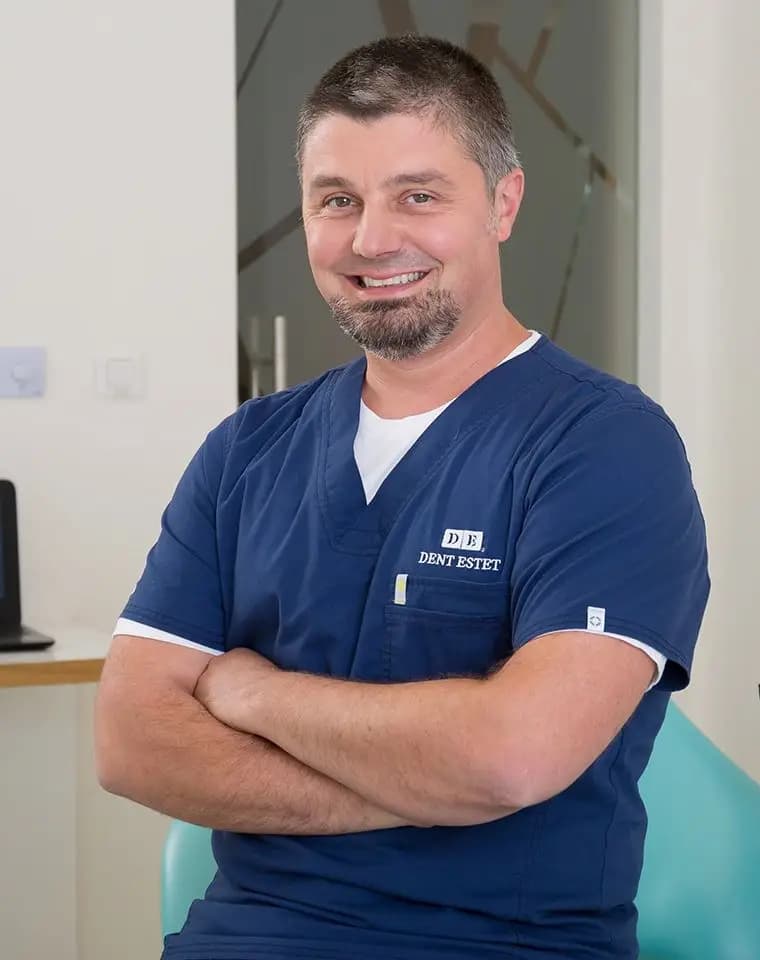
“With its modern design, the Straumann implant offers excellent primary stability, making it ideal for any clinical situation, but particularly for complex cases involving the rehabilitation of an edentulous arch. It is a reliable and safe solution for immediate implantation and restoration, allowing patients to resume chewing within a single day.”
Specialist Doctor - DENTO-ALVEOLAR SURGERY
Dentist - COSMETIC DENTISTRY
Certified in IMPLANTOLOGY
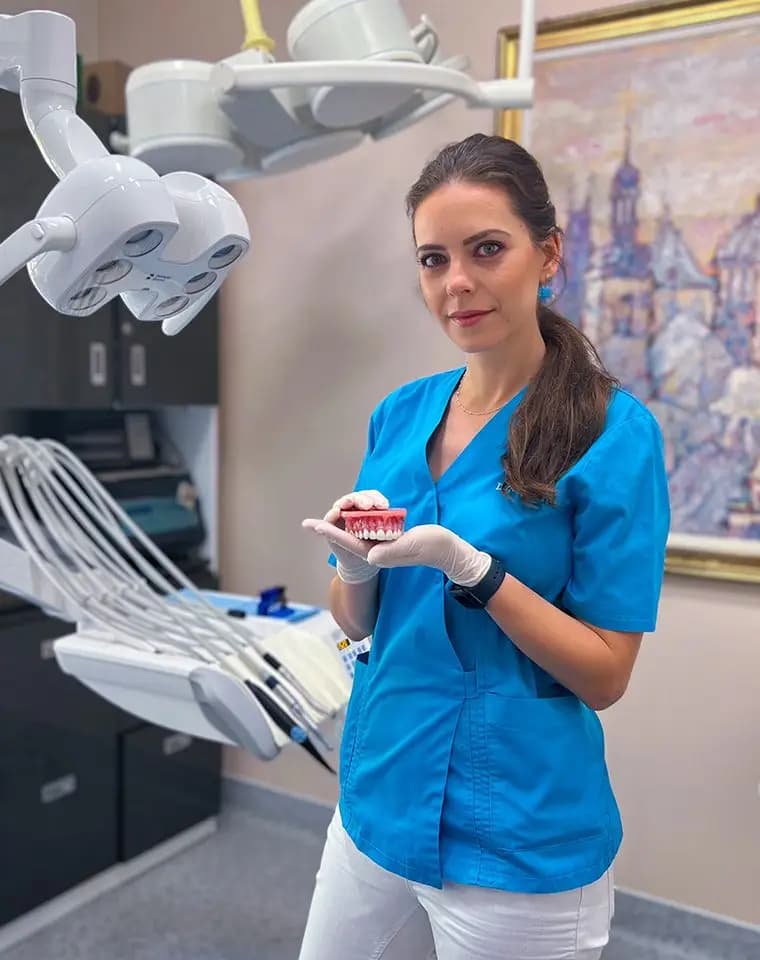
Book a specialist consultation for dental implants at DENT ESTET clinics and discover personalised solutions for replacing missing teeth. Our team of experts ensures safe, effective treatments and long-lasting aesthetic results.
DENT ESTET Reviews

Petre Oprescu
October 7, 2026

Foarte multumit de serviciile clinicii, personalul foarte specializat cu medici de exceptie, iar personalul auxiliar se poarta deosebit de bine cu pacientii.Recomand cu toata increderea Dent Estet.
Eduard
October 7, 2026
Recomand. Cei mai buni medici!
Andreea Crucila
October 7, 2026
Am avut o experiență foarte plăcută la această clinică stomatologică. Întregul personal este amabil, atent și profesionist, iar atmosfera este una foarte plăcută și liniștită. Medicii explică fiecare etapă cu răbdare și îți oferă încredere pe tot parcursul tratamentului. Totul este foarte bine organizat, iar clinica este curată și modernă. Recomand cu drag această clinică tuturor celor care își doresc servicii de calitate și oameni cu adevărat implicați!
J V
October 6, 2026
Servicii excelente, nivel foarte ridicat de profesionalism!
Andreea Lorentz
October 5, 2026
Cea mai tare echipa de profesionisti! Recomand cu drag dr Vasile Branici, dr Adelin Radu & dr Cristina Erciulescu. Multumesc ♥️🌟💪
Gabriela Ion
October 2, 2026
Am fost foarte mulțumită de serviciile oferite de Dent Estet și, în mod special, de profesionalismul și atenția acordată de doamna doctor Andreea Rădeanu. Am apreciat foarte mult răbdarea, explicațiile clare și modul atent în care a decurs fiecare etapă. M-am simțit în siguranță și pe mâini bune pe tot parcursul experienței. Recomand cu drag Dent Estet și pe doamna doctor Andreea Rădeanu cat și restul echipei, tuturor celor care își doresc servicii stomatologice de calitate și o experiență plăcută!
Denisa Roberta
October 2, 2026
O recomand cu toată încrederea pe doamna doctor Silvia Zahari! Este un medic foarte atent, implicat și empatic. Mi-a explicat cu răbdare fiecare etapă a tratamentului, mi-a răspuns la toate întrebările și a fost mereu interesată de evoluția mea și de felul în care mă simt. M-am simțit ascultată și pe mâini bune pe tot parcursul tratamentului. Sunt foarte mulțumită de experiența avută și îi mulțumesc pentru profesionalism și grijă
monica grigore
October 2, 2026
Sinteti minunati! Multumim mult!
Schedule a consultation
Fill out the form and one of our assistants will contact you to schedule a visit to the clinic.