




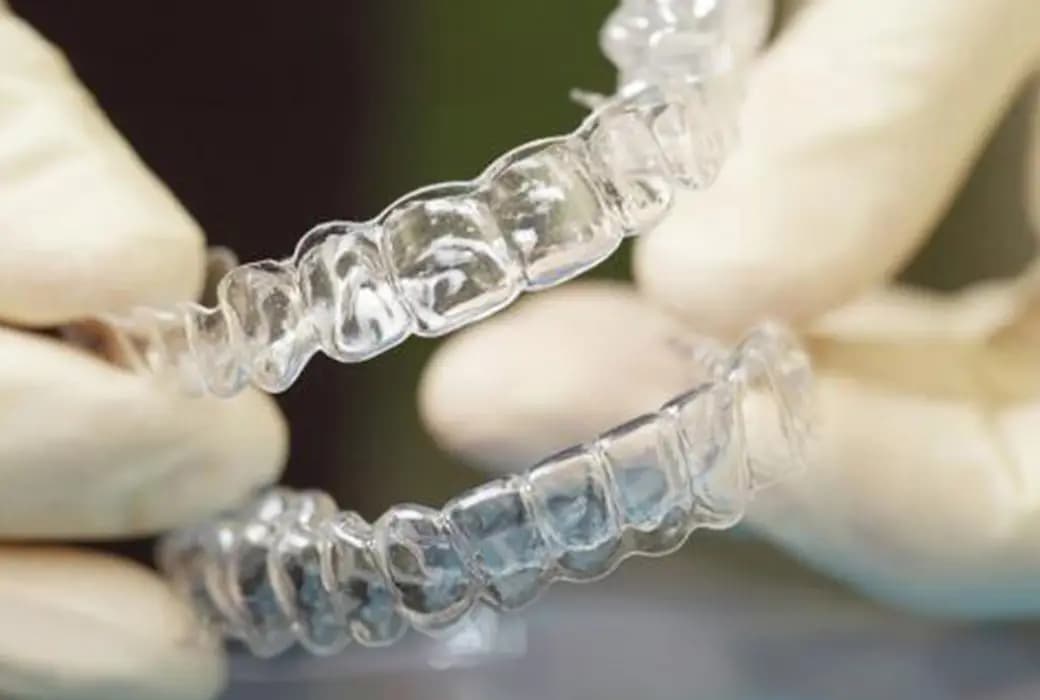
Clear aligners: the modern solution for a perfect smile
 Author: Dr. Dr Valeria Nechita
 December 29, 2025
Interest in cosmetic dentistry has grown considerably in recent years thanks to modern advances in orthodontics, implantology and dental prosthetics. Technological developments in dentistry have paved the way for innovative procedures and treatments that combine the effectiveness of braces with the results of cosmetic dental treatments.
Increasingly, invisible braces or clear aligners have become the preferred choice for those who want an attractive smile without drawing too much attention. New orthodontic systems use clear materials and advanced techniques to gradually straighten the teeth, maintaining a natural appearance throughout the treatment.
Choosing clear aligners (dental aligners) makes it easier to achieve excellent results without compromising your confidence in your own smile.
What are clear aligners?
Clear aligners are a modern orthodontic device designed to straighten teeth and correct the bite in a discreet manner. Unlike traditional braces, these virtually invisible aligners are, in fact, clear trays made from medical-grade polymers, meaning they are barely noticeable during treatment.
Whether we are talking about clear aligners such as Invisalign®, Spark™ or the FAS Aligner System®, available at DENT ESTET clinics, the aim of this type of aligner is the same: to apply controlled forces to the teeth, causing them to gradually move into the correct position.
This process takes place gradually, under the supervision of an orthodontist, so that the final result is both aesthetic and functional.
Types of clear aligners
There are several types of clear aligners, each designed to meet different needs in terms of orthodontic correction, level of discretion and lifestyle, depending on the complexity of the case and the dentist’s recommendation.
Physiognomic fixed braces (braces with sapphire or ceramic brackets)
Although not completely invisible, sapphire or ceramic braces fall into the category of aesthetic braces. They are, in fact, an aesthetic alternative to traditional metal braces.
Sapphire brackets have the advantage of being completely transparent, offering superior aesthetics, whilst ceramic brackets are a colour close to the natural shade of the teeth. Furthermore, thanks to the strength and stability of the materials, sapphire or ceramic braces can treat even complex cases, such as severe rotations, significant crowding or bite problems.
Benefits of sapphire/ceramic braces:
- greater discretion thanks to superior aesthetics compared to traditional metal braces
- precision in tooth movement throughout treatment
- greater effectiveness in complex cases
Invisalign® braces
This is the most popular type of invisible braces, being the first system based on clear aligners launched over 25 years ago.
Advantages of Invisalign® braces:
- Almost perfect aesthetics – Invisalign® aligners are almost invisible thanks to their ultra-clear aligners
- Precise digital planning – treatment is planned and monitored step by step, thanks to ClinCheck® technology
- Extremely comfortable – the SmartTrack® material has been designed to be biocompatible and not to irritate the tissues
- Easy maintenance – allows for proper and effective hygiene, as the aligners can be removed for brushing
- Increased efficiency – shortens treatment time compared to traditional braces and is ideal for mild to moderate cases. It can also treat complex cases with the right technique
“For Invisalign treatment to be effective, it is essential that the patient wears the aligners for between 20 and 22 hours a day. The advantage is that the aligners are changed at home, at intervals of approximately 7–14 days, according to the plan established by the dentist,” says Dr Alexandra Moanță, specialist in Orthodontics and Dentofacial Orthopaedics.
Spark® aligners
Spark® aligners represent a modern solution for clear aligners. Made from a patented material – TruGEN™ – the Spark® aligner is barely visible, extremely comfortable and offers enhanced stain resistance
What sets Spark® braces apart from other clear aligners is their superior retention on the tooth surface. Thanks to their smooth edges, Spark® offers a pleasant orthodontic experience throughout the entire treatment.
Advantages of the Spark® aligner:
- Superior aesthetics – thanks to the innovative material and design, Spark® aligners are extremely discreet when worn.
- Enhanced comfort – the rounded, smooth edges are specially designed to prevent irritation or other gum problems
- Superior stain resistance – the TruGEN™ material maintains a clear and aesthetic appearance throughout the treatment, even when consuming drinks such as coffee, tea or red wine.
- Affordability – Spark® aligners offer a good balance between performance, comfort and cost.
Other types of aesthetic braces
- Lingual braces – these are fitted to the inside of the teeth, so they are not visible and offer discretion throughout treatment
- Physiological self-ligating braces – use tooth-coloured brackets and a special mechanism without elastic ligatures, resulting in minimal aesthetic impact.
- Mixed braces – a combination of ceramic brackets on the front teeth and metal brackets on the back teeth
The advantages of clear aligners over traditional braces
Aesthetic discretion
Clear aligners are preferred because the aligners are almost invisible. In professional or social settings, this makes a significant difference, as the aligners are no longer an eye-catching feature, but a discreet detail.
Greater comfort for the patient
Clear aligners are made from patented, biocompatible materials. They have the advantage of not irritating the lips and cheeks, nor do they significantly alter the patient’s lifestyle. Even fixed braces with aesthetic brackets are designed for enhanced comfort.
Significantly better oral hygiene
Unlike fixed metal braces, removable aligners allow for normal brushing and the correct use of dental floss, which facilitates better hygiene. This reduces the risk of tooth decay, gingivitis and tooth staining, problems frequently associated with metal braces.
Predictable digital planning
Clear aligners, such as Invisalign or Spark, use technologies that ensure precision in treatment planning. The patient can see a simulation of the final result right from the start, which helps them understand the entire process.
Simple maintenance
There are no strict dietary restrictions, and the aligners are easy to clean. Clear fixed braces require a little extra care, but are easier to maintain than metal ones.
How much do clear aligners cost?
The cost of clear aligners can vary significantly, as it is influenced by a number of factors. These include the type of aligner chosen, the materials used, the complexity of the orthodontic case, and the total duration of treatment.
In the case of aligner systems, such as Invisalign, the price is also influenced by the number of aligners required to achieve the desired result.
At DENT ESTET clinics, the price of ceramic or sapphire braces can range from 5,700 to 6,200 RON per arch. As for treatment with Invisalign aligners, the price can start from €2,100 per arch, but the final price is determined based on the personalised treatment plan.
The final cost is always determined following an orthodontic consultation and a detailed assessment of each individual case. We invite you to view the prices for clear aligners on our orthodontics pricing page.
Who are invisible braces suitable for?
Invisible aligners are a suitable option for those seeking effective orthodontic treatment without any visible impact on their smile. They are frequently chosen by adults who value discretion and by professionals for whom aesthetics and everyday comfort are essential.
This type of brace is also recommended for motivated teenagers who are able to follow the instructions for wearing the aligners, as well as for patients seeking a high level of comfort during treatment. Invisible braces are particularly suitable for mild or moderate cases of misaligned teeth.
In more complex situations, the orthodontist may recommend alternatives, such as fixed braces with sapphire or ceramic brackets, which offer greater control over tooth movement.
“Modern orthodontics is about more than just straightening teeth; it’s about a complete transformation of the experience. Clear aligners offer a discreet and effective alternative for correcting certain orthodontic issues without disrupting our lifestyle. Whether we’re talking about elegant sapphire brackets or the advanced digital technology behind the Invisalign system, these solutions represent a remarkable step forward: patients can have a beautiful smile whilst continuing to feel confident at all times. “Dental transformation is no longer a difficult and visible process, but a discreet and personalised journey towards a more harmonious version of one’s own smile,” says Dr Valeria Ștefănescu, Specialist in Orthodontics and Dentofacial Orthopaedics at DENT ESTET clinics.
Invisalign treatment
1. Initial consultation and 3D digital scan
Invisalign treatment begins with a detailed consultation carried out by a specialist in Orthodontics and Dentofacial Orthopaedics from the DENT ESTET team. During this session, the dentist assesses the position of the teeth, the bite and general oral health.
Tests such as 3D digital scanning and digital X-rays provide a precise image of the dental arches, without the need for traditional impressions, forming the basis for a personalised treatment plan.
2. Detailed digital plan
The scan results are sent to the developers of the Invisalign® aligners, who use ClinCheck® technology to create a detailed digital plan for the final alignment.
This simulates the tooth movements step by step and allows you to preview the final result of the treatment right from the start. The plan is tailored to each patient’s needs and can be adjusted before treatment actually begins.
3. Manufacturing of custom aligners
Invisalign aligners are made individually, in accordance with the approved digital plan. Each aligner is designed to apply controlled pressure to specific teeth, gradually guiding them into the correct position. The material is transparent, comfortable and suitable for daily wear.
4. Wearing the aligners for 20–22 hours a day
For the treatment to be effective, the aligners must be worn for between 20 and 22 hours a day and removed only during meals and when cleaning your teeth.
At intervals of approximately 7–14 days, you can change your set of aligners, as directed by your dentist, to ensure the correct progression of your teeth alignment.
5. Regular check-ups
Visits to the orthodontist’s clinic are generally less frequent than with fixed braces. These visits allow the progress of the treatment to be monitored and the aligners adjusted if necessary.
6. Retention after treatment
Once the desired result has been achieved, the retention phase is essential. The dentist will recommend wearing retainers to keep the teeth in their new position and prevent relapse.
Frequently asked questions about invisible braces
Can you see the clear aligners?
The aligners are almost invisible, whilst the sapphire brackets blend in very well with the surface of the teeth.
How long does treatment with invisible braces take?
On average, 6–24 months, depending on the complexity of the case.
Does it hurt?
The discomfort is mild and occurs mainly at the start or when changing the mouthguard.
How much do invisible braces cost?
The price of clear aligners varies depending on the type chosen and the complexity of the case. Prices can range from 5,700 to 6,200 RON for fixed orthodontic appliances, and start at 2,400 euros per arch for clear aligners.
Bibliography
- American Association of Orthodontists
- Invisalign Official
- How Does Invisalign Straighten Teeth?, Verywell Health, 2024
- The Orthodontic Revolution: Invisalign, a modern solution, Romanian Journal of Oral Rehabilitation, 2024
- Assessment of Patient-Reported Outcomes in the Use of Clear Aligners Compared to Conventional Fixed Braces, PubMed, 2025