



Types of elastic bands for braces: their purpose and guidelines for wearing them
 Author: Dr. Alexandra Moanță
 November 27, 2026
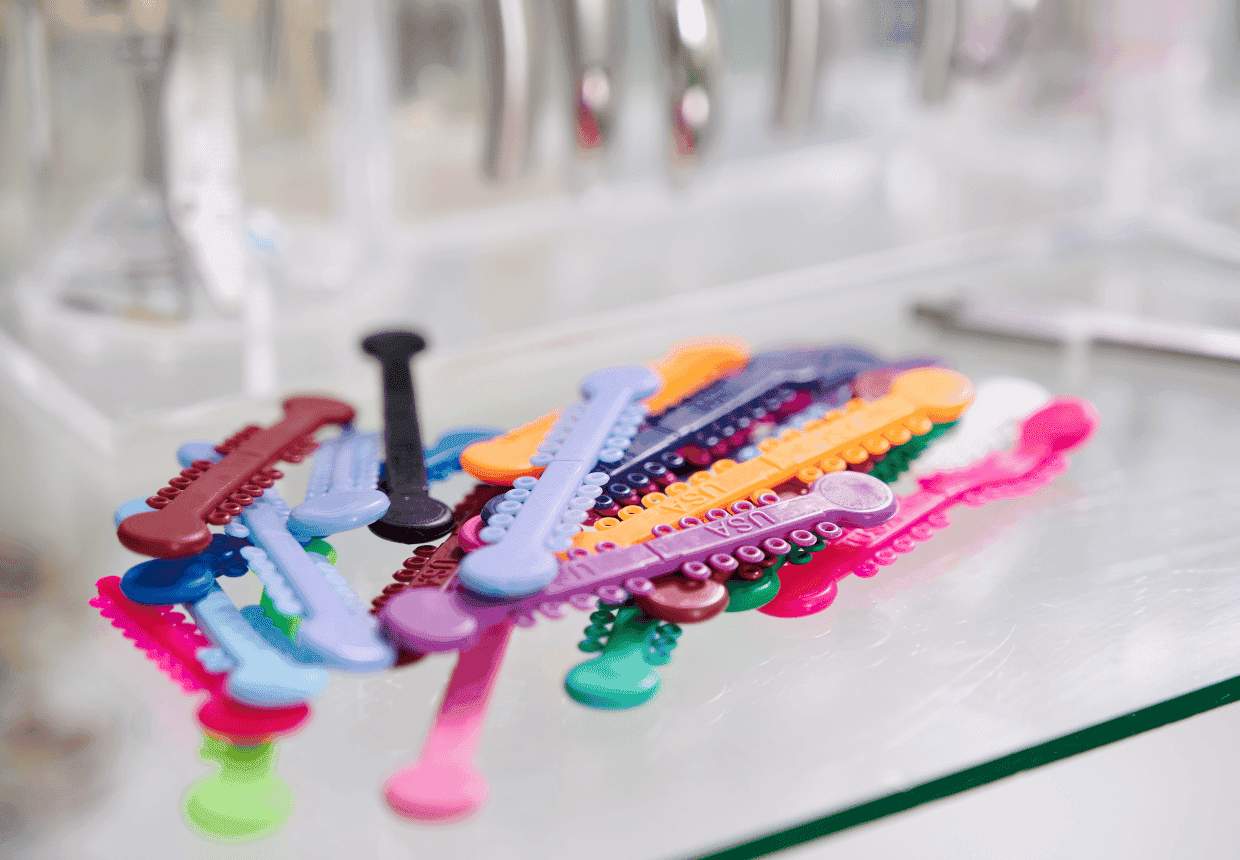
There are three main categories of components commonly referred to as elastic bands for dental braces:
- elastic ligatures, which hold the archwire in place within the brackets;
- elastic chains, used, amongst other things, to close gaps;
- traction elastics, which help to move the teeth and correct the bite. Traction elastics can act between the two arches or on the same arch.
This distinction is also important for day-to-day care: ligatures and chains are changed at the clinic, whilst removable traction elastics are fitted by the patient following the dentist’s instructions. Below, you’ll find out how to recognise them, what role they play and what you need to know about wearing them.
Not all elastics serve the same purpose: some hold the orthodontic archwire in place, whilst others help to move the teeth in a controlled manner and correct the bite.
What role do elastic bands play in orthodontic treatment?
In orthodontic treatment, the various components have different functions. Some elastics secure the orthodontic archwire in the brackets, whilst others apply additional forces to guide the planned movement of the teeth.
Aligning the teeth and correcting the bite are interrelated objectives. The teeth may appear straight, but the contact between the upper and lower arches may still require adjustments. In such situations, traction elastics may form part of the treatment.
‘Even if the teeth already appear straight, elastics are necessary to correct the bite and achieve the correct relationship between the dental arches. For example, they can help correct a bite where the upper and lower teeth do not meet properly. Thus, the treatment aims to improve both aesthetics and functionality.” – Dr. Alexandra Moanță
What are the main types of elastic bands for braces?
To distinguish between them easily, it is helpful to start by looking at their function. The table sets out the three categories; intermaxillary and intramaxillary elastics are variants of traction elastics.
| Category | How to recognise them and what their role is | Who changes them |
| Elastic ligatures | Small rings on brackets; they hold the orthodontic archwire in place | The dentist, in the surgery |
| Elastic chains or power chains | Rings linked together in a chain; they also help to close gaps | The dentist, in the surgery |
| Traction elastics | Bands stretched between anchor points; they produce planned movements, including for bite correction | Removable ones are changed by the patient following instruction; other fittings are managed in the surgery |
Elastic ties: the small rings on the brackets
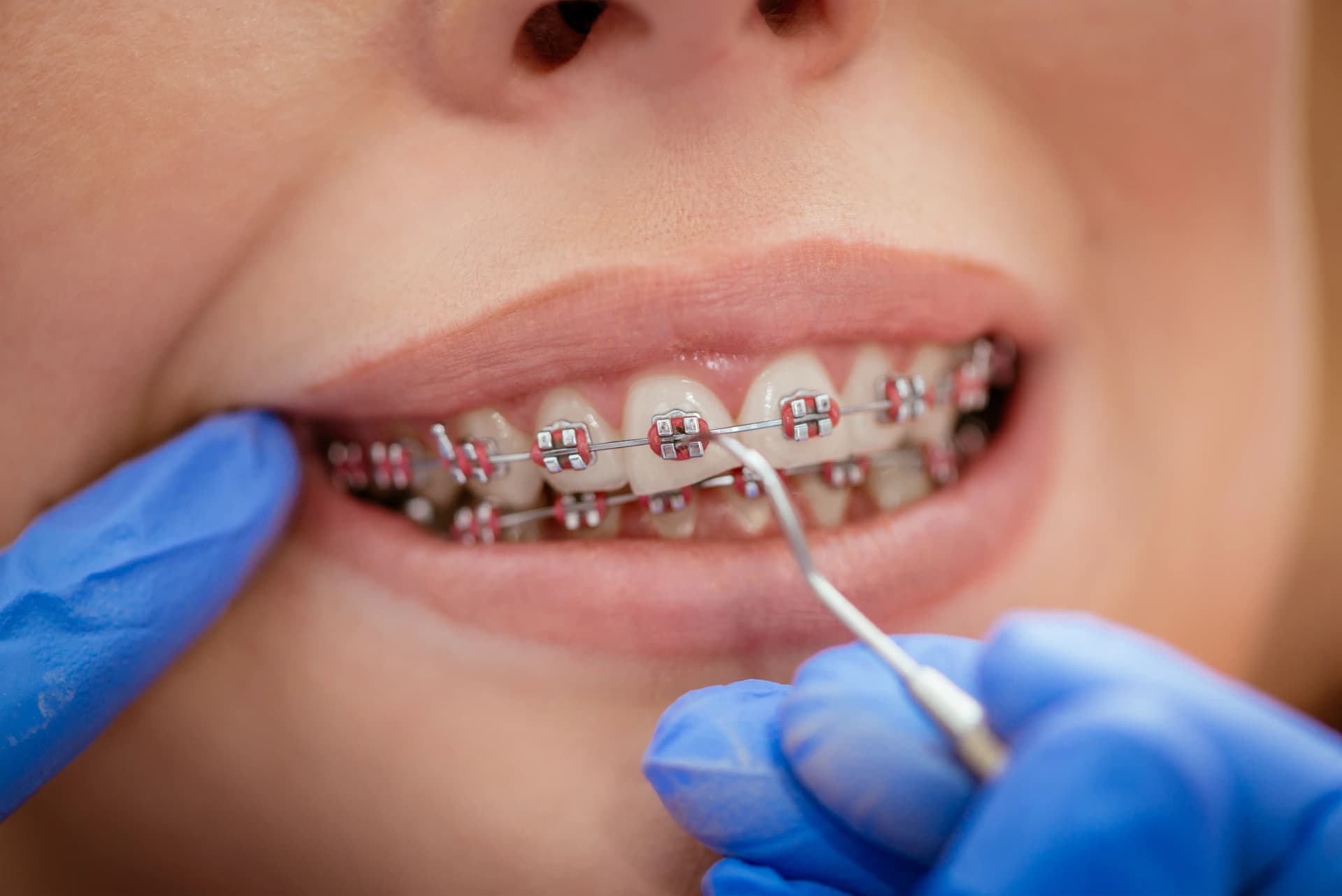
Ligatures are the transparent or coloured rings that surround the brackets and hold the archwire in place. They are replaced at the practice during check-ups scheduled as part of the treatment plan.
Not all fixed braces use elastic ligatures. There are also metal ligatures, and self-ligating braces have their own mechanism for holding the archwire in place. However, a patient with self-ligating braces may still need traction elastics.
Elastic chains or power chains: linked rings
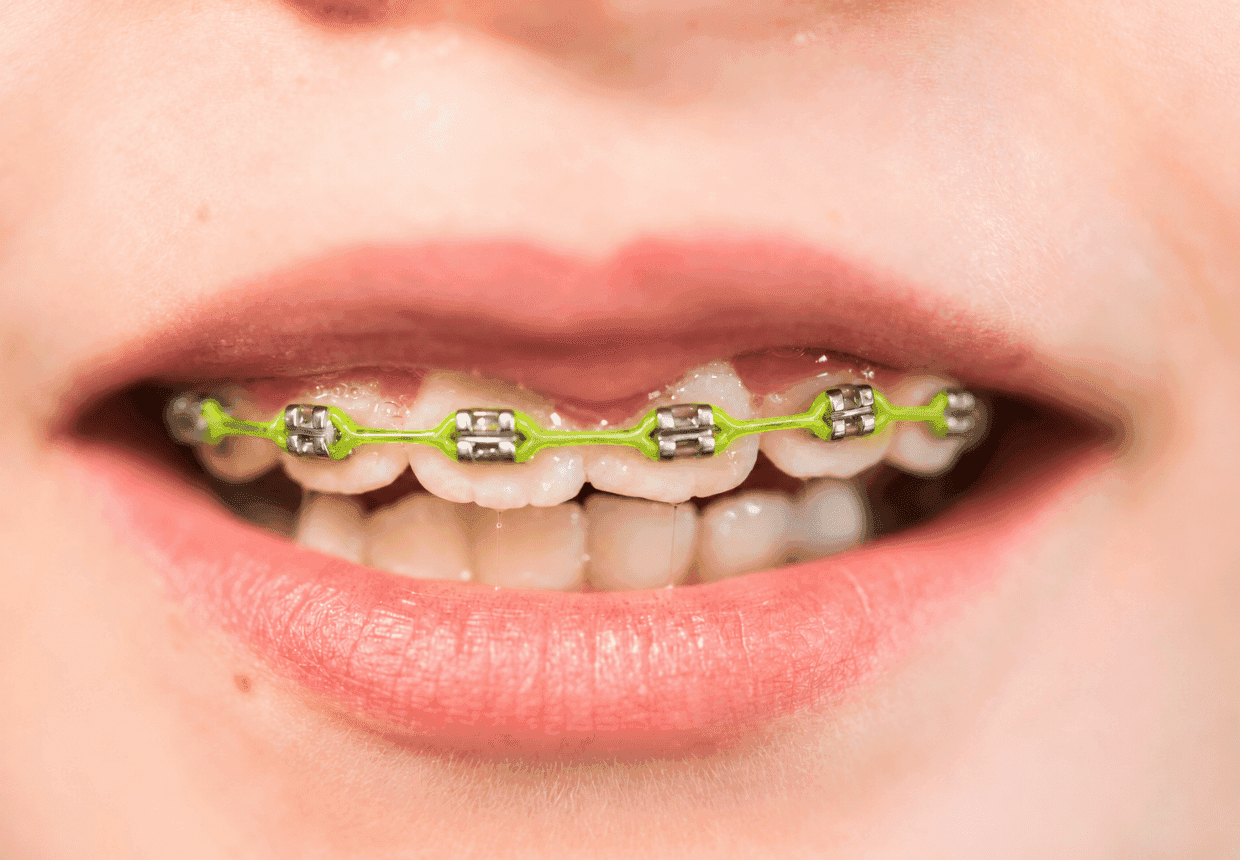
The elastic chain consists of several connected rings and is attached to several brackets. The dentist can use it to bring teeth closer together and close gaps, as well as for other controlled movements. There are versions with different distances between the rings.
The chain remains on the braces between check-ups and is replaced at the clinic. If it breaks or comes loose, please notify the clinic; do not cut it or try to reposition it.
Traction elastics: intermaxillary and intramaxillary
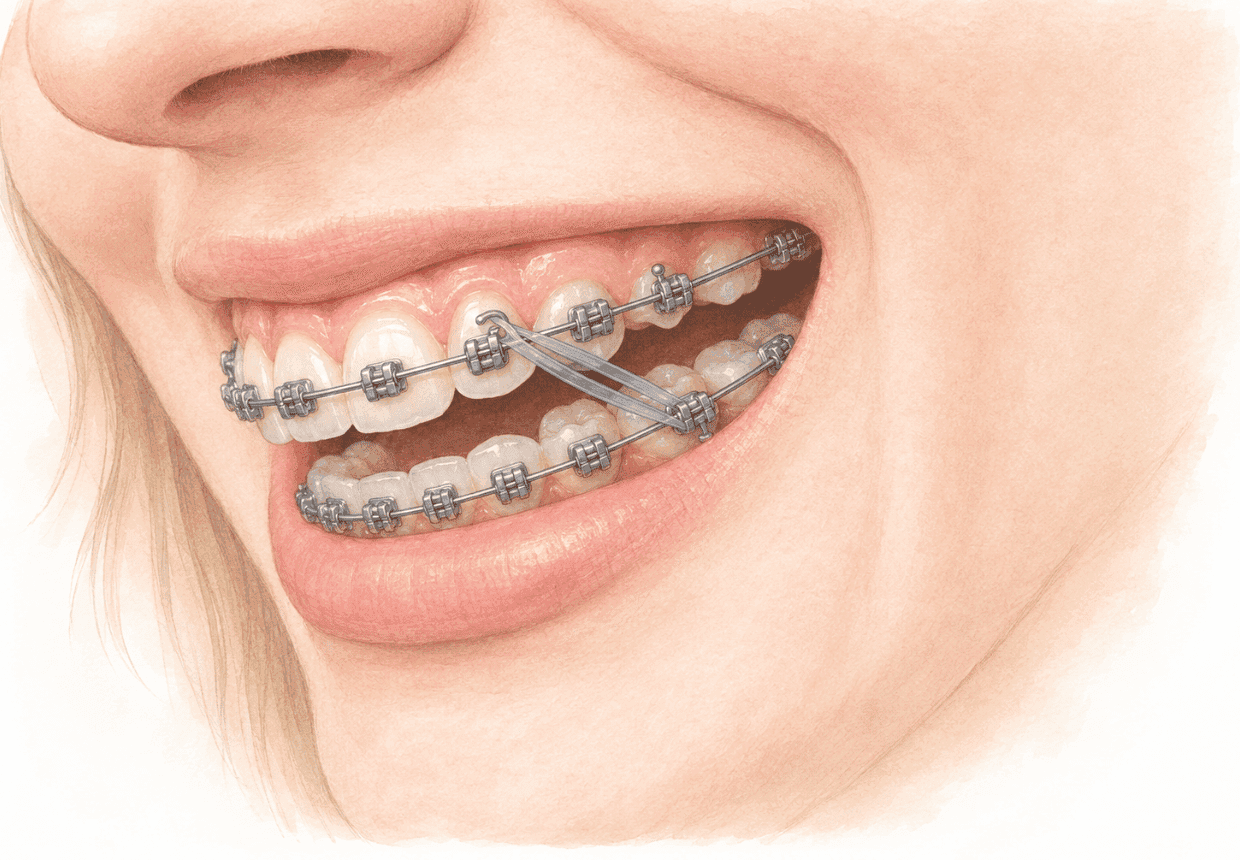
Intermaxillary elastics connect points on the upper and lower dental arches. Their role is to apply forces to correct the alignment of the teeth and the bite. Intramaxillary elastics act between points on the same dental arch.
In the case of removable elastics, you will receive the prescribed product and a demonstration of how to fit them. Both the attachment points and the direction of the pull are important; do not copy another patient’s setup.
What do ‘Class II’, ‘Class III’ and ‘triangular’ elastic bands mean?
These terms describe how the traction straps function or are fitted. ‘Class II’ and ‘Class III’ refer to the direction of traction, whilst ‘triangular’ describes the shape of the fitting. A triangular elastic band may, in turn, have a specific orientation.
- Class II elastics are used in certain situations where the upper teeth are positioned too far forward in relation to the lower teeth.
- Class III elastics can be used for certain corrections of the opposite relationship, where the lower teeth are too far forward in relation to the upper teeth.
- Vertical attachments, including some triangular ones, can help the teeth of both arches make better contact when the mouth is closed.
The same name does not mean the same treatment plan for all patients. These explanations are intended to help you understand the advice you have been given, not to choose the treatment plan yourself. The options for correction depend on the orthodontic diagnosis; elastic bands do not solve every problem relating to the position of the jawbones.
How does the doctor choose the right elastic bands?
The doctor determines the type of elastic, its size, tension and attachment points depending on the intended movement and the stage of treatment. Elastics that look similar are not necessarily interchangeable.
Keep the packaging so you can identify the product, and ask the clinic for the same type when you need replacements. Do not choose a different type based solely on the colour or the symbol on the packet.
Tell your doctor if you have a known allergy to latex. Some elastic bands contain this material, but there are also latex-free options available, which can be selected according to the needs of your treatment.
How long should the elastic bands be worn for, and how often should they be changed?
For removable traction elastics, the schedule is individual: they may be prescribed for specific hours or for most of the day, including whilst sleeping. The frequency of changing them is a separate instruction from the number of hours they are to be worn.
| Component | When to change | What to bear in mind |
| Elastic bands | At check-ups scheduled by the orthodontist | Replaced at the practice |
| Elastic chains | When the dentist advises, depending on how the treatment is progressing | The appearance of the chain alone does not determine when it needs changing |
| Removable traction elastics | Usually daily or more frequently, as prescribed | They should also be replaced if they break; use the prescribed type |
The rules regarding mealtimes should be specified in your instructions: some protocols require the elastics to be removed, whilst others recommend continuing to wear them if possible. Removable elastics should be taken out for brushing and reapplied afterwards as recommended.
The total duration may cover a specific stage or a longer period. The introduction of elastics does not automatically mean that treatment is nearing completion.
“I explain to the patient the daily duration for wearing the elastics, how often they should be changed, and the recommendations regarding meals and sleep. I check their understanding through a practical demonstration. For example, for a patient with a busy schedule, I recommend that they link changing the elastics to fixed times of the day, such as when they wake up, during their lunch break and as part of their evening routine, to avoid missing them,” explains Dr Alexandra Moanță.
How do you fit and look after intermaxillary elastics?
During your first training session, practise the assembly in the treatment room so that you can replicate the procedure on your own. If you can’t remember the sequence, ask for clarification before reapplying the elastic bands.
- Wash your hands before handling them.
- Use the prescribed product and the attachment points demonstrated.
- Follow the replacement schedule; a broken elastic band should be replaced with a new one of the specified type.
- Keep a stock of spares and contact the clinic before they run out.
- Clean your teeth, the area around the brackets and the spaces between your teeth.
Do not double up on elastics to make up for missed appointments. Increasing the force may cause discomfort or unwanted movement, without speeding up the treatment.
What colours can you choose for your braces?
The colours mainly refer to the ligatures on the brackets. Depending on the braces and the options available, you can choose from transparent, discreet or brightly coloured options. Your preferences will be discussed at your check-up, when the ligatures are replaced.
Some ligatures may change in appearance between appointments. The colour does not whiten the enamel and is not a substitute for good oral hygiene. For traction elastics, the choice of product is based on the dentist’s prescription, not on aesthetic preference.
What should you do if the elastic bands snap or cause pain?
You may experience some initial discomfort when you start wearing the elastic bands. If the pain persists, gets worse or prevents you from wearing them, you should discuss this with your doctor, without changing the tension or the regimen yourself.
If a removable elastic band breaks and the attachment points are intact, you can replace it with a new one of the prescribed type. If a hook, bracket or elastic chain has come loose, contact the clinic for instructions; do not improvise an alternative attachment point.
For irritation caused by a bracket or hook rubbing against your mouth, orthodontic wax may be helpful. This provides local protection for the mucous membrane, but does not correct the fit of the appliance and is no substitute for an assessment of persistent pain.
If you notice any signs of a possible reaction to the material, inform the medical team. Rapid swelling of the lips or tongue and difficulty breathing require urgent medical attention.
“A common mistake is wearing the elastics only at night, without following the instructions for their use during the day as well. To prevent this, I emphasise the importance of wearing them constantly. I advise patients to establish a routine of checking their elastics after every meal, to avoid slowing down the treatment,” advises Dr. Alexandra Moanță.
Frequently asked questions about orthodontic elastics
Are elastic bands also used for alignment?
Yes. Aligner treatment may include elastic bands to provide additional movement. The dentist determines the attachment points and the schedule for wearing them.
Can I only wear the hair ties at night?
Only if this is the prescribed regimen. A recommendation to wear the device during the day must not be replaced, on one’s own initiative, with wearing it exclusively at night.
What happens if I forget to wear my hair ties?
Irregular wear may delay correction. Resume the prescribed programme and speak to your doctor if the break has been prolonged or is recurring. Do not compensate by doubling the number of elastic bands.
Can I buy elastic bands for my braces myself?
Ask your orthodontist to specify exactly which product has been prescribed. Do not use ordinary elastic bands and do not attempt to move your teeth closer together without orthodontic supervision.
Do I still need elastic bands if my teeth look straight?
It is possible. The appearance of the teeth alone does not indicate whether the bite has been corrected. Continue wearing the appliance as planned until your dentist changes the instructions.
If you have any queries about the recommended elastics, please speak to the dentist overseeing your treatment. To have your teeth alignment and bite assessed, you can book an orthodontic consultation at DENT ESTET.