



Lingual braces: advantages, disadvantages and how they work
 Author: Dr. Dr Iana Dilă Luță
 November 4, 2026
Lingual braces are a discreet orthodontic solution that allows teeth to be straightened without visible brackets on the front surfaces of the teeth. Discover how they work, who they are suitable for, and what the treatment involves.
What are lingual braces and how do they work?
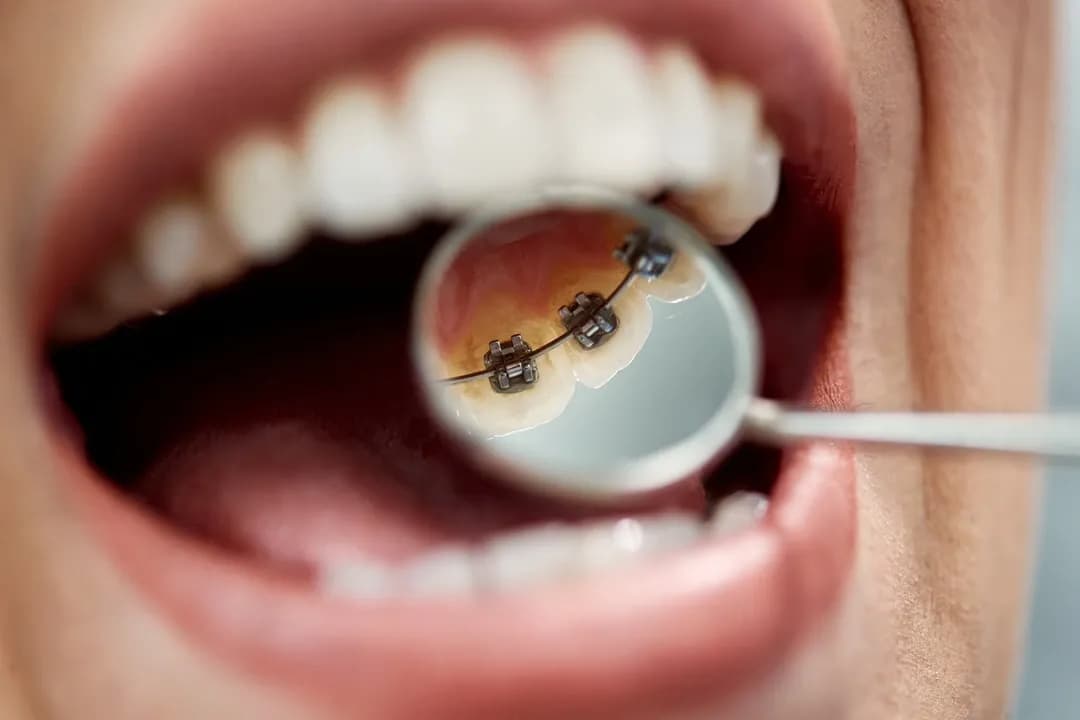
Lingual braces are a type of fixed orthodontic appliance, with brackets attached to the inner surface of the teeth, making them very discreet when speaking and smiling. They can correct various alignment and bite problems, depending on the dentist’s recommendation.
The main advantages are their aesthetic discretion and the fact that they do not need to be removed daily.
Limitations include:
- more difficult to keep clean;
- discomfort affecting the tongue;
- possible changes in pronunciation;
- a cost that may be higher than that of traditional fixed braces.
“As it is positioned behind the teeth, the lingual brace is difficult to see when the patient is speaking or smiling. This feature makes it a suitable option for people who want orthodontic treatment that is as discreet as possible,” explains Dr Iana Dilă Luță, a specialist in Orthodontics and Dentofacial Orthopaedics.
What orthodontic problems can be corrected with lingual braces?
Lingual braces can be used to treat several types of dental and occlusal abnormalities. However, their suitability depends on the complexity of the case, the patient’s anatomical characteristics and the orthodontic system used.
Problems that can be corrected include:
- Crowded or misaligned teeth;
- Spacing between teeth (diastemas and gaps);
- Certain types of malocclusion (reverse, crossbite, open bite, deep bite).
The specialist in Orthodontics and Dentofacial Orthopaedics determines whether the lingual braces can provide the necessary control to correct the identified orthodontic problem.
What are the advantages of lingual braces?
The main advantage of lingual braces is their aesthetic discretion, as the brackets are fixed to the inner surface of the teeth. As a fixed appliance, it applies the planned orthodontic forces without the need for the patient to remove and reapply them daily.
The effectiveness of the treatment depends on the orthodontic diagnosis, the system used and the treatment plan drawn up by the dentist, not just on the positioning of the brackets.
Key benefits:
- Aesthetic discretion. The components of the appliance are positioned behind the teeth, making them much less visible during social and professional interactions.
- Continuous action. As a fixed appliance, it works continuously and does not need to be removed or reapplied by the patient.
- Customisation options. Certain lingual systems allow brackets and wires to be tailored to the patient’s dental anatomy, enabling individualised control over tooth movement.
- Correction of a variety of orthodontic problems. Depending on the system used and the dentist’s experience, lingual treatment may be suitable for both alignment problems and certain bite abnormalities.
These advantages must be considered alongside each patient’s individual circumstances, as aesthetic discretion is not the only criterion when choosing a brace.
What are the disadvantages and limitations of lingual braces?
Placing the braces on the inner surface of the teeth also involves a few specific considerations that the patient must bear in mind.
In the first few days, the tongue comes into contact with the brackets, which may cause irritation or a foreign body sensation. There may also be temporary changes in pronunciation, particularly for sounds that require the tongue to touch the teeth.
Oral hygiene may be more difficult, as the components of the braces are located in areas that are harder to reach. After fitting and following certain adjustments, temporary tooth sensitivity or discomfort may occur.
Another consideration is the cost, which may be higher than for conventional fixed braces, particularly for systems with customised components.
Lingual braces vs. traditional braces vs. aligners: what are the differences?
Lingual braces, traditional fixed braces and clear aligners are all designed to correct the position of the teeth, but they differ in terms of visibility, how they are used and hygiene requirements.
| Criterion | Lingual braces | Conventional braces | Conventional braces |
| Visibility | Fitted behind the teeth, difficult to see | Brackets visible on the outer surface | Clear aligners, discreetly visible |
| Type of braces | Fixed | Fixed | Removable |
| Power supply | The appliance remains on the teeth | The braces remain on the teeth | The braces come off during meals |
| Hygiene | Requires careful cleaning around the inner brackets | Requires careful cleaning around the outer brackets | Teeth can be brushed without aligners |
| Discipline | Does not depend on voluntary wear | Does not depend on voluntary wear | Requires adherence to the daily wearing time |
| Indications | Determined on an individual basis | Determined on an individual basis | Determined on an individual basis |
| Cost* | from 6,000 RON | from 5,200 RON | from 9,000 RON |
*Prices valid at DENT ESTET clinics
The choice of braces should not be based solely on aesthetic considerations. The orthodontic diagnosis, treatment objectives, the complexity of the case and the patient’s lifestyle are equally important.
Find out the differences between invisible braces and traditional braces
Who are lingual braces recommended for?
Lingual braces may be an option for teenagers and adults who wish to have their teeth straightened without any visible changes to their smile during treatment.
“Lingual braces are particularly popular with people for whom appearance is of great importance in their professional life or social interactions. They may also be suitable for patients who prefer fixed braces and do not wish to deal with the daily removal and reinsertion of removable aligners.” – Dr Iana Dilă Luță

In certain situations, lingual braces may also be recommended for adolescents, provided that their dental development and clinical assessment allow for this.
How does treatment with lingual braces work?
The treatment involves several stages, from the initial assessment to maintaining the results achieved.
Orthodontic consultation and initial assessments
The first stage involves assessing the position of the teeth, the relationship between the dental arches and the way in which they come together when biting.
The dentist may recommend imaging tests, dental photographs and an intraoral scan, depending on the specifics of the case.
This information enables a diagnosis to be made and treatment options to be identified.
Digital planning and device customisation
Based on the initial assessment, the treatment objectives and the necessary tooth movements are determined.
Digital planning can help to analyse the position of the teeth and design the stages of treatment. With certain lingual systems, the brackets and wires are custom-made to suit the patient’s anatomy.
This customisation aims to adapt the components of the appliance to the patient’s specific clinical characteristics and orthodontic objectives.
Installation of the appliance and regular inspections
Brackets are fixed to the inner surfaces of the teeth, and orthodontic wires are then fitted to apply the forces required to move the teeth.
Throughout the course of treatment, the patient returns to the dentist at regular intervals to have the braces adjusted or tightened and to monitor progress.
The frequency of check-ups is determined on a case-by-case basis, depending on the system used and the stage of treatment.
Removal of the appliance and the retention phase
Once the desired result has been achieved, the dentist assesses the final position of the teeth and removes the braces.
Next comes the retention phase, which is essential for maintaining the orthodontic result. This involves the use of fixed or removable retainers, as recommended by the dentist.
Without retention, the teeth may tend to shift again over time.
How long does treatment with lingual braces take?
The duration of treatment varies from patient to patient and cannot be determined solely on the basis of the type of appliance chosen.
Factors influencing the duration include:
- the complexity of the orthodontic problem;
- the condition of the supporting tissues;
- the individual’s biological response.
Adhering to appointments and the dentist’s recommendations helps ensure that treatment proceeds as planned.
A realistic estimate of the duration can be provided following the orthodontic consultation and analysis of the necessary investigations.
How do you get used to lingual braces?
It is important to highlight certain aspects relating to the fitting of lingual braces
Speech and discomfort in the first few days
Initially, some patients may find it difficult to pronounce certain sounds or experience irritation of the tongue.
These symptoms are usually temporary and subside as the patient gets used to the braces. If persistent sores or significant discomfort occur, an assessment by the orthodontist is required.
Diet during treatment
In the first few days after the braces are fitted, soft foods may be easier to eat.
Throughout treatment, it is advisable to avoid very hard or sticky foods, which can damage the brackets or other parts of the braces.
Cutting food into smaller pieces and chewing carefully can help to reduce discomfort.
Recommended foods when wearing braces
Oral hygiene with lingual braces
Oral hygiene requires extra care, as bacterial plaque and food debris can build up around the brackets.
It is important to:
- Careful brushing of all tooth surfaces, including the inner surfaces.
- Using interdental brushes to clean the areas around the brackets.
- Cleaning hard-to-reach areas with the instruments recommended by your dentist.
- Professional cleanings and regular dental check-ups.
Proper oral hygiene helps prevent tooth decay and gum inflammation during orthodontic treatment.
See the Guide to Braces Hygiene
If the brackets cause rubbing or irritation to the tongue, your dentist may recommend the temporary use of orthodontic wax. Orthodontic wax protects the tissues, but does not replace an assessment of any components causing persistent discomfort.
How much do lingual braces cost?
The cost of lingual braces depends on the orthodontic system used, the level of customisation and the complexity of the treatment.
Lingual braces with custom-made brackets may be more expensive than conventional fixed braces, due to the design and manufacturing process.
When assessing the total cost, the duration of treatment, regular check-ups, any additional procedures and the retention phase must also be taken into account.
Frequently asked questions about lingual braces
Are lingual braces completely invisible?
Lingual braces are fitted to the inner surface of the teeth and are usually not visible when the patient smiles. However, certain components may be visible from certain angles or in specific situations.
Is it more painful than traditional braces?
Not necessarily. Both types of braces can cause tooth sensitivity after fitting or activation. Lingual braces may also cause irritation to the tongue, particularly in the early stages.
Are lingual braces suitable for people of all ages?
There is no universal age for the use of lingual braces. They may be recommended for adults and, in certain situations, for adolescents, depending on dental development, the orthodontic diagnosis and clinical circumstances.
Are the results achieved with lingual braces just as good as those achieved with traditional braces?
Both systems can achieve good orthodontic results when they are appropriately indicated and used correctly. Their effectiveness depends on the complexity of the case, treatment planning and the control of tooth movement, not just on the positioning of the brackets.